
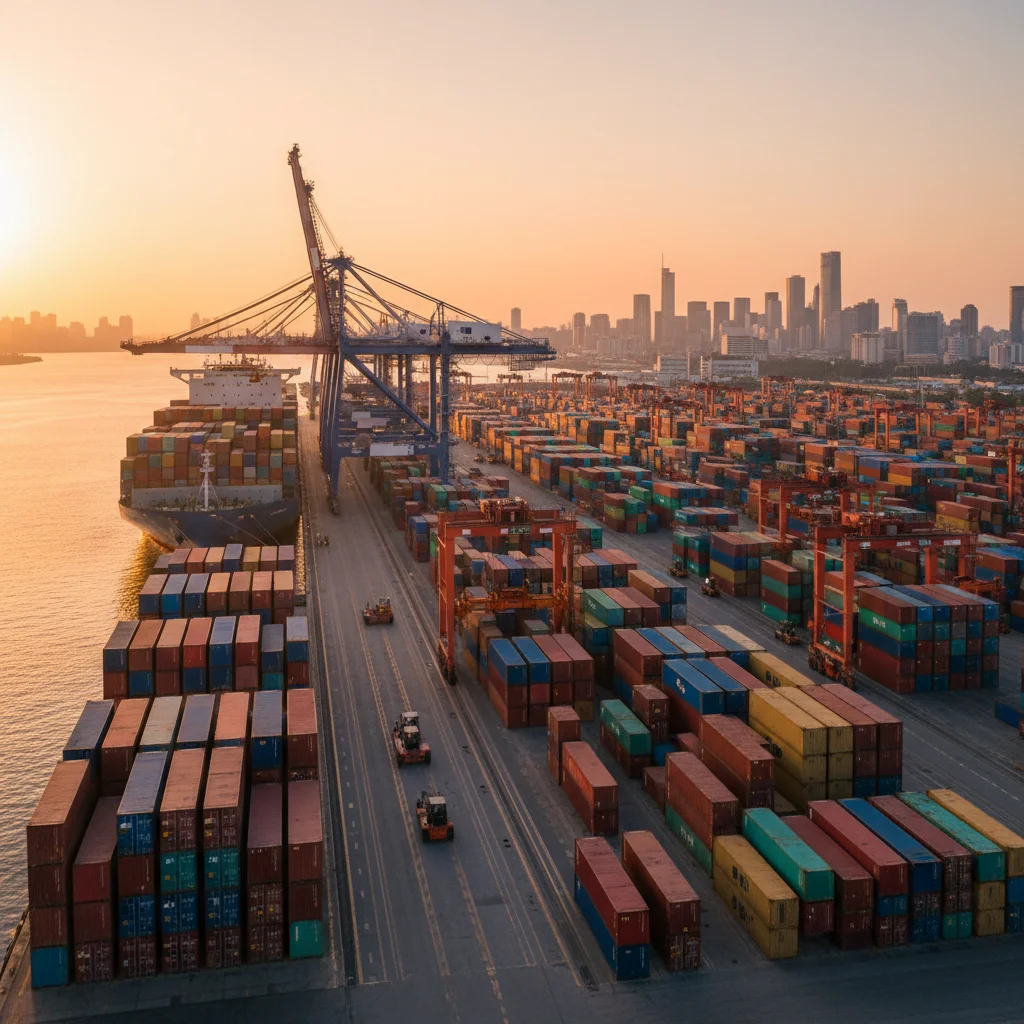
The Ultimate Guide to Cargo Insurance for Businesses
Every time a shipment leaves your warehouse, your revenue is on the move. Whether it’s on a truck, a ship, or a plane, those goods are vulnerable to countless risks that can disrupt your operations. A single lost or damaged shipment can cost tens of thousands of dollars, erasing profits and straining client relationships. That’s why cargo insurance isn’t just an expense—it’s a strategic tool for protecting your business. Understanding what cargo insurance is and what your cargo insurance coverage includes is the first step to keeping your assets safe when things go wrong.
Get a cargo insurance quote today or call 305-900-2823 to speak with a risk advisor at Insurance Underwriters.
In this guide, we explain what cargo insurance is, the types of coverage available, who needs it, how much it costs, and how to choose the right policy. If your business moves goods of any kind, this is essential reading.
What Is Cargo Insurance?
Cargo insurance is a commercial insurance product that covers physical loss or damage to goods while they are being transported from one location to another. It applies to shipments moving by truck, ocean vessel, air freight, or rail, and it can cover domestic or international routes.
Cargo insurance is a specialized coverage that reimburses the owner or shipper of goods for the declared value of freight that is lost, stolen, or damaged in transit. It fills the gap between carrier liability limits and the actual value of the shipment, ensuring businesses do not absorb catastrophic losses.
Carrier liability, which is the legal obligation of the trucking or shipping company, is often limited by federal regulations or international conventions. For example, motor carriers in the United States are only required to cover a fraction of a shipment’s value under released-value rates. Ocean carriers operating under the Hague-Visby Rules cap liability at roughly $500 per shipping unit. These limits leave a significant gap that cargo insurance is designed to fill.
Unlike commercial property insurance, which covers goods at a fixed location, cargo insurance follows the goods from the moment they leave the origin until they reach the final destination. This door-to-door protection is critical for businesses that rely on a steady flow of inventory.
A Breakdown of Cargo Insurance Types
Cargo insurance comes in several forms, each designed for different modes of transportation and business needs. Understanding the distinctions helps you select the right coverage for your operations.
Motor Truck Cargo: Protection on the Road
Motor truck cargo insurance is specifically designed for trucking companies and freight haulers. It covers goods loaded on a commercial vehicle from the time of pickup to delivery. This is a standard requirement for most for-hire carriers, and many shippers require proof of motor truck cargo coverage before they release freight.
A motor truck cargo policy typically covers theft, collision damage, fire, and overturn losses. If your fleet handles trucking operations, this is the foundational coverage you need. It protects against the most common causes of freight loss on the road, including jackknife accidents, cargo shifts, and hijacking.

Ocean Cargo: Securing Your Goods at Sea
Ocean cargo insurance covers goods transported by sea. Given that approximately 90% of global trade moves by ocean vessel, this is one of the most common forms of cargo coverage worldwide. Policies are typically written on one of three levels:
- Institute Cargo Clause A (All-Risk): The broadest coverage, protecting against all perils except specific exclusions like war, strikes, and inherent vice.
- Institute Cargo Clause B (Named Perils): Covers fire, explosion, vessel stranding, jettison, general average, and overboard loss.
- Institute Cargo Clause C (Restricted): The most limited option, covering only major casualties like sinking, fire, and collision.
For high-value international shipments, All-Risk (Clause A) coverage is strongly recommended. The cost difference is modest compared to the financial exposure of an uninsured loss at sea.
Air Cargo: Coverage for Shipments by Air
Air cargo insurance protects goods shipped via air freight. While air transport is statistically safer than ocean or ground shipping, it is often used for high-value, time-sensitive goods like electronics, pharmaceuticals, and luxury items. The per-unit value of air cargo tends to be much higher, making insurance essential even though loss frequency is lower.
Airlines limit their liability under the Montreal Convention to approximately $25 per kilogram. For a pallet of electronics worth $100,000, the airline’s liability might cap at a few thousand dollars. Air cargo insurance fills that gap completely.
Inland Marine: Covering Goods in Transit Over Land
Inland marine insurance is a broader category that covers property in transit over land, including goods on trucks, trains, and even items being transported by courier. While motor truck cargo insurance focuses on for-hire carriers, inland marine can cover goods owned by the shipper regardless of who is hauling them.
This is particularly useful for manufacturers, distributors, and retailers who ship their own products using company vehicles or third-party logistics providers.
Is Cargo Insurance Right for Your Business?
Cargo insurance is not just for large shipping companies. Any business that moves goods faces exposure to transit losses. Here are the primary groups that should carry cargo coverage:
- Trucking companies and freight carriers: Motor truck cargo insurance is effectively mandatory for for-hire carriers. Shippers and freight brokers require it as a condition of hauling their freight.
- Freight brokers and logistics companies: While brokers do not physically handle cargo, they often carry contingent cargo insurance to protect their clients when a carrier’s coverage falls short.
- Manufacturers and distributors: If you ship raw materials or finished goods, your standard general liability policy does not cover goods in transit.
- Importers and exporters: International shipments face extended transit times, multiple handling points, and variable carrier liability, making cargo insurance critical for cross-border trade.
- E-commerce businesses: Online retailers shipping products to customers face loss and damage risks at every stage of fulfillment.
- Construction companies: Firms transporting building materials, equipment, and supplies to job sites need coverage for goods in transit and often pair it with commercial auto insurance.
If your business would suffer a financial setback from a lost or damaged shipment, cargo insurance is a necessity, not an option.
What Does Cargo Insurance Cover?
Cargo insurance policies generally cover physical loss or damage to goods during transit. The specific scope depends on whether the policy is all-risk or named-perils, but common covered events include:
- Vehicle accidents, collisions, and overturns
- Theft and pilferage
- Fire, lightning, and explosion
- Natural disasters (hurricanes, earthquakes, floods)
- Water damage from rough seas or heavy rain
- Loading and unloading damage
- General average contributions (ocean cargo)
- Jettison and washing overboard
All-risk policies provide the broadest protection and cover any physical loss or damage that is not specifically excluded. Named-perils policies only pay for events listed in the policy language.
Need help choosing the right level of cargo coverage? Request a quote or call Insurance Underwriters at 305-900-2823.
Specialized Coverage Options to Consider
While a standard cargo policy provides a strong foundation, your specific operations might have unique risks that require additional protection. These specialized coverages, often available as endorsements, allow you to tailor your policy to address the precise challenges your business faces. Think of them as precision tools for fine-tuning your risk management strategy. Adding the right endorsements transforms a general policy into a strategic asset that closes potential gaps and protects your business from the nuanced risks inherent in your supply chain.
Refrigeration Breakdown Coverage
If you transport perishable goods like food, flowers, or certain pharmaceuticals, this coverage is non-negotiable. Standard cargo insurance covers loss from an accident, but it won’t help if a shipment of frozen goods thaws because the truck’s cooling unit fails mid-journey. Refrigeration breakdown coverage, often called “reefer” coverage, is designed for this exact scenario. It protects you from losses caused by the mechanical or electrical failure of a temperature control unit, ensuring that a simple equipment malfunction doesn’t turn a valuable shipment into a total financial loss.
Pollution and Debris Cleanup
An accident can create a mess that extends far beyond the damaged cargo itself. If your freight spills and contaminates a waterway or leaves hazardous debris on a highway, the cleanup costs can be astronomical, often accompanied by significant regulatory fines. Pollution and debris cleanup coverage is designed to pay for the substantial expenses associated with containing and removing pollutants or wreckage caused by your cargo. This protects your business from unexpected and often crippling environmental liabilities that can far exceed the value of the freight itself.
Earned Freight Coverage
When a shipment is lost or damaged and cannot be delivered, the carrier loses more than just the value of the cargo—they also lose the payment for the transportation service. Earned freight coverage is designed to reimburse a carrier for the income lost on a load that could not be delivered due to a covered peril. This endorsement protects your revenue and cash flow, ensuring that a single cargo loss doesn’t also create a significant operational deficit. It’s a critical tool for maintaining financial stability, especially for carriers operating on tight margins.
Hired Auto Cargo Coverage
Your cargo insurance typically covers goods on vehicles you own, but what happens when you use subcontractors or rent trucks to handle overflow? Hired auto cargo coverage extends your protection to freight being hauled by another company under your authority or in a vehicle you’ve temporarily leased. This is essential for freight brokers and carriers who rely on a network of partners to meet demand. It ensures seamless protection and helps you maintain carrier compliance by managing the risks associated with third-party transport.
Infidelity or Dishonesty Coverage
While we trust our teams, internal risks are a reality for any business. This specialized coverage protects your business from financial loss if your cargo is stolen by one of your own employees or an owner-operator working under your authority. It addresses the difficult but necessary reality of internal theft, which can be a significant source of loss in the transportation industry. Adding this endorsement provides a crucial layer of security against dishonesty, ensuring your risk management plan accounts for threats from both inside and outside your organization.
Other Covered Costs
A disruption in transit can trigger a cascade of additional expenses that go beyond the value of the cargo itself. For example, if a truck is in an accident, the cargo may need to be offloaded, moved to a secure warehouse for temporary storage, and then reloaded onto a different truck for final delivery. Some policies can be endorsed to cover these secondary costs, including storage, freight forwarding, and rerouting expenses. These provisions help you manage the full financial impact of a supply chain interruption.
What Isn’t Covered? Common Policy Exclusions
Cargo insurance policies exclude certain types of losses. Knowing these exclusions helps you manage risk and fill gaps with supplemental coverage where needed.
Cargo insurance typically excludes losses caused by inherent vice (natural deterioration of the goods), inadequate packing by the shipper, willful misconduct, delay-only damages, war and strikes (unless added by endorsement), nuclear contamination, and ordinary wear and tear during normal transit conditions.
- Inherent vice: Losses caused by the natural characteristics of the goods, such as fruit spoiling or chemicals degrading over time.
- Inadequate packing: If goods are damaged because they were poorly packaged or loaded, the insurer may deny the claim.
- Delay: Financial losses caused solely by late delivery (without physical damage) are typically not covered.
- War, strikes, and terrorism: These are excluded by default but can be added back through endorsements at additional cost.
- Willful misconduct: Intentional damage or fraud by the insured voids coverage.
- Nuclear and radioactive contamination: Standard cargo policies exclude losses from nuclear events.
- Ordinary wear and tear: Gradual deterioration from normal transit conditions is not covered.
For perishable goods, temperature-controlled cargo endorsements may be available. If you ship to high-risk regions, war and strikes coverage is worth the added premium. Discuss your specific exclusion concerns with an insurance advisor to ensure there are no surprises at claim time.

Specific Items Often Excluded
While cargo insurance is comprehensive, it’s important to know that no policy covers every possible loss. Certain items and causes of damage are standard exclusions across the industry. For example, “inherent vice” refers to losses from the natural properties of the goods themselves, like fruit spoiling or metal rusting without an external cause. Similarly, if damage occurs because the goods were not packed or loaded correctly by the shipper, the claim may be denied. Policies also exclude intentional damage or fraud by the insured party, known as willful misconduct, as well as losses from nuclear events or ordinary wear and tear that happens during normal transit.
Common Situations Not Covered
Beyond specific items, certain scenarios are typically not covered by a standard cargo policy. A major one is financial loss caused solely by delay. If your shipment arrives late but the goods are physically unharmed, the policy won’t cover losses you incurred from the missed deadline. This is a critical detail for businesses relying on just-in-time inventory. Additionally, events like war, strikes, riots, and terrorism are usually excluded by default. However, for businesses shipping through high-risk areas, coverage for these events can often be added back to the policy through a special endorsement for an additional premium.
Understanding Policy Warranties
A policy warranty is a condition you must follow to keep your coverage valid. For example, a policy might have a warranty stating that all temperature-controlled containers must be monitored at specific intervals. Failing to meet these conditions can jeopardize your claim, even if the loss was otherwise covered. This is why it’s so important to read your policy documents carefully and not just the declarations page. The best way to avoid surprises is to discuss your specific concerns with an experienced risk advisor who can highlight these critical details and ensure your coverage aligns perfectly with your operations.
What Determines Your Cargo Insurance Cost?
The cost of cargo insurance varies based on several factors. Understanding what drives pricing helps you budget accurately and identify ways to manage premiums.
Cargo insurance cost depends primarily on the value of goods shipped, the mode of transportation, the route and destination, the type of commodities, the claims history of the insured, and the deductible and coverage limits selected. Premiums typically range from 0.3% to 2% of the insured cargo value for most standard shipments.
The Main Factors That Affect Your Premium
- Cargo value: Higher-value shipments cost more to insure. Policies are typically rated as a percentage of the declared value.
- Commodity type: High-theft items (electronics, pharmaceuticals, alcohol) and fragile goods carry higher rates than durable bulk commodities.
- Mode of transport: Ocean and truck shipments generally cost more to insure than air freight because of longer transit times and higher loss frequency.
- Route and destination: Shipments to regions with high theft rates, poor infrastructure, or political instability carry higher premiums.
- Claims history: A clean loss record earns lower rates. Frequent claims increase your premium at renewal.
- Deductible: Higher deductibles reduce the premium but increase your out-of-pocket exposure per claim.
- Policy type: Annual open-cargo policies (covering all shipments throughout the year) are more cost-effective per shipment than single-voyage certificates.
- Packaging and security measures: Businesses that invest in GPS tracking, tamper-evident seals, and professional packing may qualify for premium discounts.
For a trucking company shipping moderate-value freight domestically, motor truck cargo insurance might cost between $1,500 and $5,000 per year depending on fleet size and cargo value. An importer moving high-value goods internationally will pay rates proportional to the total insured shipment value.
Typical Annual Premiums and Per-Shipment Costs
To give you a clearer picture, let’s look at some numbers. For a yearly motor truck cargo policy with a $100,000 coverage limit, you can generally expect to pay anywhere from a few hundred to a few thousand dollars per year. This annual approach provides consistent coverage for carriers running regular routes. If you insure goods on a case-by-case basis, the cost is calculated differently. According to industry data, insurance bought per shipment typically costs about 0.1% to 2% of the total value of the goods. This model works well for businesses with infrequent or highly variable shipments, allowing you to pay for protection only when you need it.
Common Deductible Amounts
Your deductible is the amount you pay out of pocket before your insurance coverage kicks in on a claim. For cargo insurance, deductibles commonly fall between $1,000 and $5,000 per incident. Choosing the right deductible is a strategic decision. A higher deductible will lower your annual premium, which can be great for your budget. However, it also means you take on more financial risk if a loss occurs. It’s important to find a balance that aligns with your company’s risk tolerance and cash flow, ensuring a potential claim doesn’t create a financial strain.
The Single Deductible Benefit
When a single accident causes damage to your truck, trailer, and cargo, you could be facing three separate deductibles—one for each policy. This can add up quickly. However, some insurance carriers offer a “single deductible” benefit. As explained by Great West Casualty Company, this feature means you only pay the highest single deductible applicable to the loss, even if multiple coverages are triggered. This can save you thousands of dollars on a single claim. Finding policies with these valuable, cost-saving features is one of the key benefits of working with an experienced risk advisor who knows the market.
Cargo Insurance vs. Carrier Liability: What’s the Difference?
One of the most common misconceptions in freight shipping is that the carrier’s liability coverage is sufficient. It rarely is. Here is how cargo insurance and carrier liability compare:
Carrier liability is the legal responsibility of the trucking company, airline, or shipping line. Federal law requires motor carriers to carry some level of cargo liability, but the limits are often far below the actual value of the goods. Under the Carmack Amendment, motor carriers are liable for the full value of goods only if no released-value rate was agreed upon. In practice, many carriers negotiate lower liability limits in their bills of lading.
Cargo insurance is a separate policy purchased by the shipper or cargo owner. It pays based on the declared value of the goods regardless of what the carrier’s liability covers. It also offers broader perils coverage and faster claims resolution.
For small businesses that cannot absorb a five-figure loss from a single shipment, cargo insurance is the only reliable way to transfer that risk. Relying solely on carrier liability is a gamble that often does not pay off when a claim occurs.
Legal Requirements for Cargo Insurance
Beyond being a critical risk management tool, cargo insurance is often a legal and contractual necessity. For-hire motor carriers, in particular, must meet specific insurance standards to operate legally and secure business. These rules are designed to protect shippers and the public by ensuring that a carrier has the financial capacity to cover losses. While federal regulations set a baseline, the most stringent requirements often come from the shippers and freight brokers who hire you. Failing to carry adequate coverage not only exposes your business to legal penalties but can also lock you out of valuable contracts with clients who demand proof of sufficient insurance before releasing their freight.
Federal Motor Carrier Safety Administration (FMCSA) Rules
In the United States, the Federal Motor Carrier Safety Administration (FMCSA) establishes the minimum insurance requirements for interstate motor carriers. The rules vary depending on what you haul. For carriers transporting household goods, the FMCSA mandates a minimum of $5,000 in cargo liability coverage per vehicle and $10,000 per occurrence. It is important to note that individual states may impose additional requirements, so it is essential to check local regulations as well. These federal minimums are the starting point for compliance, but they are rarely sufficient for protecting your business or meeting client expectations.
While the FMCSA does not set a specific cargo insurance minimum for carriers hauling general freight, this is where market demands take over. In practice, shippers, brokers, and logistics partners will not work with a carrier that doesn’t have robust motor truck cargo coverage. The industry standard is typically a minimum of $100,000 in cargo insurance, and many contracts require even higher limits. These contractual obligations are the real driver behind cargo insurance, making it an essential component for any carrier looking to grow their business and work with reputable clients. Think of it less as a regulatory hurdle and more as a key to unlocking better business opportunities.
How to Choose the Right Cargo Insurance Policy
Selecting the right cargo insurance requires a careful assessment of your shipping operations, risk tolerance, and budget. Follow these steps to ensure you get the right coverage:
1. Start by Assessing Your Shipping Needs
Document what you ship, how often, the average and maximum shipment values, the modes of transport you use, and the routes and destinations. This information forms the foundation of any cargo insurance quote.
2. Match the Coverage Type to Your Cargo
If you ship frequently (more than a few times per month), an annual open-cargo policy is more cost-effective and provides seamless coverage for every shipment. If you ship infrequently, single-voyage certificates may be more practical.
3. Decide Between All-Risk and Named Perils Coverage
All-risk coverage costs slightly more but eliminates the risk of uncovered losses. For high-value or fragile goods, all-risk is almost always the better choice. Named-perils coverage may be suitable for low-value, durable bulk commodities where the risk profile is well understood.
4. Don’t Skip the Fine Print: Review Exclusions
Ask your insurance advisor to walk through every exclusion. If you ship perishable goods, temperature-sensitive products, or to conflict zones, you may need endorsements to fill gaps in the standard policy.
5. Find the Right Balance with Limits and Deductibles
Your cargo insurance limit should match the maximum value of goods you might have in transit at any one time. Setting the deductible requires balancing premium savings against your ability to absorb small losses.
6. Partner with a Broker Who Knows Cargo
Cargo insurance is a specialty line. Work with a broker who understands freight, logistics, and the nuances of different transit modes. At Insurance Underwriters, our risk advisors handle cargo placements for trucking companies, importers, manufacturers, and logistics firms across the country.
If your business also faces risks from business interruption due to supply chain disruptions, consider bundling cargo coverage with a business interruption policy for comprehensive protection.
Practical Tips for Policyholders
Shop for Your Policy Early
Give yourself a head start when it’s time to renew or purchase a new policy. You should start looking for new insurance 45 to 60 days before your current policy ends. This timeframe gives you and your advisor ample breathing room to thoroughly review your needs, explore different carriers, and negotiate the best possible terms. A last-minute scramble often leads to rushed decisions, overlooked details, and potentially higher premiums. By planning ahead, you put yourself in a stronger position to secure comprehensive coverage that truly fits your business without the pressure of a looming deadline.
Right-Size Your Coverage to Match Your Cargo
Finding the right balance with your coverage is key to effective risk management. Your cargo insurance limit should be high enough to cover the maximum value of goods you might have in transit at any single time. Anything less exposes you to a significant financial gap, while over-insuring means you’re paying for protection you don’t need. Similarly, your deductible should reflect a balance between premium savings and what your business can comfortably pay out-of-pocket after a loss. A higher deductible lowers your premium, but make sure it’s an amount you can absorb without financial strain. Choosing the right policy involves a strategic look at your specific operations and risk tolerance.
Improve Security to Lower Your Premiums
Insurance underwriters love to see proactive risk management, and they often reward it with lower premiums. Simple security upgrades can make a significant difference in how carriers view your risk profile. Businesses that invest in security measures like GPS tracking on vehicles, tamper-evident seals on containers, and professional packing standards are often eligible for discounts. Other valuable steps include using secured yards for overnight parking and implementing thorough driver screening and training programs. These actions demonstrate a commitment to protecting your cargo, which translates directly into a lower likelihood of claims and, consequently, a more favorable insurance rate.
Be Cautious of Unusually Cheap Policies
While everyone wants a good deal, an unusually low insurance quote should be a red flag. A rock-bottom price might indicate that the policy is riddled with exclusions, leaving you unprotected against common risks. When a claim is denied because of a fine-print exclusion, that “cheap” policy suddenly becomes incredibly expensive. Instead of focusing solely on the premium, evaluate the overall value of the coverage. A quality policy provides broad protection with clear terms. It’s always better to pay a fair price for reliable coverage than to save a little now only to face a catastrophic, uninsured loss later.
How to File a Cargo Insurance Claim
When cargo damage or loss occurs, acting quickly is critical. Here is the standard claims process:
- Document the damage immediately. Take photos, note the extent of loss, and preserve any damaged packaging.
- Notify the carrier. File a written notice with the carrier or their agent at the time of delivery. Note any damage on the bill of lading or delivery receipt.
- Contact your insurance provider. Report the claim to your cargo insurer as soon as possible. Most policies require notification within a specific timeframe (often 24-72 hours).
- Gather supporting documents. Prepare the bill of lading, commercial invoice, packing list, photos of damage, and any correspondence with the carrier.
- Cooperate with the adjuster. The insurer may send an adjuster to inspect the damaged goods. Provide full access and documentation.
- Receive payment. Once the claim is approved, the insurer pays the declared value of the lost or damaged goods minus any applicable deductible.
Prompt documentation is the single most important factor in a successful cargo claim. Delays in reporting or insufficient evidence can complicate or reduce your payout.
What Florida Businesses Need to Know About Cargo Insurance
Florida is one of the busiest trade hubs in the United States. Miami alone handles billions of dollars in cargo annually through PortMiami, Miami International Airport, and a vast network of trucking routes connecting the Southeast. For Florida-based businesses, cargo insurance is not optional.
Florida businesses face unique cargo risks including hurricane season exposure (June through November), high-theft corridors along major interstates, humidity-related damage to sensitive goods, and the complexity of cross-border shipments to Latin America and the Caribbean. These factors make comprehensive cargo coverage essential for any Florida-based shipper, importer, or carrier.
Insurance Underwriters is headquartered in Miami and specializes in helping Florida businesses secure the right cargo insurance for their unique risk profiles. Whether you are shipping construction materials from a job site, importing goods through PortMiami, or running a regional trucking fleet, we can tailor a cargo insurance program that fits your operations.
Frequently Asked Questions About Cargo Insurance
What is the difference between cargo insurance and freight insurance?
Cargo insurance and freight insurance are often used interchangeably. Both refer to coverage that protects goods in transit. Technically, “freight insurance” can also refer to coverage for the freight charges themselves (the cost of shipping), while cargo insurance specifically covers the physical goods. In practice, most policies cover both the goods and associated shipping costs.
Is cargo insurance required by law?
Cargo insurance is not universally required by law for shippers or cargo owners. However, motor carriers are required to maintain minimum levels of cargo liability coverage to operate legally. Many contracts, trade agreements, and letters of credit also require shippers to carry cargo insurance as a condition of doing business.
How much does cargo insurance cost?
Cargo insurance typically costs between 0.3% and 2% of the total insured cargo value per shipment. Annual open-cargo policies for businesses with regular shipping volume can range from $1,500 to $10,000+ per year depending on commodity type, shipment values, and risk factors. High-risk commodities and international routes cost more.
Does cargo insurance cover stolen goods?
Yes, most all-risk cargo insurance policies cover theft and pilferage. Named-perils policies also typically include theft as a covered event. However, there may be conditions, such as requiring proof that reasonable security measures were in place at the time of the theft.
What is general average in ocean cargo insurance?
General average is a maritime law principle where all parties in a sea voyage share the cost of losses incurred to save the ship and cargo. If a ship’s crew jettisons some cargo to prevent the vessel from sinking, all cargo owners share the financial burden proportionally. Cargo insurance covers your share of general average contributions.
Can I get cargo insurance for a single shipment?
Yes. Single-voyage or single-shipment cargo insurance certificates are available for one-time or infrequent shippers. These are priced per shipment based on the value, commodity type, and route. For businesses that ship regularly, an annual open-cargo policy is more cost-effective.
Key Takeaways
- Don’t rely solely on carrier liability: A carrier’s insurance is basic and rarely covers your shipment’s full value. Cargo insurance protects your actual investment, closing the significant gap between their limited liability and your potential loss.
- Customize your coverage for your specific risks: Your business has unique shipping needs, and your insurance should reflect that. Specialized options, like refrigeration breakdown or all-risk coverage, transform a standard policy into a strategic tool that protects against your specific operational challenges.
- Choose your policy with a strategic mindset: Selecting the right coverage is a critical business decision. It requires a clear look at your shipment values, policy exclusions, and budget, and working with an experienced advisor ensures you get comprehensive protection that aligns with your goals.
Comments
Comments are closed.