
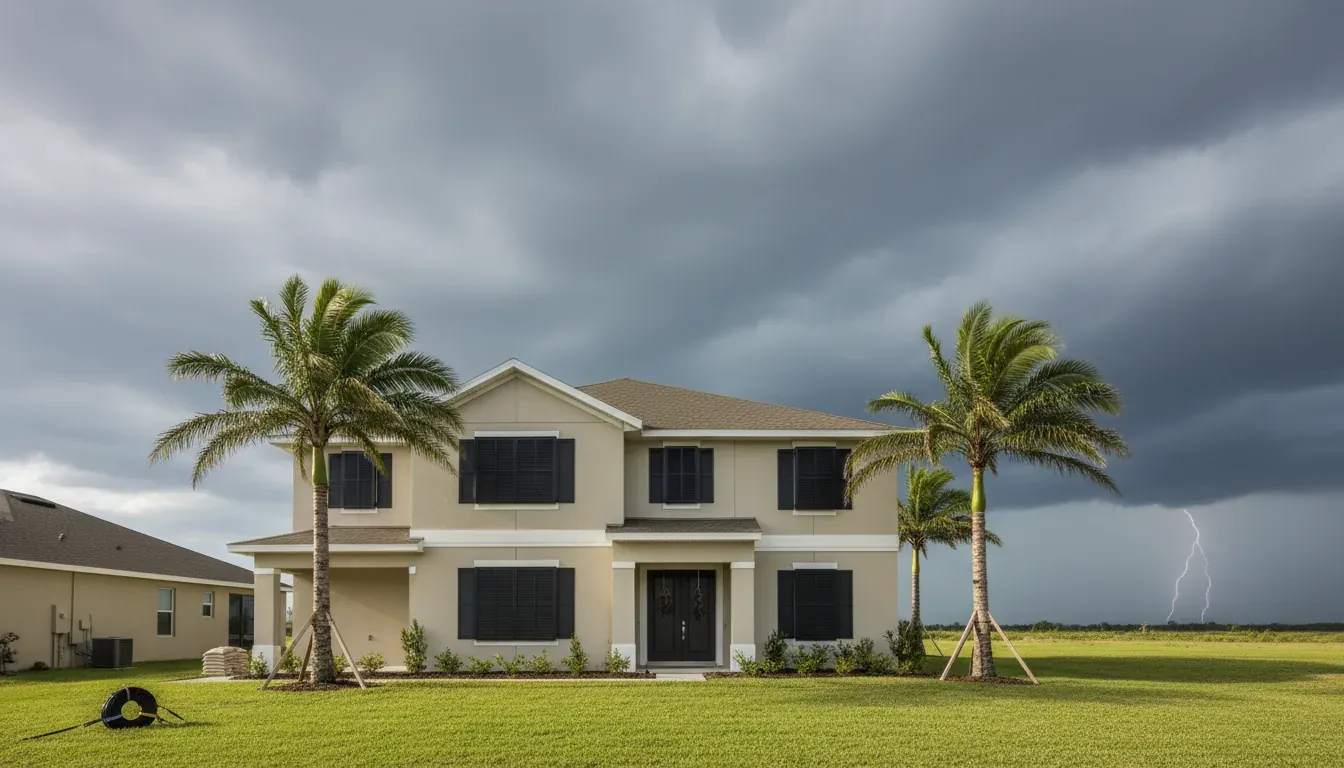
Florida Homeowners Insurance: A Plain-English Guide
Florida Homeowners Insurance: Hurricane and Flood Coverage Guide
Your Florida homeowners insurance is so much more than just another line item on your mortgage statement. For those of us in Miami, Broward, and other coastal communities, it’s the one thing that stands between recovering after a hurricane and facing a devastating financial setback. The challenge is that these policies can be incredibly confusing. Wind damage is often handled differently than flood damage, hurricane deductibles don’t work like standard ones, and even finding a carrier can feel like a moving target. This guide will help you cut through the noise and understand what you’re really covered for.
This guide explains the current Florida homeowners insurance market, what hurricane and windstorm coverage typically includes, why flood insurance is separate, what drives high premiums in South Florida, and how wind mitigation inspections may help lower your rate. It also explains how an independent brokerage with access to 200+ carriers can help homeowners compare coverage instead of relying on one quote.
Florida Homeowners Insurance: A Plain-English Guide
Florida homeowners insurance is property coverage designed to help protect a home, belongings, and personal liability from covered losses such as fire, theft, windstorm, and certain types of accidental damage. A standard policy may include dwelling coverage, other structures coverage, personal property coverage, loss of use, personal liability, and medical payments to others.
The important Florida-specific detail is that not every water or storm-related loss is handled the same way. Wind damage, hurricane damage, storm surge, rising water, roof age, and coastal exposure can all affect the policy language, deductible, eligibility, and premium. That is why homeowners should review coverage with a licensed insurance professional rather than assuming every storm loss is covered automatically.
What’s Happening with the Florida Homeowners Insurance Market?
Florida remains one of the most challenging homeowners insurance markets in the United States. Hurricanes, severe convective storms, reinsurance costs, litigation history, roof claims, inflation in construction materials, and coastal property concentration have all affected premiums and carrier appetite.
There are some signs of stabilization. The Florida Office of Insurance Regulation’s July 2025 Property Insurance Stability Report showed that, for homeowners policies, voluntary market insurers held 89.83% market share and Citizens Property Insurance Corporation held 10.17% as of March 31, 2025. The same report noted that insurers assumed 477,821 policies out of Citizens in 2024 and approximately 200,099 policies from January through June 2025.
That does not mean every homeowner is seeing relief. Premiums still vary widely by county, home age, roof condition, distance to the coast, construction type, claim history, coverage amount, deductible, and whether wind coverage is included. Homeowners in South Florida may face fewer standard-market options than inland homeowners, especially for older roofs, waterfront homes, high-value properties, or homes with prior claims.
Understanding the Average Cost of Coverage
So, what can you expect to pay? While the average Florida homeowners insurance premium is around $3,390 per year, it’s important to see that number as a starting point. Your actual cost is highly personalized and depends on factors like your home’s age, roof condition, construction type, and proximity to the coast. The amount of dwelling coverage you need is the biggest driver; a policy for a $300,000 home will cost far less than one for a $750,000 home. The good news is that you can influence your rate. Florida insurers are required to offer discounts for certified wind mitigation features that protect your home from hurricane damage. An independent broker can help you identify these savings and compare options to find the most effective coverage for your budget.
What’s Typically Covered by Florida Homeowners Insurance?
Policy forms and exclusions vary by carrier, but a Florida homeowners policy often includes several core coverage parts:
- Dwelling coverage: Helps repair or rebuild the structure of the home after a covered loss.
- Other structures coverage: Applies to detached structures such as a fence, shed, or detached garage.
- Personal property coverage: Helps cover belongings such as furniture, clothing, electronics, and household items.
- Loss of use coverage: May help with additional living expenses if a covered loss makes the home unlivable.
- Personal liability coverage: Helps protect against covered bodily injury or property damage claims made by others.
- Medical payments coverage: Provides limited coverage for certain injuries to guests, regardless of fault.
For a broader overview of residential coverage options, see InsuranceUnderwriters.com’s house insurance page. Homeowners who need several personal policies may also want to review the company’s personal insurance options.
Decoding the Different Types of Homeowners Policies (HO-Forms)
Not all homeowners policies are created equal. The insurance industry uses a set of standardized policy types, known as forms, to define what is and isn’t covered. Think of them as different packages, each designed for a specific type of home or resident. Understanding which form you have—or which one you need—is the first step in ensuring your property and assets are properly protected. While there are several variations, most Florida homeowners will encounter one of three main policy forms: the HO-3, HO-5, or HO-6.
HO-3 (Special Form)
The HO-3 is one of the most common homeowners insurance policies in the country. It offers a hybrid approach to coverage. For your home’s structure, it provides “open-peril” protection, which means it covers damage from any cause unless that cause is specifically listed as an exclusion in the policy. However, for your personal belongings (like furniture and electronics), it typically provides “named-peril” coverage. This is more restrictive, as it only covers damage from a list of specific perils, such as fire, theft, or windstorm. It’s a solid, middle-of-the-road policy that provides a good balance of protection and affordability for many homeowners.
HO-5 (Comprehensive Form)
For homeowners seeking broader protection, the HO-5 policy is the top-tier option. It expands on the HO-3 by offering “open-peril” coverage for both your home’s structure and your personal belongings. This is a significant upgrade, as it provides much more extensive protection for your possessions. If a cause of loss isn’t explicitly excluded, it’s covered. Furthermore, HO-5 policies often include higher coverage limits for valuable items like jewelry and fine art and typically pay out claims on a “replacement cost” basis, meaning you get enough to buy a new item, not just the depreciated value of the old one.
HO-6 (Condo Insurance)
If you own a condominium, your insurance needs are different from those of a single-family homeowner. An HO-6 policy, often called “walls-in” coverage, is designed specifically for you. Your condo association’s master policy generally covers the building’s exterior and common areas, but you are responsible for your individual unit. An HO-6 policy covers the interior of your unit, including walls, fixtures, and flooring, as well as your personal belongings and liability. It fills the critical gaps left by the master policy, ensuring your personal space and assets are protected. You can explore how these policies fit into a broader personal risk management strategy with an advisor.
Other Policy Types: HO-4, HO-7, and HO-8
While less common for the typical Florida homeowner, a few other policy forms serve specific needs. The HO-4 policy is for renters and covers personal belongings and liability, but not the building itself. An HO-7 policy is a modified form designed to cover mobile or manufactured homes, which have unique risk characteristics. Finally, the HO-8 policy is tailored for older homes, particularly those where the cost to rebuild would far exceed the home’s market value. This form provides basic, “named-peril” coverage and pays out claims on an actual cash value basis rather than replacement cost.
Common Exclusions in Standard Policies
Knowing what your policy covers is only half the battle; you also need to be crystal clear on what it doesn’t. Every insurance policy contains exclusions, and in a state like Florida, these can have major financial consequences. According to the Florida Department of Financial Services, standard homeowners policies almost universally exclude damage from floods, including storm surges from a hurricane. This is the single most important exclusion for Florida residents to understand, as flood damage requires a separate insurance policy. Other common exclusions include earthquakes, sinkholes, intentional damage, pest infestations, and damage from mold or rot that isn’t the result of a covered peril. Reviewing these exclusions with an insurance professional is essential to identify and address any gaps in your protection.
Hurricane Coverage in Florida: How It Works
Hurricane and windstorm coverage are central to Florida homeowners insurance. Many policies cover wind damage, but the details matter. Coastal homes, older homes, and certain high-risk properties may have different eligibility rules, separate wind deductibles, or limited carrier options.
A standard deductible, such as $1,000 or $2,500, may apply to many non-hurricane claims. A hurricane deductible is different. In Florida, hurricane deductibles are commonly written as a percentage of the dwelling coverage limit, often 2%, 5%, or 10%, depending on the policy and property. For example, a 2% hurricane deductible on a home insured for $500,000 means the homeowner may be responsible for the first $10,000 of a covered hurricane loss.
Homeowners should look closely at three items before selecting a policy:
- Whether wind coverage is included: Some policies may include wind, while others may require separate windstorm coverage or have specific exclusions.
- How the hurricane deductible applies: Ask whether it applies per calendar year or per event, and confirm the exact percentage.
- How roof claims are handled: Roof age, roof material, and policy language can affect whether a claim is paid at replacement cost or actual cash value.
Quick answer: Florida homeowners insurance may cover hurricane wind damage if wind is included in the policy, but it typically does not cover flood damage from storm surge or rising water. Flood coverage usually requires a separate flood insurance policy.
NFIP vs. Private Flood Insurance: Which Is Right for You?
Flood insurance is separate from homeowners insurance. A standard homeowners policy generally excludes flooding caused by storm surge, rising water, overflowing bodies of water, or heavy rain that enters from the ground up. In Florida, that distinction is crucial because a single hurricane can cause both wind damage and flood damage.
Homeowners usually have two main flood insurance options: the National Flood Insurance Program, known as NFIP, or private flood insurance. NFIP policies are backed by the federal government and have standardized limits. Private flood policies are offered by private carriers and may provide higher limits, broader coverage options, shorter waiting periods, or additional living expense coverage, depending on the insurer.
| Feature | NFIP Flood Insurance | Private Flood Insurance |
|---|---|---|
| Provider | Federal program administered by FEMA | Private insurance carriers |
| Coverage limits | Standardized federal limits | May offer higher limits depending on the carrier |
| Pricing | Based on NFIP rating rules | Based on carrier underwriting and property-specific risk |
| Waiting period | Often 30 days unless an exception applies | May be shorter with some carriers |
| Best fit | Homeowners who want standardized flood coverage | Homeowners seeking higher limits or broader options |
Bottom line: Florida homeowners should not wait until a storm is approaching to ask about flood coverage. Flood policies may have waiting periods, and coverage must usually be in place before a loss occurs.
Other Major Risks: Sinkholes and Vacant Homes
Beyond wind and water, Florida homeowners face other unique risks that require specific attention. Sinkholes are a well-known geological feature of the state, and insuring a home that will be vacant for an extended period also presents challenges. Both situations require a careful review of your policy to ensure you have the right protection, as standard coverage may not apply.
Sinkhole Coverage vs. Catastrophic Ground Cover Collapse
Because Florida has more sinkholes than any other state, it’s vital to understand your coverage options. Every standard homeowners policy in Florida includes “catastrophic ground cover collapse” protection. However, this coverage is very specific and only applies if the ground movement is abrupt, a depression in the ground is clearly visible, and the home is condemned and ordered to be vacated. Think of it as coverage for a total structural failure. Optional sinkhole coverage is much broader. It can help pay for damage from slower ground settlement, like foundation cracks or warped floors, that doesn’t result in the home being condemned. You can learn more about these distinctions from the Florida Department of Financial Services.
Navigating Your Insurance Options in Florida
The Florida insurance landscape can feel complicated, but homeowners generally have three main avenues for securing coverage: the private market, the state’s insurer of last resort, and the surplus lines market. Most homeowners will find a policy in the private market, which includes well-known national and regional carriers. For those who are turned down by private insurers, Citizens Property Insurance Corporation offers a backstop. Finally, the surplus lines market serves high-risk or unique properties that don’t fit the underwriting criteria of standard carriers. Understanding which path is right for your property is the first step toward finding a stable, long-term solution.
Major Private Insurance Providers
The private insurance market is where most Florida homeowners secure their policies. This market is made up of companies like State Farm, Kin Insurance, and Slide Insurance, which compete to write and service policies across the state. These insurers have their own underwriting rules, pricing models, and appetite for risk, which is why quotes can vary so much from one company to the next. The best way to find the right fit is to compare multiple options. Working with an independent brokerage like InsuranceUnderwriters.com allows you to access quotes from hundreds of carriers at once, saving you time and helping you find the most competitive rate for your specific needs.
Citizens Property Insurance Corp: The Insurer of Last Resort
Citizens Property Insurance Corporation is a state-backed entity created to provide coverage for homeowners who cannot find it in the private market. It acts as a safety net, not a competitor to private insurers. In recent years, as the private market has stabilized, many policies have been moved out of Citizens and back to private companies through a process called “depopulation.” For example, the Florida Office of Insurance Regulation reported that insurers assumed nearly half a million policies from Citizens in 2024. While Citizens remains a critical option for some, its goal is to be a temporary solution until a homeowner can find coverage with a private carrier.
Surplus Lines Insurance for High-Risk Properties
What happens when a property is too high-risk even for standard private insurers? That’s where surplus lines insurance comes in. This is a specialized market for homes that don’t qualify for traditional coverage, often due to factors like high value, coastal location, age, construction type, or claim history. Surplus lines carriers have more flexibility in their rates and policy forms, which allows them to insure risks that standard companies cannot. This market is essential for protecting unique and hard-to-place properties in Florida, but it requires the guidance of a knowledgeable agent who understands how to access these specialized insurers.
Why Are My South Florida Insurance Premiums So High?
South Florida premiums are high because the region combines several risk factors in one place: coastal exposure, hurricane frequency, dense property values, older housing stock, flood risk, and high rebuilding costs. Miami-Dade, Broward, and Palm Beach homeowners may also face underwriting restrictions based on roof age, distance from the coast, or prior claims.
Key premium drivers include:
- Hurricane exposure: Carriers price for the possibility of severe wind losses and widespread regional claims.
- Reinsurance costs: Insurers buy insurance for their own risk, and those costs can affect policyholder premiums.
- Roof age and condition: Older roofs can limit carrier options or increase premiums, even when the home is otherwise well maintained.
- Construction and repair inflation: Labor, materials, and code-compliant rebuilding can increase claim costs.
- Flood and storm surge risk: Even though flood is separate, flood-prone areas often overlap with wind-exposed coastal areas.
- Claims history: Prior water, roof, liability, or hurricane claims may affect eligibility and pricing.
- Coverage choices: Higher dwelling limits, lower deductibles, replacement cost options, and endorsements can raise premiums.
These factors also explain why one carrier’s quote may be much higher than another’s for the same property. A carrier that wants newer inland homes may price a coastal older home very differently than a carrier built to handle coastal property risk.
Compare home insurance options through InsuranceUnderwriters.com to see how different carriers evaluate your property, deductible, and coverage needs.
Cost Breakdowns by Home Value
The cost to rebuild your home, known as its dwelling coverage limit, is one of the biggest factors determining your insurance premium. While statewide averages can be tricky in a market as diverse as Florida’s, looking at costs by home value helps illustrate how premiums scale. For a home with $300,000 in dwelling coverage, the annual premium might be around $1,740. As that value increases, so does the cost. A home insured for $500,000 could see premiums closer to $2,900, and a $750,000 home might be around $4,350 per year. Of course, these are just benchmarks. Your final premium depends on a mix of factors, including your specific location, your home’s age, and your chosen deductible. For high-value properties, working with a broker who can access multiple carriers is key to finding the right balance of coverage and cost.
How Credit History Impacts Your Rates
It might seem unrelated, but your credit history can play a role in what you pay for homeowners insurance. Insurers use a credit-based insurance score, which is different from your regular credit score, to predict the likelihood of future claims. The logic is based on broad statistical data suggesting that how a person manages their financial affairs can correlate with their risk profile. It’s not about whether you can pay your premium on time; it’s a statistical tool carriers use to assess risk. It’s important to remember this is just one piece of the puzzle. Carriers also look at your property’s location, its rebuilding cost, your past claims history, and the safety features you have installed. A strong credit history can certainly help, but it’s weighed alongside many other details to determine your final rate.
How a Wind Mitigation Inspection Can Lower Your Premium
A wind mitigation inspection documents construction features that may reduce hurricane wind damage. Florida law requires insurers to notify personal residential policyholders about available premium discounts, credits, or other rate reductions for qualifying hurricane loss mitigation features.
During a wind mitigation inspection, a qualified inspector may review items such as:
- Roof covering and roof age
- Roof deck attachment
- Roof-to-wall connections, such as clips, straps, or wraps
- Roof geometry, including hip roof features
- Secondary water resistance
- Opening protection, including impact windows, doors, shutters, or approved panels
- Compliance with Florida building code standards
The inspection does not guarantee a lower premium, but it can reveal credits that a homeowner is already eligible for or improvements that may be worth considering. In many cases, a current wind mitigation form is especially useful when shopping a policy with multiple carriers.
The Four-Point Inspection for Older Homes
While a wind mitigation inspection focuses on storm readiness, a four-point inspection is a broader check-up that insurers often require for older homes. It helps carriers understand the condition of the property’s most critical systems before issuing a policy. The inspection evaluates four key areas: the roof, the electrical system, the plumbing, and the HVAC (heating, ventilation, and air conditioning). The inspector’s report directly influences your coverage options and premiums. A home with well-maintained, modern systems may qualify for better rates, while one with outdated or failing components could face higher costs or even be denied coverage until repairs are made. Think of it as a health check-up for your home that’s essential for securing the right homeowners insurance.
Simple Ways to Lower Your Florida Homeowners Insurance Premium
Homeowners cannot control the weather or the statewide insurance market, but they can take practical steps to improve eligibility and compare better options.
- Shop with more than one carrier: Florida underwriting changes often. A competitive carrier last year may not be the best option this year.
- Update your wind mitigation inspection: If you added a new roof, impact windows, shutters, or other upgrades, make sure the documentation is current.
- Review deductible options: Higher deductibles may reduce premium, but choose an amount you could realistically pay after a loss.
- Maintain the roof and exterior: Carriers often review roof age, roof condition, electrical systems, plumbing, and general upkeep.
- Consider flood coverage before renewal season: Flood pricing and eligibility may vary, and waiting periods can apply.
- Bundle when it makes sense: Some carriers offer discounts for combining home and auto coverage. You can review related options on the car insurance page.
- Avoid reducing coverage blindly: A lower premium is not helpful if it leaves a major gap in dwelling, liability, flood, or loss-of-use protection.
Before you accept a renewal increase, ask whether the policy should be remarketed. That means comparing your current policy against other eligible carriers while keeping coverage quality in mind.
Bundling Home and Auto Insurance
Combining your home and auto policies is one of the easiest ways to lower your overall insurance costs. Many carriers offer a multi-policy discount, and the savings add up. In fact, customers who bundle their home and auto coverage can save an average of $817 per year. In a market like Florida, that’s a significant amount. But the benefit isn’t just financial. Bundling also streamlines your insurance management. You’ll have one carrier, one renewal date, and one point of contact for claims or questions. It’s a practical strategy that merges cost efficiency with simplicity, creating a more organized approach to your personal protection.
Adding an Umbrella Policy for Extra Liability Protection
Your standard homeowners policy has liability limits, and a major lawsuit could easily exceed them. This is where an umbrella policy becomes essential. It provides an extra layer of liability protection that sits on top of your existing home and auto policies, kicking in when those limits are exhausted. For anyone with significant assets to protect, this coverage is a non-negotiable part of a sound financial plan. It’s an affordable way to secure an additional $1 million or more in coverage, safeguarding your savings, investments, and future earnings from a catastrophic claim. Think of it as the final, crucial piece of your personal risk management strategy.
What to Check Before You Buy or Renew Your Policy
When comparing Florida homeowners insurance, do not focus only on the annual premium. Review how the policy would respond after a real claim.
- Dwelling limit: Is it based on current rebuilding costs, not just the home’s market value?
- Hurricane deductible: What percentage applies, and how much would you owe out of pocket?
- Wind coverage: Is wind included, excluded, or handled separately?
- Flood coverage: Do you have NFIP or private flood coverage if rising water affects the home?
- Roof settlement: Does the policy use replacement cost or actual cash value for roof losses?
- Ordinance or law coverage: Would the policy help pay for code-required upgrades after a covered loss?
- Loss of use: Would temporary housing expenses be covered if the home is unlivable?
- Exclusions and endorsements: Are water backup, screened enclosure, personal property, or valuables handled the way you expect?
Homeowners who travel often may also find value in this related InsuranceUnderwriters.com article on safe travels with family, especially when reviewing broader family protection needs before hurricane season or vacation periods.
Know Your Rights: Florida Consumer Resources and Protections
The complexity of Florida’s insurance landscape has led to the creation of robust consumer protections and resources. As a homeowner, you are not expected to go it alone. The state provides several programs and legal frameworks designed to ensure you are treated fairly, have access to coverage, and can resolve disputes effectively. Understanding these tools can help you manage your policy with confidence and advocate for yourself when needed. From a formal Bill of Rights during the claims process to state-run programs that can help you find a policy or strengthen your home, these resources are there to support you. Knowing they exist is the first step toward becoming a more empowered and informed insurance consumer.
In a market as dynamic as Florida’s, where policies and carrier appetites can shift with little warning, these resources are more than just a safety net—they’re essential tools for every homeowner. Staying informed helps you anticipate changes, ask the right questions at renewal, and understand the fine print in your policy. While these state programs provide a great foundation, an independent insurance advisor can act as your personal advocate. They can help you make sense of the information from these resources, prepare the right documentation like wind mitigation reports, and ensure you’re positioned to find the best possible coverage from a wide range of carriers.
The Homeowner Claims Bill of Rights
When you file a claim, you are entitled to certain standards of service and communication from your insurance company. Florida’s Homeowner Claims Bill of Rights outlines these specific entitlements, ensuring transparency and fairness throughout the process. The bill states that you have the right to receive acknowledgment of your claim within a set timeframe, get a response to your communications, and receive payment for undisputed parts of your claim. It also requires the insurer to provide a reasonable explanation for any claim denial. Familiarizing yourself with these rights before you ever need to file a claim puts you in a stronger position to ensure the process is handled correctly and that your insurer is held accountable.
State Programs and Helplines
Beyond the legal framework of the Bill of Rights, Florida offers several hands-on programs and direct support channels for homeowners. These initiatives are designed to provide practical assistance, whether you are struggling to find an affordable policy, looking to make your home more hurricane-resistant, or find yourself in a dispute with your current carrier. These state-sponsored resources act as a valuable safety net, offering guidance and tangible support to help you secure and maintain the protection your home needs. By using these programs, you can access expert help and financial assistance that might not be available otherwise.
Florida Market Assistance Plan (FMAP)
If you’ve had trouble finding homeowners insurance through traditional channels, the Florida Market Assistance Plan (FMAP) is an important resource. It is a free referral service that connects you with insurance agents and companies that may be willing to write policies in your area. This is particularly helpful for homeowners who have been non-renewed or are located in what insurers consider high-risk zones. FMAP is not a guarantee of coverage, but it serves as a critical bridge, providing a structured way to explore available options in the private market before having to turn to Citizens Property Insurance Corporation, the state’s insurer of last resort.
My Safe FL Home Program
The My Safe FL Home program is a proactive initiative designed to help homeowners fortify their properties against hurricanes. The program offers free home inspections to identify how your home could be made stronger and more wind-resistant. Based on the inspection results, you may be eligible for grants to help pay for recommended upgrades, such as reinforcing your roof or installing impact-rated windows and doors. Participating in this program not only makes your home safer for your family but can also help you qualify for significant wind mitigation credits on your insurance premium, directly addressing one of the biggest cost drivers for Florida homeowners.
State Mediation Program
Should you find yourself in a disagreement with your insurance company over a claim, the state offers a mediation program to help resolve the dispute. This program provides a neutral, third-party mediator to facilitate a conversation between you and your insurer to find a mutually agreeable solution. It is a much faster and more cost-effective alternative to pursuing a lawsuit. The mediation program is an invaluable tool for homeowners who feel their claim was unfairly denied or underpaid, giving them a formal but non-adversarial path to challenge the insurer’s decision and reach a fair settlement.
Insurance Consumer Helpline
For any questions, concerns, or complaints related to your insurance, you can contact the Florida Department of Financial Services directly through its Insurance Consumer Helpline. By calling 1-877-MY-FL-CFO (693-5236), you can speak with specialists who can provide information, offer guidance on a specific issue, or help you file a formal complaint against an insurance company. This helpline is a direct line of support for consumers, serving as a one-stop resource for getting clear answers and assistance. It is a good practice to save this number, as it can be an essential first call when you encounter a problem or need clarification on your policy or rights.
How to Avoid Expensive Lender-Placed Insurance
If your homeowners insurance policy lapses or is canceled, your mortgage lender can purchase a policy on your behalf to protect their financial interest in the property. This is known as lender-placed or force-placed insurance. While it prevents a gap in coverage, it comes at a steep cost. These policies are significantly more expensive than what you could find on the open market and offer very narrow protection. They are designed to protect the bank, not you, your personal belongings, or your equity. The best way to avoid this expensive scenario is to be proactive. Ensure your premiums are paid on time and, if you receive a non-renewal notice, begin shopping for a new policy immediately to prevent any lapse in your essential coverage.
Compare Florida Homeowners Insurance with InsuranceUnderwriters.com
InsuranceUnderwriters.com is an independent insurance brokerage operated by 4 Quotes, L.L.C. The company is headquartered in Miami and works with homeowners across Florida and all 50 states. Unlike a captive agency that represents one insurer, InsuranceUnderwriters.com can access 200+ insurance carriers to help compare options for different property types and risk profiles.
That matters in Florida because not every carrier wants the same type of home. One insurer may prefer newer construction. Another may be more comfortable with coastal exposure. Another may be a better fit for a homeowner who needs home, auto, flood, umbrella, or specialty coverage reviewed together.
The process is consultative rather than one-size-fits-all. A licensed agent can help you review:
- Current policy declarations and renewal pricing
- Hurricane and wind deductible options
- Flood insurance choices, including NFIP and private options
- Wind mitigation credits and property documentation
- Carrier eligibility based on roof, location, home age, and claims history
- Coverage gaps that may not be obvious from premium alone
Start your Florida homeowners insurance quote here and let InsuranceUnderwriters.com help you compare available coverage through its network of 200+ carriers.
Frequently Asked Questions
Is Hurricane Damage Covered by My Homeowners Insurance?
Florida homeowners insurance may cover hurricane wind damage if windstorm coverage is included in the policy. A separate hurricane deductible usually applies. Flooding from storm surge or rising water is typically excluded and requires a separate flood insurance policy.
Do I Really Need Flood Insurance in Florida?
Flood insurance may be required if your property is in a FEMA-designated high-risk flood zone and you have a federally backed mortgage. Even when it is not required, many Florida homeowners consider flood insurance because heavy rain, storm surge, and drainage issues can affect homes outside high-risk zones.
NFIP vs. Private Flood Insurance: What’s the Difference?
NFIP flood insurance is backed by the federal government and uses standardized coverage limits. Private flood insurance is offered by private carriers and may provide higher limits, broader options, or shorter waiting periods, depending on the carrier and property.
Will a Wind Mitigation Inspection Actually Lower My Premium?
A wind mitigation inspection can help identify hurricane-resistant features that may qualify for insurance credits. Discounts vary by carrier and property, but roof-to-wall connections, roof deck attachment, roof shape, secondary water resistance, and opening protection may affect pricing.
Decoding Your Florida Homeowners Insurance Rate Increase
Your renewal may increase because of statewide market conditions, reinsurance costs, claims trends, inflation in repair costs, roof age, coverage changes, location, or carrier underwriting changes. Before accepting a large increase, compare options with an independent agency that can access multiple carriers.
Ready to Compare Florida Homeowners Insurance Quotes?
Florida homeowners insurance is complex because the risks are complex. The right policy should address wind, hurricane deductibles, flood exposure, rebuilding costs, personal property, liability, and the realities of your location. It should also be reviewed regularly because Florida carrier appetite changes quickly.
InsuranceUnderwriters.com helps Florida homeowners compare coverage through 200+ carriers, with guidance from experienced agents who understand South Florida’s insurance market. If you are buying a home, facing a renewal increase, or unsure whether your hurricane and flood coverage fit your risk, now is the time to review your options.
Request a home insurance quote from InsuranceUnderwriters.com today.
Key Takeaways
- Know the difference between wind and water coverage: A standard Florida homeowners policy may cover wind damage from a hurricane, but it almost always excludes flood damage from storm surge. You need a separate flood insurance policy, available through the NFIP or private carriers, to be fully protected from rising water.
- Use inspections to find potential savings: A wind mitigation inspection documents storm-resistant features that can qualify you for significant premium discounts. For older homes, a four-point inspection is often required by insurers and can directly impact your eligibility and rates.
- Shop the market to manage your premium: Don’t just accept a renewal increase without checking other options. The Florida insurance market changes constantly, so comparing quotes from multiple carriers is the most effective way to find the right balance of coverage and cost for your specific home.
Comments
Comments are closed.