

Representations and Warranties Insurance for M&A Deals
A single undisclosed liability can turn a successful acquisition into an expensive post-closing dispute. The right insurance structure decides whether the buyer, seller, or insurer absorbs that loss.
Ready to protect your M&A deal from hidden risk? Contact Insurance Underwriters for a risk advisory consultation.
Representations and warranties insurance covers certain financial losses when an unknown breach of a seller’s statements is discovered after an acquisition closes. Buyer-side policies generally move covered claims from the seller to the insurer, while seller-side policies protect the seller against covered buyer claims. The coverage can support cleaner exits and stronger bids, but it does not replace due diligence because known or disclosed issues are generally excluded.
To judge whether this coverage fits a transaction, both parties must understand where risk moves, what stays exposed, and how underwriting affects negotiations. The next section, How representations and warranties insurance reallocates M&A risk, explains that tradeoff before costs and coverage details. Here’s how.
How representations and warranties insurance reallocates M&A risk
Representations and warranties insurance is a deal policy that covers certain financial losses. It responds when a seller’s statements in the purchase agreement later prove untrue. Those statements may address taxes, contracts, ownership, financial records, or other parts of the target business.
From seller recourse to insurer recourse
In a traditional deal, the seller promises to repay the buyer for covered losses after closing. The parties negotiate a liability cap, claim period, and escrow to support that promise. If a covered breach appears, the buyer seeks payment from the seller under the purchase agreement.
A buyer-side policy changes the main path for recovery. The buyer submits a covered claim to the insurer instead of first pursuing the seller. Harvard Law School’s review of market trends explains that this structure gives buyers post-closing recourse from a third party. This can protect business ties when former owners remain as managers or key employees.
A cleaner allocation for both parties
The policy does not erase risk. It divides that risk among the buyer, seller, and insurer under agreed terms. A typical allocation may include:
- The insurer pays covered losses above the policy retention and within the coverage limit.
- The buyer keeps risks below the retention and risks excluded by the policy.
- The seller may keep limited liability for agreed matters, fraud, or other negotiated exceptions.
This structure can reduce the seller’s need to leave a large share of sale proceeds in escrow. It can also help the buyer present a less demanding indemnity package. That benefit sits alongside other forms of risk mitigation during M&A transactions, not in place of careful deal review.
Coverage still follows the deal documents
The insurer does not provide a broad promise against every post-closing problem. Coverage usually follows the representations, definitions, and indemnity terms in the signed purchase agreement. Policy wording then adds its own retention, limit, exclusions, and claim rules.
Due diligence remains central because the policy is meant for unknown breaches. A known issue often needs a price change, seller indemnity, or separate insurance solution. Buyers and sellers should map each key risk to the party that will bear it after closing.
That map makes the reallocation clear before funds change hands. It also helps the deal team decide whether representations and warranties coverage or another form of specialty insurance fits the risk.
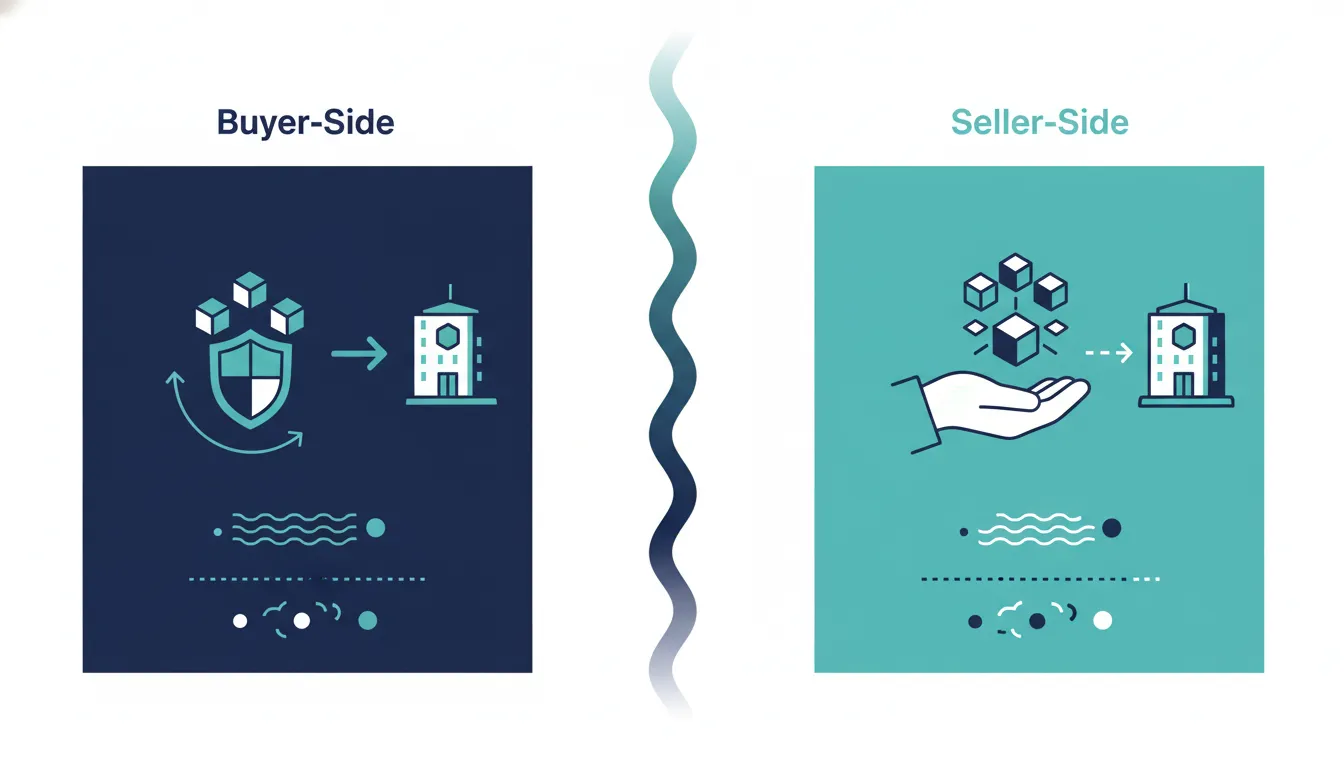
Buyer-side vs. seller-side R&W insurance
Representations and warranties insurance can protect either side of an M&A deal. The key difference is who holds the policy and makes a covered claim. Buyer-side coverage protects the buyer from loss caused by an unknown breach. Seller-side coverage protects the seller when a buyer seeks indemnity for a breach.
How each policy responds
Under a buyer-side policy, the buyer makes a claim directly against the insurer after finding a covered breach. This gives the buyer a source of recovery beyond the seller’s negotiated liability. It can also keep a post-closing dispute away from former owners who now work for the buyer.
A seller-side policy responds when the buyer brings an indemnity claim against the seller. The insurer may cover the seller’s resulting loss, subject to the policy terms. The seller remains involved in the claim, unlike the cleaner direct route offered by buyer-side coverage.
| Point of comparison | Buyer-side policy | Seller-side policy |
|---|---|---|
| Policyholder | Buyer | Seller |
| Who makes the claim | Buyer claims against insurer | Seller seeks cover after buyer’s claim |
| Primary protection | Buyer’s loss from a covered breach | Seller’s indemnity exposure |
| Seller involvement | Often limited after closing | Seller remains part of the claim |
| Common use | More common structure | Used less often |
Why buyer-side policies are more common
Buyer-side coverage supports direct recourse to an insurer rather than the target’s former owners. This structure can preserve business ties and help a seller make a cleaner exit. A Harvard Law School review of R&W insurance trends also notes that insured deals can require less seller escrow.
The approach can also strengthen a bid in a competitive sale. A buyer may accept a lower seller indemnity while keeping meaningful protection against unknown breaches. That balance explains why buyer-side policies now lead the market.
Choosing the right side of the policy
The better structure depends on the purchase agreement, due diligence, and each party’s planned risk allocation. Known issues found during diligence are generally outside the intended scope of either policy. Parties should compare exclusions, retention, limits, and claim procedures before signing.
An independent broker can place this review within a broader commercial insurance plan. This helps buyers and sellers test whether the policy matches the deal terms and expected post-closing duties.
What does R&W insurance cover and exclude?
Representations and warranties insurance can cover financial loss from an unknown breach of a seller’s statements in the purchase agreement. Covered loss may include damages and certain defense costs, subject to the policy’s terms, retention, limits, and survival periods.
The policy usually follows the deal agreement, but it does not copy every term without change. In fact, policies often incorporate the agreement’s indemnification terms and underlying representations. The final binder, schedules, and endorsements set the actual coverage.
Core coverage boundaries
A covered claim generally starts with a representation that was untrue when made. The breach must also cause a loss that meets the policy definition. Common covered areas may include financial statements, taxes, contracts, employment matters, intellectual property, and compliance with laws.
Coverage is not a guarantee that the insurer will pay every claimed loss. Definitions, exclusions, the retention, and claim notice rules can affect the result. A careful review of this specialty insurance policy should compare its wording with the signed deal agreement.
Known issues and common exclusions
R&W coverage is built mainly for unknown breaches. An issue found during diligence or disclosed before binding is generally excluded. Instead, the parties may address it through price, escrow, a seller indemnity, or separate coverage.
- Known matters: facts found in diligence, disclosure schedules, or underwriting discussions.
- Forward-looking statements: forecasts, projections, and promises about future results.
- Covenants: promises to take or avoid an action before or after closing.
- Purchase price adjustments: disputes over working capital, debt, cash, or other closing calculations.
- Deal-specific risks: named concerns such as an open tax review, pending dispute, or weak diligence area.
These categories are common, not automatic. An insurer may narrow, remove, or add exclusions after reviewing the target and diligence. Buyers should track each exclusion and decide who keeps that risk.
Policy wording controls
Small wording changes can decide whether a claim falls inside coverage. Review how the policy defines breach, loss, knowledge, damages, and the insured parties. Also check whether defense costs reduce the limit and whether any exclusion has a narrow exception.
Coverage counsel and an experienced broker can compare the draft policy against the acquisition agreement and diligence record. That review supports broader risk mitigation during M&A transactions, but no review can guarantee a claim outcome. The issued policy always controls.
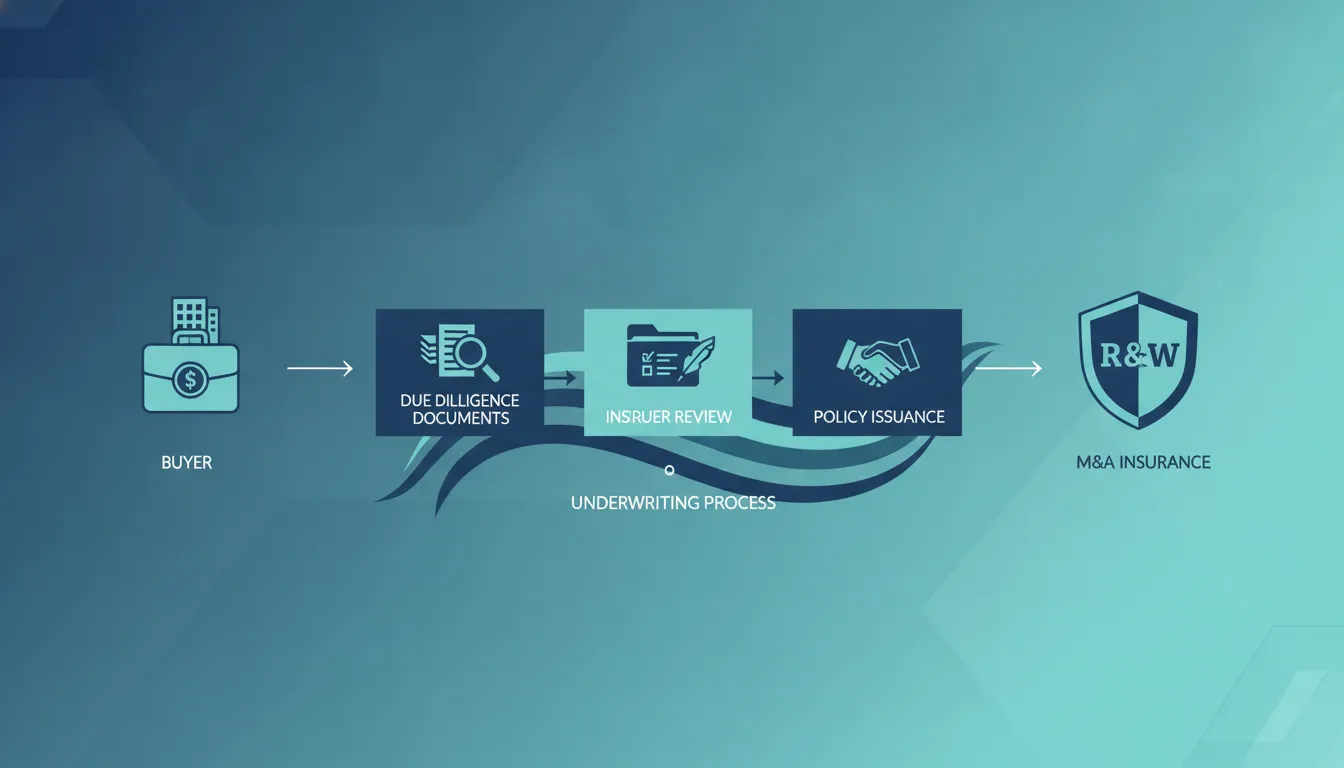
How does the R&W insurance underwriting process work?
Representations and warranties insurance underwriting turns deal diligence into a policy built around the transaction’s actual risks. Early advisor involvement keeps insurance work aligned with the purchase agreement, diligence plan, and expected closing date. Executives should expect a fast, document-led review rather than a standard business insurance application.
Early planning with the broker
Before signing an NDA with insurers, the broker helps the deal team define the proposed limit, retention, and policy structure. This early review also helps identify likely coverage concerns while there is still time to improve diligence. It gives the broker enough context to approach insurers suited to the deal.
Policy wording matters because policies largely incorporate the acquisition agreement’s indemnity terms, including its underlying representations and warranties. The team should keep the insurance advisor informed as those terms change. This helps avoid a late mismatch between the agreement and proposed coverage.
The underwriting sequence
The process usually moves through six linked stages. Each stage gives underwriters more detail about the target, the deal terms, and the work completed by advisors.
-
Prepare the submission. Share a short deal summary, draft purchase agreement, target financials, and proposed timeline with the broker. The broker then approaches suitable insurers within agreed confidentiality limits.
-
Sign NDAs and compare indications. Selected insurers sign an NDA and review initial materials. They return non-binding indications covering possible limits, retention, premium, exclusions, and required diligence.
-
Open the diligence record. After the team selects an insurer, underwriters receive the data room and advisor reports. They focus on how legal, financial, tax, and operational risks were tested and resolved.
-
Answer follow-up questions. The insurer sends questions about gaps, unusual findings, and areas that need more support. Clear answers and organized files help separate unknown risks from issues already found.
-
Complete the underwriting call. Deal leaders and advisors explain the target, diligence scope, key findings, and open items. Underwriters use the call to test the written record and confirm the team’s conclusions.
-
Negotiate and bind. The insurer issues a draft with proposed coverage, exclusions, conditions, and final pricing. Counsel and the broker negotiate wording, finish remaining requests, and arrange binding alongside the transaction.
Why quality diligence matters
R&W insurance is built around unknown breaches, so it does not replace a careful review of the target. The policy often follows the acquisition agreement’s indemnity terms. Weak diligence or unclear deal language may lead to more questions, narrower terms, or added exclusions.
Underwriters need a clear record showing what advisors reviewed, what they found, and how the deal team responded. Executives can help by assigning owners, keeping the data room current, and resolving open items before the underwriting call.
The review may also reveal risks outside the R&W policy, including D&O, cyber, or key-person concerns. A broader plan for risk mitigation during M&A transactions can keep those related gaps from being overlooked.
Premiums, retentions, limits, and policy periods
Representations and warranties insurance costs have several moving parts. Premium, underwriting fee, retention, limit, and policy period each answer a different question. Comparing only the premium can hide the larger effect on deal risk and post-closing recovery.
Premium and underwriting fee
The premium is the price paid for the policy. Published market commentary has placed R&W premiums below 3% of the coverage limit in some market conditions. That figure is a benchmark, not a quote. The same M&A insurance market analysis notes that premium and retention amounts can change as the market develops.
Actual premium terms depend on the deal, requested limit, diligence quality, industry, and policy scope. An underwriting fee is separate from the premium. It pays for the insurer’s review of the transaction and supporting diligence. Deal teams should confirm whether that fee is refundable and when it becomes due.
A broker can gather quotes and explain differences between them. Still, no responsible review should promise a set price before insurers assess the risk. Broader specialty insurance advice can also help teams compare policy wording, not just headline cost.
Retention and limit
The retention is the amount of covered loss absorbed before the insurer starts paying. It works much like a deductible. Published examples have described retentions at 1% of deal value or less. Yet the final amount can shift based on deal size, risk, and negotiation.
The limit is the most the insurer will pay, subject to the policy’s terms. Research materials note that limits are often near 10% of enterprise value. They also describe retentions commonly ranging from 1% to 3% of enterprise value. These are reference points from published R&W insurance guidance, not fixed rules.
Buyers should test whether the proposed limit matches the losses that could follow a breach. A lower premium may not be useful if the retention is too high. The same concern applies when a limit is too low for the deal’s main exposures.
Policy and survival periods
The policy period sets how long covered breaches may lead to a valid claim. It should be reviewed beside the acquisition agreement’s survival periods. General representations are often covered for one to three years. Fundamental representations, including some tax matters, may receive longer periods.
Time alone does not settle coverage. The policy will also state how and when a claim must be reported. Deal teams should map each representation to its policy period before closing. They should also check whether defense costs reduce the available limit.
When does representations and warranties insurance make sense?
Representations and warranties insurance makes sense when unknown breach risk could slow a sound deal or keep the parties tied together after closing. It can support a buyer’s bid, give a seller a cleaner exit, or protect working relationships. The right fit still depends on the deal terms, due diligence, price, and risks.
Competitive auctions and stronger bids
In a competitive auction, a buyer may use the policy to offer favorable indemnity terms without giving up meaningful protection. This can help the bid keep pace while reducing the seller’s post-closing exposure. A Harvard Law School market review identifies bid differentiation as a main buyer benefit.
The product can also fit when a buyer wants broad recourse but the seller wants to limit escrow or indemnity. It should be reviewed alongside the buyer’s wider commercial insurance program. That review helps reveal gaps between transaction coverage and the operating policies needed after closing.
Clean exits and management rollover
A clean exit matters when sellers plan to distribute proceeds soon after closing. It can also matter when founders, managers, or other sellers will keep working for the buyer. Direct claims against those people may strain the new working relationship. With a buyer-side policy, the buyer can seek covered loss from the insurer instead.
This structure does not remove the need for clear deal terms. The purchase agreement, disclosure schedules, and due diligence still shape what the insurer may cover. Buyers and sellers should agree on who pays the premium and which risks need separate treatment. They should also decide how uncovered claims will be handled.
Complex deals and poor-fit signals
Cross-border deals or transactions with complex tax, title, cyber, or regulatory risks may benefit from added review. These deals often involve several legal systems, business units, or data sources. A broker can place representations and warranties insurance within a broader specialty insurance plan. The broker can also flag risks that need separate coverage.
The product may not fit when due diligence is weak or the deal timeline prevents a full review. It may also miss the mark when known issues drive most of the concern. Known problems found during diligence are generally excluded. A separate policy, escrow, price adjustment, or direct indemnity may address those issues more clearly.
It may be a poor fit when the expected protection does not justify the premium, retention, underwriting work, and counsel fees. Before proceeding, compare the proposed policy with the deal’s likely loss paths. The best decision follows the actual risk, not the presence of insurance in other deals.
When should executives involve a risk advisor?
Executives should involve an independent risk advisor before the purchase agreement and diligence plan are final. Early input helps the deal team test whether representations and warranties insurance fits the intended risk allocation. It also leaves time to compare insurer terms without putting the closing schedule under needless pressure.
The policy often follows the indemnity terms in the acquisition agreement. This makes early coordination important because changes to representations, exclusions, and remedies can affect the proposed coverage. A Harvard Law School review of R&W insurance explains that policies largely incorporate the agreement’s indemnity terms.
Early coordination across the deal team
A risk advisor connects the executives, legal counsel, broker markets, and diligence teams. The advisor can help prepare a clear submission, seek insurer indications, and compare options on consistent terms. This process gives executives a better view of tradeoffs before choosing an insurer.
The advisor should also track how diligence findings affect coverage. Insurers usually focus on the scope and quality of the buyer’s review before negotiating the final policy. Known concerns may need another risk solution, while unknown breach risk remains the main focus of representations and warranties insurance.
Policy terms that need close review
Price is only one part of the decision. Executives should compare exclusions, retention, limits, covered representations, claim rules, and the proposed policy period. They should also ask how the policy works with other coverage and the deal’s broader risk mitigation during M&A transactions.
- Which representations receive full, limited, or no coverage?
- What diligence gaps could lead to an exclusion?
- How does each insurer define loss and handle defense costs?
- What must happen before the insurer pays a claim?
- Which terms may still change during final policy negotiation?
Selecting the right advisory approach
Executives should ask whether an advisor can reach several suitable markets and explain differences in plain language. They should also confirm who will manage insurer questions, policy comments, and claims after closing. Clear ownership reduces gaps between deal counsel, diligence providers, and the insurance market.
A useful advisor should challenge weak assumptions rather than simply present quotes. Before selecting coverage, executives can contact a risk advisor to review the deal structure, diligence plan, timing, and desired protection. That review can show where policy terms support the agreement and where another response may be needed.
Frequently Asked Questions
What is the difference between buy-side and sell-side R&W policies?
A buy-side R&W policy generally pays the buyer for covered losses caused by an unknown breach of the seller’s representations. This lets the buyer seek post-closing recovery from the insurer instead of relying only on the seller. A sell-side policy protects the seller when the buyer makes a covered breach claim. Buy-side coverage is more common, but the right structure depends on the deal’s risk allocation.
What costs are typically associated with R&W insurance?
R&W insurance costs usually include the premium, an underwriting fee, taxes, broker fees, and expenses for legal or specialist review. Premiums generally range from 2% to 4% of the policy limit, according to Perkins Coie. Actual pricing depends on the deal size, industry, due diligence quality, coverage limit, retention, and requested terms. Buyers and sellers should compare total costs, not only the premium.
What is typically excluded from R&W insurance coverage?
R&W insurance generally excludes issues that the insured knew about before the policy began. It may also exclude forward-looking statements, purchase price adjustments, certain pension liabilities, and risks that need separate coverage. Exclusions vary by policy and transaction. Because the policy is meant for unknown breaches, thorough due diligence helps define what the insurer will cover and which risks remain with the parties.
How long is the coverage period for an R&W insurance policy?
The coverage period depends on the type of representation and the negotiated policy terms. General representations often receive shorter protection, while fundamental and tax representations can last longer. Perkins Coie notes that coverage periods are generally three years for general representations and six years for fundamental and tax representations. Parties should confirm the exact survival periods, claim deadlines, and notice requirements before closing.
Ready to Protect Your M&A Deal From Hidden Risk?
Waiting until late-stage negotiations to address representations and warranties can leave key coverage questions unresolved when your team has the least flexibility to respond. Starting the review now gives your advisors more time to examine deal terms, identify concerns, and pursue insurance that fits the transaction. Early planning helps buyers and sellers align expectations before deadlines, negotiations, and closing pressure narrow the practical options available to both sides during talks.
Unanswered risk questions can slow negotiations today and create avoidable uncertainty after the deal closes. Ready to build a clearer insurance plan for your transaction? Call 786-344-9343 to schedule a risk advisory consultation and discuss your priorities with an insurance professional.
Comments
Comments are closed.