
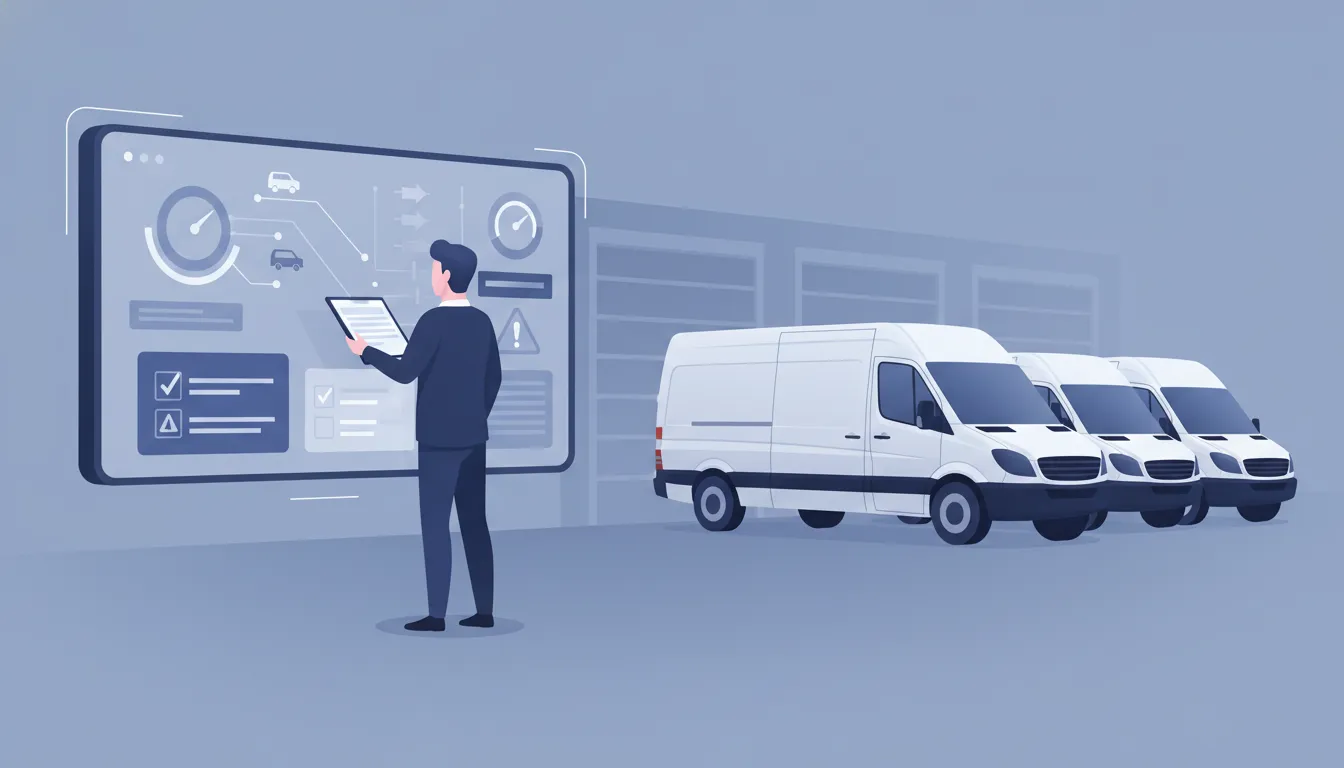
Fleet Safety Telematics Commercial Auto Insurance
Vehicles keep many businesses moving, but every mile also creates risk. A strong approach to fleet safety telematics commercial auto insurance brings driver policies, vehicle data, incident records, and coverage conversations together. The objective is not to chase a promised discount. It is to understand the operation clearly, identify preventable hazards, and show how the business manages them over time.
Schedule a commercial fleet coverage review with Insurance Underwriters.
Telematics can reveal patterns that are difficult to see from crash reports alone. A complete program turns those patterns into coaching, maintenance decisions, and documented follow-up. This guide explains how to build that program and prepare for a productive commercial coverage review.
How fleet safety telematics commercial auto insurance reviews work
Fleet safety telematics supports a commercial auto insurance review by giving decision-makers current facts about driving behavior, vehicle use, maintenance, and incident response. Insurance Underwriters can help a business organize these facts into focused questions about coverage and risk management without promising a particular underwriting result.
Commercial auto risk is shaped by more than the number of vehicles a business owns. Who drives, where vehicles travel, how often they are used, what they carry, and how the company responds to unsafe behavior all matter. Telematics can help a business describe those conditions with current operational information rather than assumptions.
Common systems record location, mileage, speed, acceleration, braking, idle time, and other vehicle events. Some systems also connect with cameras, maintenance records, or driver identification tools. The most useful information depends on the fleet’s work and the risks management is trying to address.
Use data to guide action, not simply collect it
A dashboard alone is not a safety program. Fleet leaders need a defined process for reviewing alerts, confirming context, coaching drivers, and tracking whether behavior improves. For example, a harsh-braking alert may reflect unsafe following distance, but it may also reflect a driver avoiding a sudden hazard. Managers should look for patterns and discuss events fairly before choosing corrective action.
During a coverage review, telematics and program records can help an insurance advisor understand how the business operates. They can also surface changes that deserve discussion, such as new routes, increased mileage, different vehicle types, or a growing driver roster. These conversations do not guarantee a specific underwriting result or premium change. Coverage availability, pricing, and underwriting decisions vary by carrier and account.
Core components of an effective fleet safety program
Technology works best inside a consistent safety framework. Every organization will tailor its program, but the following components create a practical foundation.
Written expectations and driver qualification
A written fleet policy should explain who may drive, permitted vehicle use, seat-belt requirements, distracted-driving rules, incident reporting, and consequences for repeated violations. It should apply consistently to employees who regularly operate vehicles and anyone who drives only occasionally.
Driver qualification procedures may include reviewing licenses, experience, job requirements, and motor vehicle records when appropriate. Businesses should follow applicable employment, privacy, and record-retention laws when collecting and using driver information.
Training, coaching, and accountability
Orientation should explain both safe-driving expectations and how telematics information will be used. Ongoing coaching is more effective when it focuses on specific behavior, gives the driver a chance to add context, and defines a clear next step. Managers should document coaching and recognize sustained improvement, not only violations.
Preventive maintenance and vehicle readiness
Drivers need a simple way to report defects, and managers need a process for resolving them. Inspections, service schedules, tire care, and repair records support safer operations. Maintenance data can also help explain whether a vehicle event may have involved a mechanical issue.
| Program element | Practical evidence | Review question |
|---|---|---|
| Driver policy | Signed acknowledgments and revision history | Are rules current and consistently applied? |
| Training and coaching | Training logs, coaching notes, and follow-up dates | Are repeated behaviors improving? |
| Vehicle maintenance | Inspection forms and service records | Are reported defects resolved promptly? |
| Incident response | Incident files and corrective-action records | Do investigations produce useful changes? |
Fleet risks can affect more than auto coverage. Leadership may also want to review how vehicle incidents connect with workers compensation coverage and broader business liability insurance.
Which telematics data should a business review?
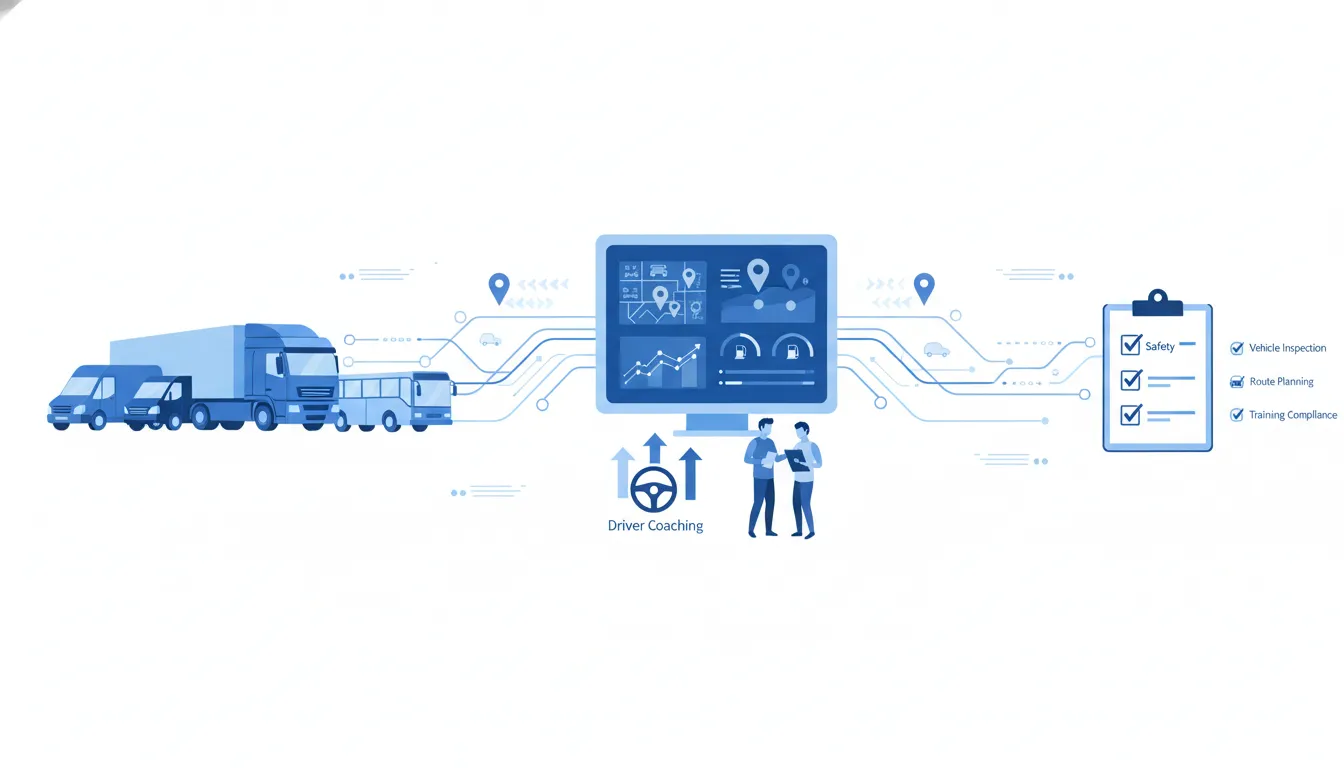
A business should review a focused set of telematics measures tied to specific safety goals, rather than every alert a platform can produce. Insurance Underwriters recommends that leaders establish a baseline, assign an owner for each measure, and document how the team responds to patterns.
The right metrics connect directly to a safety objective. Tracking every available alert can overwhelm managers and drivers. Start with a focused set of indicators, establish a baseline, and refine the program after the team understands the data.
Driver-behavior trends
Speeding, harsh braking, rapid acceleration, sharp cornering, seat-belt events, and possible distraction indicators can support coaching. Review frequency, severity, location, and surrounding conditions. A recurring pattern carries more meaning than a single unexplained event.
Exposure and route information
Mileage, driving time, time of day, vehicle utilization, and route patterns provide context for risk. An expanding service area or more night driving may change the operation even when the vehicle count stays the same. These are useful facts to bring to a commercial coverage discussion.
Maintenance and vehicle health
Diagnostic codes, mileage-based service reminders, and inspection reports can help fleet teams plan maintenance. Managers should decide who receives alerts, how quickly the team responds, and where the resolution is documented.
Before deploying monitoring technology, define access, retention, and acceptable use. Tell drivers what is collected, why it is collected, who reviews it, and how it affects coaching. Seek appropriate legal guidance for privacy and employment requirements that apply to the business. A related cyber liability insurance guide can help leaders frame broader questions about protecting business data.
Build an incident documentation process that supports reviews
A consistent incident process helps the business respond promptly and learn from what happened. It also creates more reliable records for claims and future risk-management reviews.
- Protect people first. Instruct drivers to call emergency services when needed, move to a safe location when appropriate, and follow company procedures.
- Report the incident promptly. Give drivers a clear reporting contact and backup method. Define which events must be reported, including minor impacts and near misses if the program tracks them.
- Capture factual information. Collect the date, time, location, people involved, vehicle details, photos, witness information, and a factual description. Avoid speculation or admissions.
- Preserve relevant records. Save available telematics events, camera footage, inspection records, and dispatch information according to company policy and applicable requirements.
- Investigate contributing factors. Consider behavior, route, scheduling, weather, vehicle condition, training, and policy. Focus on what the business can improve.
- Assign corrective action. Document coaching, training, maintenance, or process changes and name the person responsible for follow-up.
- Review trends. Periodically compare incidents and near misses to identify repeated locations, behaviors, vehicles, or operating conditions.
Keep records consistent and accessible
A standard incident form reduces missing information. Maintain files securely and use a consistent naming and retention process. When an advisor asks how the business handles incidents, managers can then explain the process and provide a clear operational summary without searching through disconnected emails. Drivers should also know how to reach the company’s claims resources after a covered event.
Turn a telematics alert into measurable follow-up
A strong response process helps managers separate a one-time event from a repeated pattern. Consider a delivery fleet that sees several harsh-braking alerts on the same route. A manager should not assume the driver caused each event. The first step is to compare the alerts with time, location, traffic, route schedules, and any available driver comments.
If the pattern reflects a busy intersection, management might adjust the route or delivery window. If following distance is the concern, the manager can provide targeted coaching, record the agreed action, and review that driver’s results after a set period. If a vehicle issue may have contributed, maintenance should inspect and document the repair. Each response creates a clear record of what the business learned and changed.
This process also makes monthly reviews more useful. Rather than presenting a list of raw alerts, the fleet leader can summarize repeated behaviors, actions taken, open issues, and results. That summary supports leadership decisions and gives Insurance Underwriters better context for a broader risk and coverage conversation.
Explore commercial insurance options and prepare for a focused risk review.
Questions to bring to a commercial coverage review
A coverage review is most useful when the business can describe both current operations and recent changes. Before meeting with an advisor, gather an updated vehicle schedule, driver roster, general telematics summary, safety policies, incident history, and plans for the coming year.
Questions about the operation
- Do current vehicle classifications and stated uses match actual operations?
- Have routes, service areas, annual mileage, or after-hours use changed?
- Are employees using personal vehicles for business tasks?
- Are vehicles rented, borrowed, or temporarily added during busy periods?
- Has the company added drivers, locations, equipment, or new types of cargo?
Questions about the safety program
- Which telematics trends are most relevant to the fleet’s risk profile?
- How should the business summarize coaching, maintenance, and incident follow-up?
- Are there loss-control resources available for the operation?
- What information should the business update between formal reviews?
- Which coverage terms, limits, deductibles, and exclusions deserve closer discussion?
An independent advisor can help connect operational facts with a broader commercial insurance review. The goal is to help decision-makers understand available options and identify questions that require attention, not to promise a particular carrier response. Businesses can also use the business interruption insurance guide to consider how a major vehicle loss could affect operations.
A practical implementation checklist for fleet leaders
Fleet safety improves through repeatable work. A phased rollout makes it easier to build trust, learn from the data, and maintain the program.
1. Define the purpose and baseline
Choose two or three initial goals, such as reducing repeated speeding events, improving seat-belt use, or documenting incident follow-up. Record the current baseline so the team can evaluate progress fairly.
2. Align policies with actual operations
Review driver eligibility, vehicle use, distracted driving, incident reporting, maintenance, and disciplinary procedures. Remove rules the business cannot apply consistently and address gaps revealed by current operations.
3. Configure focused alerts
Select alerts that match the goals. Set thresholds carefully and test them with a small group before a full rollout. Too many low-value alerts can cause managers to ignore the information that matters.
4. Communicate with drivers
Explain the program before activation. Drivers should understand the safety purpose, data collected, review process, and opportunity to provide context. Train managers to coach consistently and respectfully.
5. Establish a review cadence
Assign responsibility for weekly alert review, monthly trend reporting, incident follow-up, and periodic policy updates. Keep records of decisions and results. Adjust goals as risks and operations change.
6. Prepare an advisor-ready summary
Summarize the fleet, program, recent trends, actions taken, and upcoming operational changes. Discuss the summary during regular coverage reviews. Do not assume that sending raw data automatically improves coverage terms or pricing.
Frequently asked questions
Does telematics automatically lower commercial auto insurance premiums?
No. Telematics does not guarantee lower premiums or a particular underwriting decision. Results depend on the carrier, account, coverage, loss experience, operating details, and other factors. Its immediate value is helping a business understand behavior, support coaching, and document risk-management activity.
What should a small fleet track first?
Start with a limited set of measures tied to clear goals. Speeding trends, harsh events, mileage, seat-belt events when available, incident reporting, and maintenance completion can provide a useful foundation. Add metrics only when the team has a process for acting on them.
How often should fleet safety data be reviewed?
Urgent alerts may require prompt attention, while broader trends can be reviewed weekly or monthly. Leadership should also conduct periodic program reviews to evaluate results, update policies, and account for operational changes.
Can telematics replace driver training?
No. Telematics identifies events and trends, but managers still need to understand context, coach drivers, provide training, and apply policies consistently. Technology supports the safety program; it does not replace leadership.
What should be documented after driver coaching?
Record the event or trend discussed, the driver’s context, agreed actions, any assigned training, and a follow-up date. Keep documentation factual, consistent, and secure.
Schedule a commercial coverage review
A strong fleet safety program gives your business a clearer view of operational risk. It also creates better questions for your insurance advisor. Insurance Underwriters can help you review current operations, discuss coverage considerations, and identify areas that deserve follow-up.
Schedule an appointment to begin a commercial coverage review.
Comments
Comments are closed.