
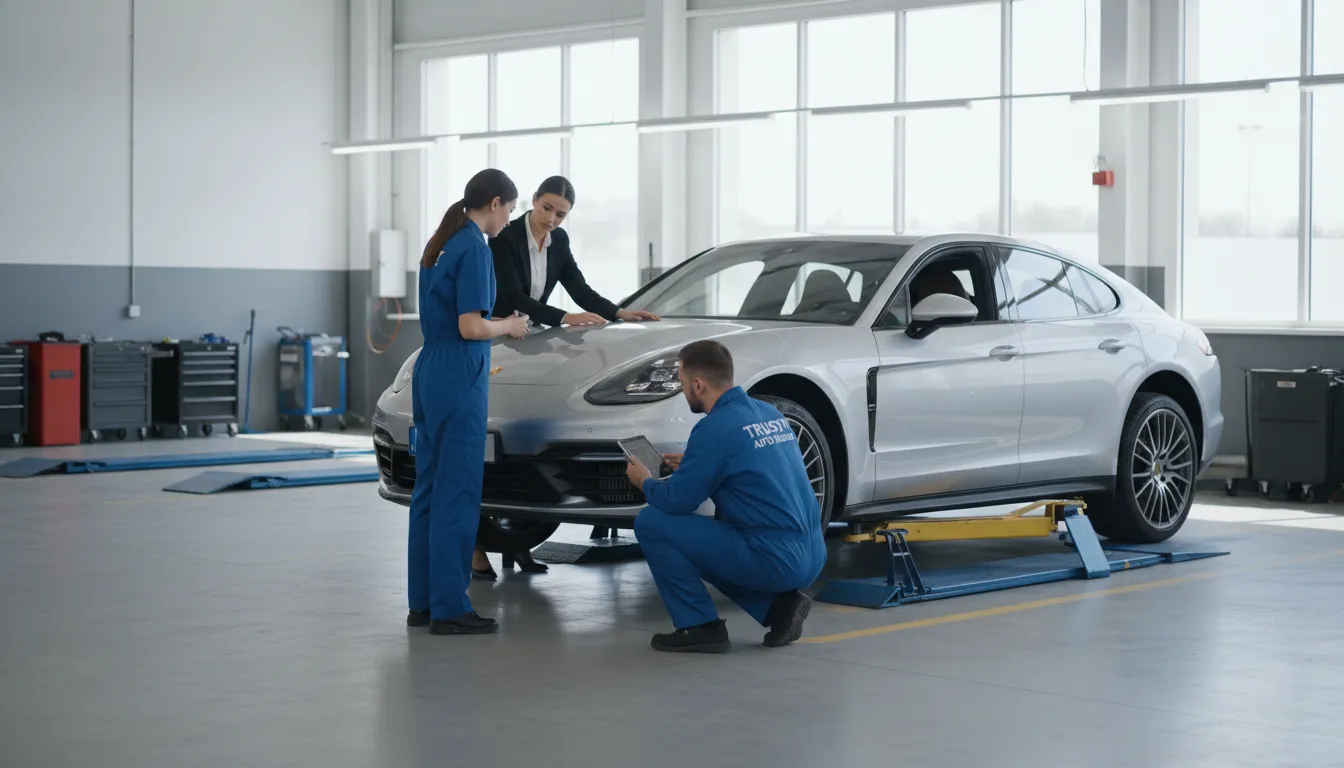
Garage Keepers Insurance: Coverage and Costs
A customer’s car can become your repair shop’s largest uninsured risk overnight. One fire, theft, collision, or severe storm can leave your business facing a costly claim.
Garage keepers insurance protects customers’ vehicles while they are in your business’s care, custody, or control for service, repair, parking, or storage. Depending on the policy and selected causes of loss, it may respond to damage from collision, fire, theft, vandalism, or severe weather. Coverage is commonly written as legal liability, direct primary, or direct excess. Each form changes when the policy pays and whether your business must be legally liable. It does not usually cover your building, tools, business-owned vehicles, faulty workmanship itself, or customer injuries. Limits, deductibles, location, operations, vehicle values, claims history, and coverage form affect the premium. An accurate quote requires a clear inventory of the vehicles and risks your business accepts.
Knowing you need protection is only the start; the key is choosing coverage that matches the vehicles you hold and the losses you could face. The first question is, “What does garage keepers insurance cover?” From there, you can compare forms, limits, costs, requirements, and quote details. Here’s how:
What does garage keepers insurance cover?
Garage keepers insurance helps protect customer-owned vehicles while they are in your business’s care, custody, or control. That distinction matters. A repair shop may own its service van, but it does not own the sedan left overnight for a brake repair. Garage keepers coverage is designed for the sedan and other customer vehicles temporarily entrusted to the business.
Common covered causes of loss
Depending on the policy form and selected options, coverage may respond when a customer’s vehicle is damaged by collision, fire, theft, vandalism, or certain weather events. For example, a mechanic could strike a lift while moving a customer’s truck, or thieves could enter a secured lot and steal several vehicles. The exact causes of loss, deductibles, and exclusions depend on the policy, so the declarations and endorsements deserve careful review.
What is usually not covered?
Garage keepers coverage is not a maintenance warranty. It generally does not pay for faulty parts, defective workmanship, ordinary wear, or the cost to redo an unsuccessful repair. It may also exclude property left inside a vehicle, illegal acts, and certain catastrophic events unless separately endorsed. If an employee installs a part incorrectly and the mistake damages the vehicle, coverage can depend on both the cause of damage and the policy wording.
Limits commonly include a maximum per vehicle and a maximum for all covered vehicles in one event. A business should estimate the highest value of any single customer vehicle and the highest total value on site at peak times. Those values can be very different for a neighborhood repair shop, a luxury dealership, and a large parking operation.
A knowledgeable agent can help match limits and deductibles to those exposures. Review the policy whenever the business adds storage space, accepts more expensive vehicles, or changes how long vehicles remain on site.
Who needs garage keepers insurance?
A business should consider garage keepers insurance whenever it regularly takes possession of customer vehicles. The practical test is simple: could a customer’s vehicle be damaged while your team is parking, moving, repairing, testing, washing, towing, or storing it? If the answer is yes, there is an exposure that general liability alone may not address.
Auto repair and body shops
Repair facilities often keep multiple customer vehicles overnight and move them between lots, bays, and test-drive routes. Body shops may hold vehicles for longer periods while waiting on parts. Both operations need limits that reflect the maximum number and value of vehicles present, not just an average day.
Dealerships, towing companies, and detailers
Dealership service departments take custody of customer vehicles even though dealer inventory requires different protection. Towing operators may be responsible for vehicles from pickup through storage and release. Detailers, mobile service providers, tire shops, and glass installers can also have care, custody, or control exposures while performing work.
Valets and parking operations
Valet services and parking garages handle vehicles without repairing them. A collision during parking, a theft from a controlled lot, or damage during retrieval can still lead to an expensive claim. Operators should review contracts because a venue or property owner may require specific limits and proof of coverage.
Even a business that handles only a few vehicles can face a severe loss if one is high value. Conversely, a business with moderately priced vehicles can face a large total loss if fire, hail, theft, or vandalism affects many vehicles at once. Exposure records should therefore track both maximum per-vehicle value and maximum total value.
Garage keepers is usually one part of a broader insurance program. Businesses should also review commercial insurance options for premises liability, owned vehicles, property, employees, and other risks.
Garage keepers legal liability vs. direct primary coverage
The coverage form determines when the policy can respond. Legal liability coverage generally applies when the business is legally responsible for damage to a customer’s vehicle. Direct primary coverage is broader because it may respond to covered damage even when the business is not legally liable. Direct excess coverage can apply above the customer’s own collectible insurance, subject to the policy terms.
| Coverage form | When it generally responds | Practical consideration |
|---|---|---|
| Legal liability | When the business is legally responsible for covered vehicle damage | Often narrower; a liability investigation may be required |
| Direct primary | For covered damage regardless of legal liability | Broader customer protection, usually at a higher premium |
| Direct excess | After the customer’s collectible insurance responds | Can leave the customer dealing with their own carrier first |
How legal liability works
Suppose an employee backs a customer’s car into a post. The business may be negligent, so legal liability coverage could respond to the covered damage. Now suppose a severe hailstorm damages the same car while it is parked outside and the business took reasonable precautions. If the business is not legally liable, a legal liability form may not respond.
Why businesses choose direct primary
Direct primary coverage can create a smoother customer experience because a covered claim may be handled without first proving the business caused the damage. It can be attractive to businesses that safeguard high-value vehicles or want to protect customer relationships after an unexpected event. The broader trigger does not remove exclusions, deductibles, or limits.
No form is automatically right for every business. Compare the additional premium with the potential effect of an uncovered customer loss. Review contractual requirements, customer expectations, vehicle values, security controls, and the company’s willingness to retain risk. Ask the agent to explain how each option would treat realistic claim scenarios before selecting a form.
How is garage keepers different from garage liability?
Garage keepers insurance protects customer vehicles left in a business’s care, custody, or control. Garage liability protects the business when its operations cause injury or property damage to someone else. The key question is simple: whose vehicle or property was damaged?
Customer vehicles versus business operations
Suppose a mechanic backs a customer’s sedan into a shop pillar during a test drive. A garage keepers policy may respond because the shop had custody of that customer’s vehicle. Coverage still depends on the policy terms, limits, exclusions, and chosen coverage basis.
Now suppose a customer slips on an oil spill in the waiting area. That claim concerns the business’s operations, not damage to a vehicle in its care. Garage liability may respond to the injury claim, subject to the policy terms.
The distinction also matters when faulty work leads to a crash after the customer leaves. That claim may involve garage liability, while damage that happens during storage may involve garage keepers. Since gaps can be costly, the U.S. Small Business Administration advises businesses to assess their risks before choosing coverage.
Garage keepers versus commercial auto
Commercial auto insurance usually covers vehicles the business owns, leases, hires, or uses for work. Garage keepers insurance coverage focuses on customer vehicles entrusted to the business. These policies can overlap in one event, but they insure different interests.
For example, a shop employee may drive a company tow truck to collect a disabled customer’s car. If the tow truck hits another vehicle, the shop’s commercial auto policy may apply. If the customer’s car is damaged while being loaded, garage keepers may apply instead.
A business that owns service vans or tow trucks should review its commercial auto insurance separately from garage keepers coverage. One does not automatically replace the other. Policy wording and the facts of the loss decide which coverage responds.
How claim facts guide coverage
Start by recording who owned each vehicle, who had custody, and what work was underway. Also note where the loss happened and whether an employee was driving. These facts help the insurer sort the claim under the right policy.
- Customer car damaged in a shop fire: Garage keepers may respond.
- Visitor injured by shop operations: Garage liability may respond.
- Company van causes a road crash: Commercial auto may respond.
- Customer car damaged during towing: Garage keepers or another applicable policy may respond, based on the facts.
Terms such as direct primary coverage and legal liability coverage can also change how a garage keepers claim works. A careful policy review should match the business’s services, vehicle values, storage practices, and daily driving duties.
How much does garage keepers insurance cost?
Garage keepers insurance does not have one standard price. Each insurer rates the risk based on the operation, vehicles in its care, coverage choices, and claim history. A current quote is the only reliable way to find the cost for a specific business.
Factors that shape the premium
Insurers look at the type of work performed and the value of customer vehicles kept on site. A repair shop handling luxury cars may present a different exposure than a small detailing business. Location, security, storage practices, annual revenue, and past losses may also affect the price.
Coverage needs can differ by industry, location, and business structure. The U.S. Small Business Administration explains these broader business insurance considerations. For garage keepers coverage, insurers also review how many customer vehicles may be in the business’s care at one time.
Accurate exposure details help an agent compare suitable options. An estimate that leaves out overnight storage or peak vehicle counts may produce a quote that does not match the real risk. Review the broader role of garage keepers insurance costs within the business’s insurance plan before choosing limits.
Per-vehicle and per-occurrence limits
A per-vehicle limit is the most the policy can pay for damage to one covered customer vehicle, subject to the policy terms. This limit should reflect the highest-value vehicle the business may hold. If the limit is too low, a large loss could leave a gap.
A per-occurrence limit applies to all covered customer vehicles damaged in one event. This figure matters when several vehicles share a lot, garage, or storage area. A fire, theft event, or severe storm could affect more than one vehicle at the same time.
The two limits should work together. A high per-vehicle limit may not be enough when one event damages several cars. Businesses should estimate the highest single vehicle value. They should also estimate the highest total value present during busy periods.
Preparing for an accurate quote
Before requesting a quote, gather records that show the actual exposure. Clear details help the insurer rate the operation and help the business compare proposals on the same basis. Useful information includes:
- The business address and a clear description of all services performed.
- The usual and peak number of customer vehicles held on site.
- The highest expected value of one vehicle and all vehicles combined.
- Whether vehicles stay indoors, outdoors, overnight, or at another location.
- Security controls, claim history, current limits, and requested deductibles.
The deductible is the amount the insured pays toward a covered loss before policy payment applies, based on the contract. A higher deductible may change the premium, but it also raises the business’s share after a claim. Choose an amount the business can pay without straining cash flow.
Ask the agent whether a deductible applies per vehicle or per occurrence. That difference can change the out-of-pocket cost when one event damages several vehicles. Compare limits, deductibles, coverage terms, and exclusions alongside price. Then request a garage keepers insurance quote based on current exposure data.
How to get the right garage keepers insurance quote
An accurate quote starts with a clear picture of the vehicles in your care and the controls used to protect them. Underestimating exposure may leave a dangerous limit gap. Overstating it can make comparison difficult. Prepare consistent information for every carrier.
- Inventory peak vehicle exposure. Estimate the highest value of one customer vehicle and the highest total value of all customer vehicles at any one time. Include overnight and seasonal peaks.
- Document operations. Describe every service involving customer vehicles, including repair, towing, test driving, parking, storage, detailing, and pickup or delivery.
- Explain security controls. Provide details about fencing, lighting, cameras, alarms, key storage, fire protection, employee screening, and after-hours access.
- Choose forms, limits, and deductibles. Compare legal liability, direct primary, and direct excess options. Check both per-vehicle and per-occurrence limits.
- Compare policy terms, not only premium. Review causes of loss, exclusions, valuation provisions, deductibles, and endorsements before making a decision.
Information an underwriter may request
Be ready to provide annual revenue, years in business, loss history, employee and driver information, premises details, and the number and types of vehicles handled. Towing operators may need to describe transport distances and storage lots. Valet services may need contracts and details about events or locations served.
Ask how deductibles apply when one event damages several vehicles. Also ask whether limits are adequate for a total-loss scenario and whether customer property inside vehicles is excluded. These details can matter more than a small premium difference.
Insurance Underwriters can help review the exposure and compare coverage options within a broader commercial insurance program. To start, use the business liability quote form and provide as much operational detail as possible.
How to reduce garage keepers claims and premiums
Strong risk controls cannot guarantee a lower premium, but they can reduce losses and give underwriters a clearer view of the operation. The best program combines physical security, documented procedures, and consistent employee training.
Control keys and vehicle movement
Keep keys in a secured, access-controlled cabinet rather than inside vehicles or near an exterior door. Maintain a log showing who moved each vehicle and why. Allow only approved drivers to conduct test drives, and establish written rules for routes, passengers, speed, and personal use.
Document vehicle condition
Use a signed intake process with time-stamped photos of all sides of the vehicle and any existing damage. Record mileage, fuel level, valuables disclosed by the customer, and the work authorized. Good records can prevent misunderstandings and help resolve claims efficiently.
Secure the premises
Well-maintained fencing, gates, lighting, cameras, alarms, and fire protection can deter theft and limit damage. Inspect these systems regularly and retain maintenance records. Do not assume a camera alone is enough; footage must be clear, properly aimed, and retained long enough to support an investigation.
Prepare for severe weather and incidents
Create a written plan for hail, flooding, hurricanes, fire, theft, and power outages. Identify where vehicles can be moved safely and who has authority to act. After an incident, protect vehicles from further damage, notify the carrier promptly, preserve evidence, and avoid promising coverage before the claim is reviewed.
Review loss trends at least annually. Repeated backing accidents may call for spotters or a redesigned traffic flow. Recurring theft attempts may justify stronger barriers or access controls. Share meaningful improvements with the insurance agent before renewal so the submission reflects the current operation.
Frequently asked questions about garage keepers insurance
Is garage keepers insurance required by law?
Requirements vary by state, contract, and operation. Even when a law does not specifically require it, a landlord, venue, lender, or business partner may require proof of coverage. An agent can help review the requirements that apply to your business.
Does general liability cover customer vehicles?
General liability policies commonly limit or exclude damage to property in the insured’s care, custody, or control. Garage keepers coverage is designed specifically for customer vehicles entrusted to an eligible business.
Does garage keepers cover tools or property inside a vehicle?
Not necessarily. Personal property, tools, and cargo inside a customer vehicle may be excluded or subject to separate limits. Review the policy wording and ask about other coverage if customers regularly leave valuable property in vehicles.
How are garage keepers limits selected?
Businesses should consider the highest value of one customer vehicle and the highest combined value of all customer vehicles at one time. Seasonal peaks, overnight storage, and catastrophic events should be included in the estimate.
Can garage keepers cover faulty workmanship?
Garage keepers coverage generally is not a warranty for defective work or parts. However, resulting damage may be treated differently depending on the facts and policy wording. Ask the agent to explain relevant exclusions and endorsements.
Ready to protect every vehicle in your care?
Waiting to review your garage keepers insurance can leave costly gaps unnoticed until a customer vehicle is damaged. Starting now gives you time to compare coverage forms, limits, deductibles, and exclusions before your next renewal or urgent quote request. A focused review also helps you choose protection that fits your operations, customer vehicles, and budget without making a rushed decision.
Ready to protect the vehicles trusted to your business? Request a garage keepers insurance quote to start a clear coverage conversation today. Share details about your services, vehicle exposure, and current coverage so an insurance professional can help identify suitable next steps. The sooner you request a quote, the sooner you can review your options and address questions before coverage becomes urgent.
Comments
Comments are closed.