
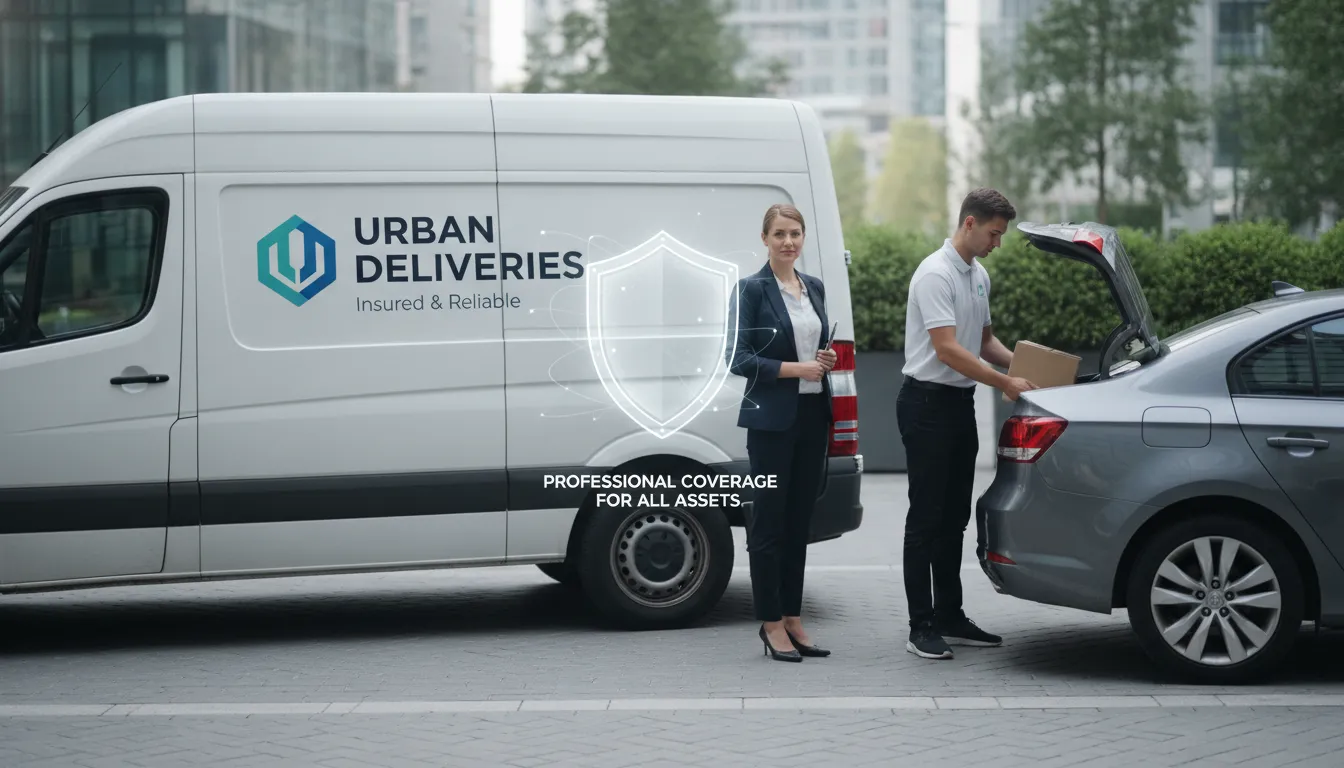
HNOA Commercial Auto Coverage: What Your Fleet Needs
Business owners face massive liability gaps when team members drive their own cars for work errands. A single accident can trigger lawsuits that threaten your entire operation. You need coverage that bridges this gap and protects what you have built.
HNOA commercial auto coverage is a critical layer of liability protection for businesses. It protects you when employees use personal cars, rentals, or rideshare apps for work. Many owners assume their general liability policy or an employee’s personal insurance will cover a crash. However, personal policies often exclude business use, leaving the company exposed to costly lawsuits. This coverage fills the gap by paying for third-party injury and property damage when a vehicle you do not own crashes during work. The National Safety Council says the average cost of a deadly crash is $1.7 million. This protection helps small business owners avoid the financial ruin of routine work errands.
Ready to protect your fleet from unexpected liability? Request a free quote from Insurance Underwriters today and make sure every driver on your team is covered.
What Is HNOA commercial auto coverage?
Hired and non-owned auto coverage is a type of commercial insurance that protects your business when you use vehicles you do not own. It covers third-party liability if a crash occurs while a car is used for business purposes. Many small firms rely on personal cars or rentals for daily tasks, and without this protection those shops could face staggering costs from lawsuits or property damage claims.
HNOA commercial auto coverage protects businesses when employees drive personal cars, rentals, or borrowed vehicles for work tasks. It fills the gap that personal auto policies leave open, covering liability costs when an accident happens during business hours in a vehicle the company does not own.
The Two Parts of HNOA Coverage
HNOA insurance has two distinct parts. The “hired” portion covers vehicles your business rents, leases, or hires for company use. If you rent a truck for a short job, this part of the policy helps pay for third-party liability. It does not cover damage to the rental truck itself, but it protects your cash flow if your driver hits someone else.
The “non-owned” part covers vehicles owned by your employees. This is essential when staff members use their own cars to run errands, visit clients, or pick up supplies. As noted by the University of Idaho, this coverage pays for harm if a worker is at fault in a crash. It fills a critical gap because these vehicles are not listed on your commercial policy.
Why HNOA Matters for Small Businesses
Many business owners assume an employee’s personal insurance will cover work-related trips. But most personal policies contain exclusions for business use. If a worker causes a crash while on the job, their insurer may deny the claim entirely. This leaves your company on the hook for the full cost of the accident.
General liability policies typically exclude motor vehicle incidents as well. You could have robust general liability coverage, yet find yourself unprotected after a work-related car accident. HNOA fills that void. Standard commercial auto plans only cover vehicles your business owns. So this endorsement ensures every trip your team takes is covered regardless of whose name is on the title. It is a vital component of fleet insurance for small business owners.
Hired Auto vs. Non-Owned Auto: What Is the Difference?
Many small business owners use the terms hired and non-owned auto coverage interchangeably. While they typically come as a package, each protects your business in a distinct way. One covers vehicles you pay to use temporarily, while the other covers vehicles your staff already own. Understanding the difference helps you select the right protection for your specific fleet insurance for small business needs.

What Is Hired Auto Coverage?
Hired auto insurance protects your business when you rent or lease a vehicle for work. If you rent a truck to move equipment or lease a van for a week-long project, this coverage applies. It pays for damages to others if your rented vehicle causes an accident. According to the University of Idaho, this liability protection is vital when your company uses a vehicle it does not own for business tasks.
Consider a contractor who needs a cargo van for a single day on a job site. If they rent that van and cause an accident, their hired auto policy handles the claim. This is a key component of HNOA commercial auto coverage for any business that uses rentals to get the job done.
What Is Non-Owned Auto Coverage?
Non-owned auto coverage applies when your employees use their own cars for business purposes. This happens constantly when a staff member drives to the bank, visits a client, or picks up lunch for the office. Most personal auto policies exclude business use, leaving your company exposed. If an employee causes a crash during a work errand, your business could be sued for the damages.
This coverage steps in when the employee’s own insurance is insufficient or denies the claim. Motor vehicle crashes remain a leading cause of work-related deaths according to the CDC. This makes the protection essential for any risk management plan. A quick trip to the post office should not spiral into a catastrophic financial loss for your company.
Hired vs. Non-Owned: Side-by-Side Comparison
| Feature | Hired Auto | Non-Owned Auto |
|---|---|---|
| Vehicle Owner | Rental company or third party | Employee |
| How It Is Used | Rented, leased, or hired | Personal vehicle used for work errands |
| Common Example | Renting a van for equipment transport | Employee driving to a client meeting |
| Primary Purpose | Cover rented vehicle liability | Cover employee vehicle use on the job |
| Who Is Protected | The business entity | The business entity |
Why Your Business Fleet Needs HNOA commercial auto coverage
Many small business owners believe their general liability policy covers every accident on the job. This is a common misconception that can lead to severe financial exposure. Most standard policies do not cover motor vehicle accidents in cars your company does not own. When an employee uses their personal truck for a client visit or supply run, your primary policy likely leaves you unprotected. This gap can expose your company to lawsuits and expensive legal fees.
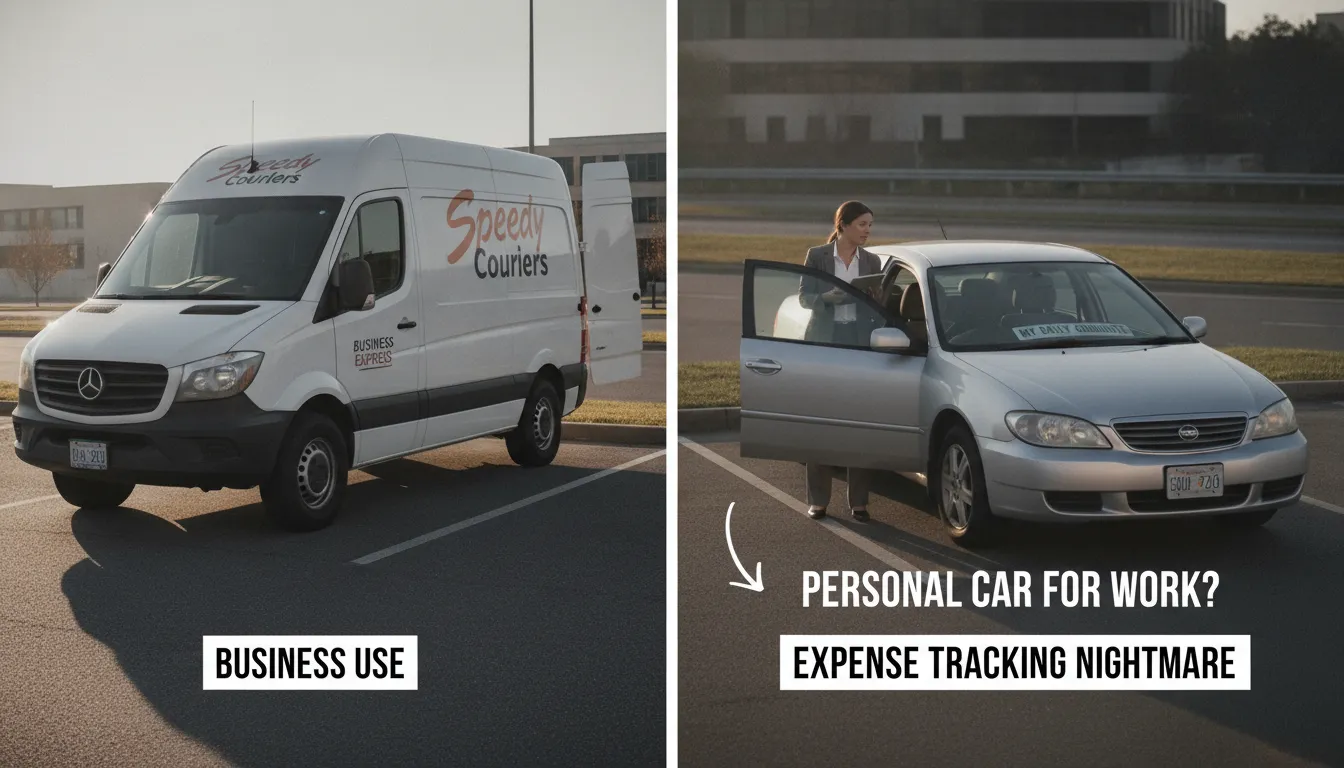
HNOA commercial auto coverage fills the dangerous gap between general liability, personal auto policies, and commercial auto insurance. It ensures your business is protected when employees drive their own cars, rentals. Or borrowed vehicles for work, covering third-party liability that personal policies and general liability plans typically exclude.
Closing the General Liability Gap
Hired and non-owned auto coverage directly addresses this vulnerability. It protects your business when workers use their personal vehicles, vans, or rental cars for work tasks. Without it, your company is exposed to costly lawsuits after a road accident. Most personal auto policies explicitly exclude business use, meaning an employee’s own insurer may refuse to pay the claim. Your firm would then bear the full cost of medical bills and property damage out of operating capital.
The risk of a denied claim is substantial because personal policies are designed for personal use. When a vehicle is used to generate income, the risk profile changes fundamentally. Insurers expect businesses to carry separate coverage for work-related trips. This applies to food delivery, client visits, supply runs, and basic errands alike. By adding commercial auto liability through an HNOA endorsement, you protect your assets regardless of whose vehicle is on the road.
Small businesses often rely on employees using personal vehicles to avoid fleet costs. While this saves money upfront, it creates substantial uninsured risk. A single accident could cost more than the value of your entire company. HNOA coverage is an affordable way to ensure a routine trip does not become a business-ending disaster.
Higher Risks for Work Vehicles
Vehicles used for business face significantly higher accident rates than personal vehicles. Drivers on the clock operate under time pressure, in unfamiliar areas, or while distracted by work tasks. The NAIC reports that business vehicles are 3.5 times more likely to be involved in a crash than personal vehicles. This elevated risk applies to every small fleet, from local delivery vans to contractor service trucks.
The financial toll of these crashes is severe. The National Safety Council estimates that the average cost of a fatal crash reaches approximately $1.7 million. These events remain the leading cause of work-related deaths in the United States according to CDC data. Carrying appropriate fleet insurance for small business operations ensures you have the resources to handle substantial claims without jeopardizing your company’s future.
Real-World Examples of HNOA Claims
Hired and non-owned auto claims typically arise during ordinary work activities. Even careful teams face accidents when least expected. Recognizing these scenarios helps you understand exactly how this coverage protects your assets.
HNOA claims commonly involve employees running errands in personal cars, renting vehicles for business travel, or using rideshare services for work meetings. In each case, personal insurance may deny the claim, making HNOA coverage the essential backstop that keeps your business financially protected.
- Food delivery in a personal car: An employee uses their sedan to deliver lunch for a catering client and hits a cyclist while turning. The employee’s personal policy covers its limit, then HNOA steps in for the cyclist’s remaining medical bills.
- Equipment transport in a rented van: You rent a cargo van to move display materials for a trade show. Your driver scrapes a parked car in the hotel lot. HNOA covers the repair costs for the damaged vehicle.
- Client visits during work hours: A sales representative drives their own SUV to meet a prospective client and rear-ends another car in heavy traffic. HNOA protects your company if the other driver sues your business.
- Supply runs for the office: An assistant drives to the store for printer ink and backs into a pedestrian in the parking lot. Your HNOA policy through fleet insurance covers the resulting legal costs.
How Much Does HNOA Commercial Auto Coverage Cost?
Hired and non-owned auto coverage is one of the most cost-effective ways to protect your business. For most small businesses, the premium is surprisingly affordable, especially when compared to the potential cost of a single uncovered accident. One major claim could cost more than a decade of premiums combined.
HNOA commercial auto coverage is surprisingly affordable for most small businesses, especially when bundled with a commercial package policy. Premiums depend on employee count, annual mileage, industry risk, and claims history, but the cost is minimal compared to the financial devastation of a single uncovered accident.
Factors That Affect Your Rate
Several variables determine what you pay for this coverage. Your business size plays a primary role. More employees driving personal vehicles for work means higher overall risk exposure. The total annual mileage those drivers log also directly influences your premium. These factors are central to how underwriters calculate fleet insurance for small business rates.
Your specific risk profile also matters significantly. Carriers evaluate the driving records of your team members and how the vehicles are used. A food delivery operation carries different risk characteristics than a sales team visiting client offices. According to Insurance Underwriters, your ultimate cost depends on fleet utilization patterns and business size.
Savings Through Bundling
Bundling coverages is one of the most effective ways to secure competitive rates. Most businesses do not purchase HNOA as a standalone policy. Instead, they add it to a commercial package policy. This approach reduces overall costs while consolidating all your business coverage under a single program.
A commercial umbrella insurance policy can provide additional protection when claims exceed your primary policy limits. This extra layer is especially valuable for severe accidents that generate substantial lawsuits. Purchasing multiple policies through a single independent broker often results in lower combined pricing. Insurance Underwriters works with over 200 carriers to find optimal coverage bundles for your specific operation.
Reducing Costs Through Risk Management
You can actively reduce your premiums over time through proactive safety measures. Implementing a fleet safety program is an excellent starting point. These programs educate drivers on safe work-related driving practices and help you monitor who is on the road. A strong safety record translates directly into lower insurance costs.
The CDC emphasizes that employers can prevent crashes by assessing their specific fleet risks and addressing them proactively. Identifying and correcting these hazards keeps your team safer while reducing claims frequency. A clean loss history over time leads to more favorable renewal terms on your commercial auto policy.
How Insurance Underwriters Helps You Get the Right HNOA Coverage
Finding the right HNOA commercial auto coverage should not require guesswork. At Insurance Underwriters, we serve as risk advisors rather than simply selling policies. Our team evaluates your entire operation to identify hidden exposures and ensures you carry comprehensive protection for every trip your team takes.
Insurance Underwriters simplifies finding the right HNOA commercial auto coverage by using a consultative risk advisor model. With access to over 200 carriers and dedicated claims support, we help you identify gaps, bundle coverage for savings, and stay protected when accidents happen.
Expert Guidance as a Risk Advisor
We use a consultative approach to help you make informed coverage decisions. This means we act as your partner, identifying and mitigating risks before they become expensive claims. Our specialists learn how your team uses vehicles and assess whether your existing commercial insurance program has appropriate coverage breadth. This matters because standard policies frequently exclude personal vehicles used for business purposes.
Our team also provides fleet management support as part of our service model. We help you track vehicle utilization and develop driver safety protocols. The Centers for Disease Control and Prevention research demonstrates that business owners play a critical role in preventing crashes by evaluating fleet-specific risks. We provide the guidance you need to build a safety framework that works for your small business.
Access to Over 200 Carriers
As an independent broker, we do not answer to a single insurance company. We maintain relationships with over 200 carriers nationwide, giving us the flexibility to shop your coverage across the market. Whether you need basic HNOA coverage or a comprehensive commercial insurance program including general liability, property. And umbrella protection, we find the right balance of coverage and cost for your specific needs.
Claims Support When You Need It Most
When an accident happens, having an advocate on your side makes a significant difference. Our claims support team helps you navigate the process from start to finish. We coordinate with your carrier, ensure documentation is complete, and work to get your claim resolved as efficiently as possible. This means you can focus on running your business while we handle the insurance details.
Do not leave your business exposed to a liability gap. Contact Insurance Underwriters today to discuss HNOA commercial auto coverage and protect your fleet from unexpected claims.
Frequently Asked Questions About HNOA Commercial Auto Coverage
Does general liability insurance cover non-owned auto accidents?
No. General liability policies typically exclude motor vehicle liability. This is why separate HNOA coverage is essential for any business where employees use personal vehicles or rentals for work-related tasks.
Will my employee’s personal auto insurance cover a work-related crash?
Not necessarily. Most personal auto policies exclude business use. If an employee causes a crash while on the job, their insurer may deny the claim, leaving your business financially responsible for damages and legal fees. HNOA coverage fills this gap.
How is HNOA different from standard commercial auto insurance?
Standard commercial auto insurance covers vehicles your business owns. HNOA covers vehicles you do not own, including employee cars, rentals, and leased vehicles. Both are often needed for complete protection.
Does HNOA cover rental car damage?
HNOA covers third-party liability for rented vehicles, meaning it pays for damage you cause to others. It typically does not cover physical damage to the rental vehicle itself. Rental companies may offer collision damage waivers for that purpose.
How much does HNOA commercial auto coverage cost for a small business?
HNOA coverage is generally affordable, often costing a few hundred dollars per year when bundled with a commercial package policy. The exact rate depends on your number of employees, annual mileage, industry, and claims history.
Get the HNOA Coverage Your Fleet Deserves
Your business faces real liability gaps every time an employee gets behind the wheel for work. Without HNOA commercial auto coverage, a single accident could expose your company to lawsuits and financial strain that jeopardize everything you have built. Insurance Underwriters makes it easy to get the right protection in place.
As an independent broker with access to over 200 carriers, we find the best HNOA coverage for your specific fleet operations. Our consultative team helps you understand your risks, choose the right limits, and bundle coverage for maximum savings.
Schedule your free consultation today and make sure every vehicle your business uses is properly protected.
Comments
Comments are closed.