
Commercial Package Policy Insurance Guide
Commercial Package Policy Insurance: What Growing Businesses Need to Know
Commercial package policy insurance is a flexible way to bundle multiple business insurance coverages into one coordinated policy. For many growing companies, it becomes the next step after a basic Business Owners Policy because it can be tailored around more complex property, liability, auto, equipment, and industry-specific risks.
Ready to review your options? Request a commercial insurance quote from InsuranceUnderwriters.com and compare coverage from a broad carrier network.
If your business has expanded beyond one location, added vehicles, hired employees, bought expensive equipment, taken on larger contracts, or opened in a higher-risk area such as coastal Florida, a standard small business package may no longer fit. A commercial package policy, often called a CPP, gives you room to build a more complete insurance program without buying every policy in isolation.
This guide explains what CPP insurance is, how it compares with a Business Owners Policy, what coverages can be included, what affects cost, and what Miami and Florida business owners should consider before requesting quotes.
What Is Commercial Package Policy Insurance?
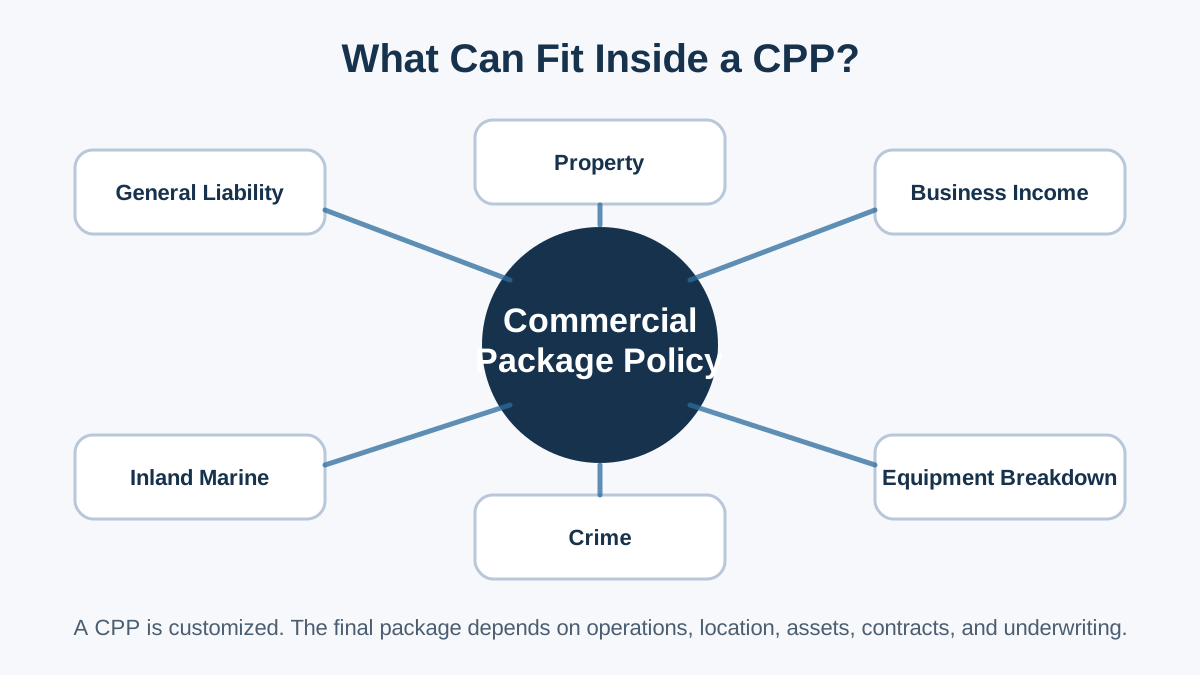
A commercial package policy is a bundled business insurance policy that combines two or more commercial coverages under one policy framework. Instead of purchasing separate standalone policies for property, general liability, inland marine, equipment, crime, or other needs, a business can package selected coverages together.
The key word is flexible. A CPP is not one fixed product with the same coverage for every company. It is built around the business type, location, assets, operations, contracts, and risk profile. A restaurant, contractor, medical office, wholesaler, property manager, and professional services firm may all need a CPP, but each would likely need a different mix of limits, endorsements, deductibles, and exclusions.
Most CPPs start with core property and liability coverage. From there, a broker can help evaluate whether the business also needs business income coverage, equipment breakdown, inland marine, crime, cyber, hired and non-owned auto, commercial umbrella, or other protections. The goal is not simply to bundle more policies. The goal is to align coverage with the way the company actually operates.
Commercial Package Policy vs. BOP: What Is the Difference?
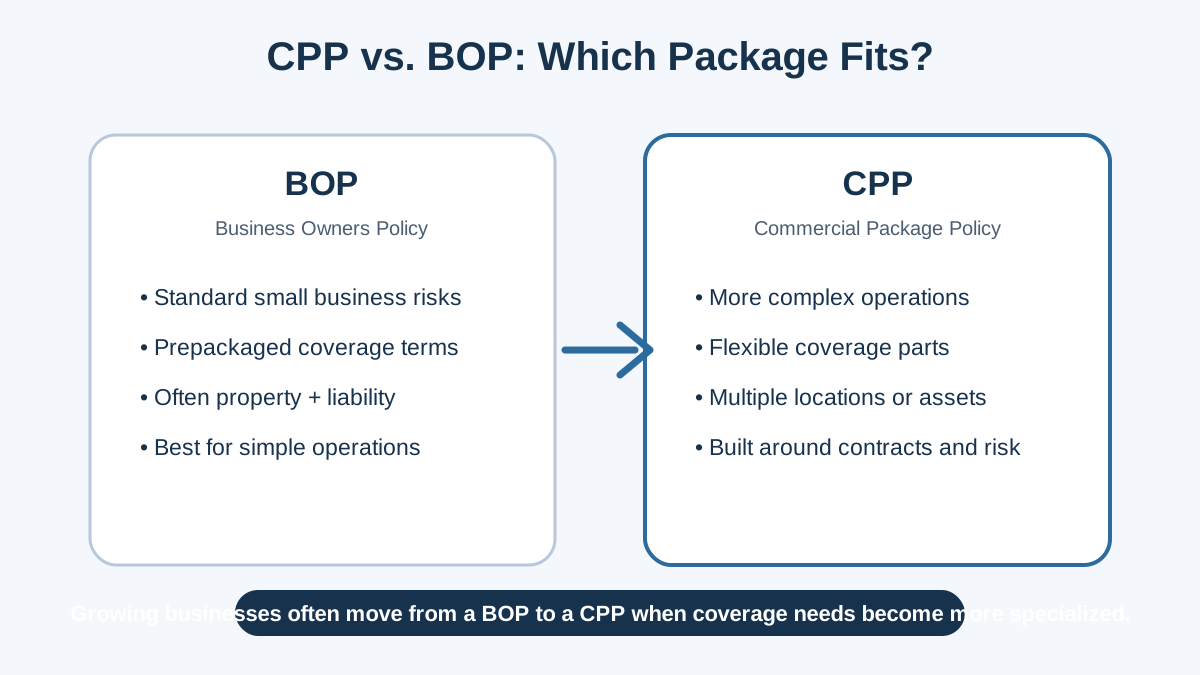
A Business Owners Policy, or BOP, is often the first bundled insurance option for small businesses. It usually combines general liability, commercial property, and business income coverage in a prepackaged format. A BOP can be an excellent fit for lower-risk businesses with simple operations, modest revenue, smaller premises, and standard coverage needs.
A CPP is usually better for businesses that need more customization than a BOP allows. If your company has higher property values, multiple locations, unusual liability exposures, specialized equipment, leased vehicles, larger contracts, or industry-specific requirements, a CPP may provide more room to structure the policy correctly.
| Feature | Business Owners Policy | Commercial Package Policy |
|---|---|---|
| Best fit | Small businesses with straightforward risks | Small to mid-sized businesses with more complex risks |
| Customization | Limited, with prepackaged terms | More flexible coverage selection and endorsements |
| Common coverages | General liability, property, business income | Property, liability, inland marine, crime, equipment, umbrella, and more |
| Eligibility | Often restricted by size, industry, revenue, or property values | Can fit a wider range of operations, subject to underwriting |
| Policy strategy | Convenient starter package | Custom risk management structure |
For example, a small accounting office with standard office equipment may be well served by a BOP. A growing contractor with tools at job sites, leased equipment, vehicles, subcontractor exposure, and contract requirements will likely need a more customized package. That does not automatically mean a CPP is always more expensive or always better. It means the coverage should be matched to the risk, not selected because it has a familiar name.
A custom risk management structure should also begin with a broader advisory review. For a fuller planning framework, see our guide to risk management consultation for businesses.
If you are still building your first policy, start with our startup business insurance guide. If your business has already grown and your coverage feels pieced together, compare that starter approach with our Business Owners Policy guide before deciding whether a CPP review is the better next step.
When Is a CPP Better Than a Business Owners Policy?
A commercial package policy often becomes the better fit when the business has outgrown the assumptions behind a basic BOP. This can happen gradually. A company may start with one office, a few employees, and modest equipment, then add a warehouse, delivery operations, expensive inventory, larger contracts, or services performed at customer locations.
Common signs you may need a CPP include:
- You have multiple locations. More premises usually means more property values, more liability exposure, and more complicated business income planning.
- Your property values are higher than standard BOP limits. Buildings, tenant improvements, inventory, tools, machinery, and computers can quickly exceed basic limits.
- Your contracts require specific coverage. Landlords, lenders, vendors, and customers may require higher limits, additional insured status, waivers of subrogation, or primary and noncontributory wording.
- Your business owns or regularly uses specialized equipment. Equipment that moves between jobs or locations may need inland marine coverage rather than standard property coverage alone.
- Your operations create unique liability risks. Contractors, wholesalers, restaurants, medical offices, property managers, and manufacturers often need coverage tailored to their actual exposures.
- You want one coordinated review instead of scattered policies. A CPP can make it easier to evaluate limits, deductibles, exclusions, and gaps across several coverage lines.
It is also worth reviewing your structure when your business changes. Adding a new service, signing a larger lease, expanding into a new county, buying a vehicle, hiring employees, or storing more inventory can all change your risk profile. Insurance that was appropriate last year may not match this year’s exposure.
What Coverages Can Be Included in a Commercial Package Policy?
Commercial package policy insurance can include a wide range of coverage parts. The exact options depend on the carrier, industry, state, underwriting appetite, and business details. A broker’s role is to help identify which coverages belong inside the package and which may need to remain standalone.
Commercial General Liability
General liability helps protect the business from third-party claims involving bodily injury, property damage, and personal or advertising injury. It is often one of the foundation pieces of a CPP. For a deeper breakdown, read our guide on what general liability insurance covers.
Commercial Property Insurance
Commercial property coverage helps protect business buildings, tenant improvements, furniture, inventory, equipment, and other physical assets against covered causes of loss. In Florida, it is especially important to review wind, hurricane, water damage, flood, coinsurance, valuation, and deductible terms carefully. You can learn more in our commercial property insurance guide.
Business Income and Extra Expense
Business income coverage can help replace lost income after a covered property loss interrupts operations. Extra expense coverage can help pay reasonable costs to resume work faster, such as temporary space, equipment rental, or expedited services. For businesses with tight cash flow, this part of the package can be just as important as repairing the physical property.
Inland Marine or Equipment Coverage
Standard property coverage may not fully protect tools, equipment, or materials while they are away from the insured premises or in transit. Inland marine coverage can be important for contractors, installers, mobile service businesses, and companies with equipment that moves between job sites.
Crime Coverage
Crime coverage may help protect against employee theft, forgery, certain types of fraud, or theft of money and securities. Businesses with multiple employees, payment handling, bookkeeping exposure, or inventory controls should review whether crime coverage belongs in the package.
Equipment Breakdown
Equipment breakdown coverage can help with sudden and accidental breakdown of covered equipment, such as boilers, HVAC systems, electrical panels, refrigeration equipment, or production machinery. This can be particularly important for restaurants, medical practices, property owners, and manufacturers.
Commercial Umbrella or Excess Liability
An umbrella or excess liability policy can provide additional limits above underlying liability policies. Some businesses include umbrella protection alongside the CPP structure, especially when contracts require higher liability limits or when the business has significant public, premises, product, or completed operations exposure.
Not sure which coverage parts belong in your package? Contact InsuranceUnderwriters.com for a commercial insurance review and compare options from more than one carrier.
What Is Usually Not Included in a CPP?
A CPP can be broad, but it does not include every business insurance need automatically. Some coverages are commonly written separately because they require separate underwriting, special forms, or different policy structures.
Workers compensation insurance is usually separate and may be required depending on your state, employee count, and industry. Commercial auto insurance may be included with some package structures, but it is often written as its own policy. Professional liability, errors and omissions, directors and officers liability, employment practices liability, cyber liability insurance, health benefits, and bonds may also need separate policies.
This is why a coverage review matters. A business owner may assume that a package policy means everything is included. In reality, the package only includes the coverage parts, endorsements, limits, and terms shown in the policy. Exclusions still apply. Unlisted locations, vehicles, professional services, flood, cyber events, employment claims, or employee injuries may not be covered unless the right policy or endorsement is in place.
How Much Does Commercial Package Policy Insurance Cost?
The cost of commercial package policy insurance depends on the business. Two companies in the same city may pay very different premiums if one has a small office and the other has heavy equipment, higher foot traffic, greater inventory values, or more hazardous operations.
Common CPP cost factors include:
- Industry and operations: A consulting firm, restaurant, contractor, wholesaler, and manufacturer have very different risk profiles.
- Location: Coastal Florida properties can face windstorm, hurricane, water intrusion, flood, and carrier availability challenges.
- Property values: Building limits, business personal property, tenant improvements, stock, machinery, and equipment all affect premium.
- Revenue and payroll: Higher sales and payroll can indicate greater liability exposure.
- Coverage limits: Higher liability limits and broader endorsements usually increase cost.
- Deductibles: Higher deductibles may reduce premium, but they also increase out-of-pocket responsibility after a loss.
- Claims history: Prior losses can affect underwriting, pricing, deductibles, and carrier appetite.
- Building features and risk controls: Fire protection, alarms, roof age, construction type, maintenance, security, and disaster planning may all matter.
The lowest quote is not always the best quote. A cheaper policy can become expensive if it excludes the risk that is most likely to create a serious loss. The better question is whether the premium, limits, deductibles, and exclusions make sense for the business you are actually running.
Florida and Miami CPP Considerations
Florida businesses need to review CPP insurance with local market realities in mind. Property insurance conditions, coastal wind exposure, building age, construction type, flood zones, and carrier underwriting appetite can all affect what is available and affordable.
Miami-area businesses should pay close attention to wind and hurricane deductibles, flood exclusions, roof requirements, protective safeguards, water damage limitations, ordinance or law coverage, and business income waiting periods. If your business depends on a physical location, a few days of downtime can create serious cash flow pressure even after the property damage is addressed.
Flood deserves special attention. Many commercial property policies exclude flood unless it is specifically added or purchased separately. A business outside a high-risk flood zone can still experience flooding from heavy rain, storm surge, drainage issues, or nearby construction. If your operations rely on inventory, equipment, records, refrigeration, or customer access, flood planning should be part of the conversation.
Contracts are another major issue in South Florida. Commercial leases, vendor agreements, property management contracts, construction agreements, and lender requirements often include insurance language that must be reviewed before a certificate of insurance is issued. A CPP can help align coverage with those requirements, but only if the policy is structured correctly from the start.
How to Compare CPP Insurance Quotes
When comparing CPP quotes, do not stop at the premium. A quote with a lower annual cost may have higher deductibles, lower limits, narrower property coverage, missing endorsements, restrictive exclusions, or less favorable loss settlement terms.
Review these items before choosing a policy:
- Named insureds, locations, and business descriptions
- General liability limits and endorsements
- Property limits by location and category
- Business income limits, waiting periods, and restoration period
- Wind, hurricane, water damage, and flood terms
- Deductibles, including percentage deductibles for wind or named storms
- Coinsurance requirements and valuation method
- Protective safeguard requirements, such as alarms or sprinklers
- Additional insured, waiver, and certificate requirements
- Exclusions that affect your industry or services
A strong broker will help you compare quotes side by side and explain the tradeoffs in plain language. InsuranceUnderwriters.com works as an independent brokerage with access to more than 200 carriers, which can be especially useful when one carrier is not the right fit for your industry, location, property, or claims history.
How to Prepare for a Commercial Package Policy Quote
The more accurate your information, the more useful your CPP quote will be. Before requesting proposals, gather basic details about your business operations, ownership, locations, payroll, revenue, property values, equipment, vehicles, contracts, prior coverage, and claims history.
You may be asked for:
- Legal business name, DBA names, and entity type
- Years in business and description of operations
- Locations, square footage, construction type, roof age, and occupancy
- Business personal property, inventory, tools, and equipment values
- Annual revenue, payroll, and employee count
- Subcontractor use and certificate procedures
- Lease, lender, or customer insurance requirements
- Current policies, renewal dates, and loss runs
- Risk controls such as alarms, cameras, sprinklers, contracts, training, or maintenance procedures
Do not worry if you do not have every answer ready. A consultative agent can help identify what is needed. The important step is to start the conversation before a renewal deadline, lease signing, major contract, or storm season creates urgency.
Frequently Asked Questions
Is a commercial package policy required by law?
A commercial package policy is not usually required by law as a single package. However, certain coverages connected to your business may be required by contracts, lenders, landlords, licensing rules, or state law. For example, a landlord may require general liability, a lender may require property coverage, and state rules may require workers compensation if you have employees.
How long does it take to get a CPP quote?
The timeline depends on the business and the information available. A straightforward account may receive quote options relatively quickly, while businesses with multiple locations, coastal property, large schedules, prior claims, or specialized operations may take longer because carriers need more underwriting detail.
Can a commercial package policy be changed mid-term?
Yes, many CPPs can be updated during the policy term by endorsement, subject to carrier approval and underwriting rules. Common changes include adding a location, updating property values, changing mailing information, adding endorsements, or adjusting limits after a business change.
Does a CPP include commercial auto insurance?
Commercial auto may be packaged with some programs, but it is often written as a separate policy. Businesses that own, lease, rent, borrow, or ask employees to use vehicles for work should review auto exposure separately instead of assuming it is included in the CPP.
What information should I have ready before requesting a CPP quote?
Helpful information includes your legal business name, locations, operations, revenue, payroll, property values, equipment values, contracts, current policies, claims history, and any certificate requirements. If you do not have every document ready, a broker can help identify what is needed for underwriting.
Is a CPP better than buying separate policies?
It depends on the business. A CPP can make coverage coordination easier and may provide a cleaner structure for property, liability, and related coverage parts. Separate policies may still be necessary for exposures such as workers compensation, commercial auto, professional liability, cyber, or benefits.
Key Takeaways
- Commercial package policy insurance bundles multiple business coverages into one customizable policy structure.
- A BOP is often best for smaller businesses with straightforward risks, while a CPP is often better for growing businesses with more complex operations.
- CPPs commonly include general liability, commercial property, business income, inland marine, crime, equipment breakdown, and other coverage parts.
- Florida businesses should review wind, hurricane, flood, business income, and contract requirements carefully.
- The right CPP quote should be evaluated by coverage quality, exclusions, deductibles, carrier fit, and premium.
If your company is growing, changing locations, signing larger contracts, or questioning whether a BOP is still enough, now is the time to review your coverage. Request a commercial package policy insurance quote from InsuranceUnderwriters.com.
Comments
Comments are closed.