
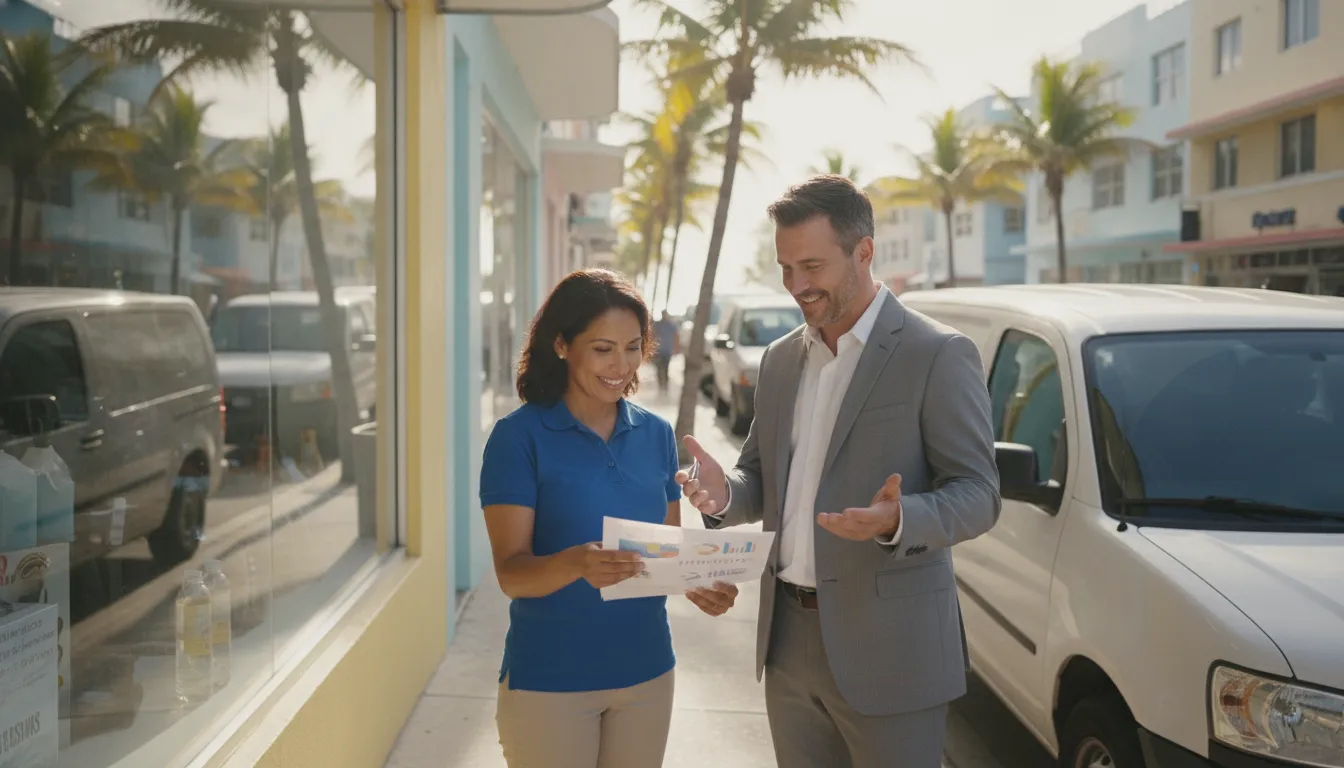
How to Get a Commercial Auto Insurance Quote Online Fast
When your delivery van, contractor truck, or food truck earns money for your business, its insurance needs to reflect that work. A quick online form can start the process, but accurate rates depend on more than the number of vehicles. Insurers need a clear picture of how the fleet is used, who drives it, and whether each vehicle is owned, rented, or leased.
To get a commercial auto insurance quote online quickly and accurately, gather your vehicle and driver details first, describe your business use honestly, and compare quotes with matching limits and coverage. A knowledgeable independent broker can help match your fleet with suitable carriers instead of treating it like a one-size-fits-all purchase.
Before entering information or comparing rates, make sure you understand why business vehicles require their own protection. Personal auto insurance and a businessowners policy may leave important gaps when vehicles are used for work.
Request a free business insurance quote
Why Your Business Needs a Commercial Auto Policy
A vehicle can be part of your business even when it looks like an ordinary car, van, or pickup. If you use it to deliver products, carry tools, visit job sites, transport equipment, or serve customers, the way it is used matters to your insurance. A personal auto policy is usually designed for personal driving, not the regular demands and risks of business operations.
The Insurance Information Institute explains that a personal auto policy generally does not cover a vehicle used primarily for business. If a delivery van is involved in a crash while making a customer delivery. Or a contractor truck is carrying supplies to a job, assuming personal coverage will respond can leave a serious gap. The exact answer depends on the policy and the use, so it is important to describe your business activity accurately when requesting coverage.
Personal coverage may not protect business driving
Business vehicles often spend more time on the road, carry tools or inventory, and may be driven by more than one employee. Those factors can change the risk compared with commuting or personal errands. Even occasional business use can create a problem if a personal insurer considers the activity unacceptable. According to the III, an insurer may charge an additional premium, refuse to insure the use, or cancel a policy when the business activity presents too much risk. In that situation, a commercial auto policy may be the best solution.
Consider a small Florida food business that uses a van for event deliveries. The owner may drive it personally during the week, but the delivery work is still a business use that should be disclosed. The same applies to a service company sending employees in a pickup loaded with equipment or a contractor moving materials between locations. The goal is not to buy more coverage than you need. It is to match the policy to how the vehicle actually supports your business.
A BOP does not cover your vehicles
Many small businesses purchase a Businessowners Policy, or BOP, for general liability and property protection. That can be useful coverage for the business, but it does not replace auto insurance. The III states that a BOP does not provide coverage for vehicles, so a separate commercial auto policy is required. Keeping those policies distinct helps ensure that the vehicle, driver, and business use are evaluated under the right type of coverage.
Commercial liability protects more than the vehicle
Most states require liability insurance for bodily injury and property damage. That coverage responds when a vehicle accident occurs while you or someone from your organization is driving for business. A crash involving a company vehicle could affect another driver, a customer’s property, or people near a job site. Commercial auto liability is designed to address those business-related exposures, subject to the policy terms, limits, and exclusions.
For a delivery fleet, contractor trucks, or other work vehicles, commercial auto insurance is not simply an administrative requirement. It is a practical way to keep a driving accident from becoming a setback for the business that depends on those vehicles every day. The Insurance Information Institute’s business vehicle guide provides additional detail on how this coverage works.
What a Commercial Auto Insurance Quote Online Requires
A commercial auto insurance quote online can be quick, but an accurate quote depends on the details behind your vehicles. An insurer is not pricing only the make and model. It is evaluating how your business uses each vehicle, who is responsible for driving it, and how the vehicle is connected to your operations.
How are the vehicles used?
Start by describing the work your vehicles perform. A delivery van making scheduled stops, a contractor truck carrying tools between job sites, and a food truck operating at public events do not present the same exposure. The quote may ask where vehicles are driven, how far they typically travel. Whether employees use them, and whether customers or other members of the public are regularly around them.
Be specific rather than choosing the closest generic description. If a vehicle sometimes makes deliveries but is primarily used to transport equipment, say so. Clear usage information helps the insurer match the policy to the actual risk instead of relying on an assumption that could create problems later.
Who drives the vehicles?
Expect questions about every driver who may operate a business vehicle. The insurer may need names, driving histories, licenses, experience, and the vehicles assigned to each person. If an employee, owner, or temporary worker could drive a van or truck, include that possibility in the discussion.
This is one reason the answer to “What information is needed for a commercial auto insurance quote?” is more than a vehicle identification number. Driver details affect underwriting, and leaving out a regular driver can make an online estimate less useful. Gather your driver list before starting so the quote reflects your actual fleet.
Do you own, rent, or lease the vehicles?
Ownership status is another basic part of the application. Tell the insurer whether each vehicle is owned by your business, rented for a period of time, or leased. Include trailers and other road-going equipment when they are part of the operation. Commercial auto forms generally define “autos” broadly to include cars, trucks, trailers, vans, and other vehicles designed for use on public roads, according to the Insurance Information Institute.
Have vehicle year, make, model, estimated mileage, garaging location, and current coverage details available as well. Coverage can be tailored to each vehicle based on factors such as size, age, theft rating, and safety rating. A newer delivery van may need a different physical-damage approach than an older contractor truck.
Before you request an online quote, assemble these details in one place. You will spend less time correcting the application, and the resulting comparison will give you a more useful starting point for choosing coverage for your business.
Information You’ll Need Before You Start
A few minutes of preparation can make your quote request faster and more accurate. Gather the details below before you begin, even if you are requesting a commercial auto insurance quote online. Having the information in one place also helps you spot missing vehicles, drivers, or business uses before an application is submitted.
- List every vehicle in the business. Start with the total fleet size, then record each car, pickup, van, truck, trailer, or other road vehicle. Note the year, make, model, vehicle identification number, and any major equipment or modifications. Commercial auto forms generally use “autos” broadly, including cars, trucks, trailers, and vans designed for public roads. The Insurance Information Institute explains how business vehicles are classified.
- Describe how each vehicle is used. Explain what the vehicle does during a normal workday. A delivery van may carry customer orders, a contractor truck may transport tools and materials, and a food truck may serve customers from changing locations. Include the service area, whether vehicles cross state lines, and whether employees take them home. The way vehicles are used is one of the details an agent needs to evaluate the risk accurately.
- Confirm ownership for each vehicle. Mark whether the business owns, rents, or leases each vehicle. Include the name of a leasing or finance company when applicable. Ownership affects the policy details and may affect which physical damage protections or loss-payee information must be included. Do not assume that a vehicle titled personally can be treated the same way as one owned by the business.
- Prepare a driver list. Gather the full name, date of birth, address, license number, state of issuance, and role for every person who may drive a company vehicle. Include occasional or backup drivers instead of listing only the primary employee assigned to each vehicle. An agent will also need driver license and motor vehicle record information, including relevant accidents, violations, suspensions, or other restrictions.
- Summarize prior claims and violations. Have the dates, descriptions, and outcomes of recent auto claims ready. Include vehicle damage, liability claims, injuries, and claims that were closed without payment if requested by the application. Be accurate about tickets and accidents. A complete history is more useful than an optimistic estimate and can prevent delays when an insurer verifies the information.
- Estimate annual mileage and operating patterns. Provide the expected annual mileage for each vehicle or a reasonable estimate by vehicle group. Note regular routes, delivery frequency, seasonal increases, and the longest typical trip. If mileage varies significantly between a local service van and a regional delivery truck, separate those estimates rather than using one average for the entire fleet.
Coverage can be tailored by vehicle because size, age, theft rating, safety rating, and other features may differ across the fleet. That means a clean, vehicle-by-vehicle checklist is more useful than a single fleet total. Once these details are ready, review how to get a commercial auto insurance quote and submit the information for a closer coverage discussion.
What Drives Your Premium: Limits, Vehicles, and Driver History
A commercial auto premium is built around the risk your business presents, not simply the number of vehicles on the policy. Two Florida businesses with three vehicles each can receive very different rates because their liability limits, vehicle types, drivers, mileage, and claims histories are different.
Liability limits set the starting point
Liability coverage helps protect your business when a driver causes bodily injury or property damage. Many insurers recommend a business auto liability limit of $1 million. With $500,000 often treated as a minimum for a small business facing the potential cost of a serious accident. The appropriate limit depends on your operations, contracts, assets, and the risks created by your vehicles.
A delivery company carrying goods through busy Miami traffic may need a different limit discussion than a contractor using one pickup to travel between job sites. Choosing the lowest limit can make a quote look attractive while leaving your business exposed. Ask what each quote covers and whether the limits are comparable before deciding on price.
Vehicle details affect coverage and cost
Insurers look at the vehicles themselves, including their size, age, theft rating, and safety rating. A heavy work truck, cargo van, food truck, and passenger car can create different repair costs and accident exposures. Commercial auto forms may define autos broadly to include cars, trucks, trailers, vans, and other vehicles designed for public roads.
Give the insurer accurate information for every vehicle. Include its year, make, model, ownership status, and primary use. Coverage can be tailored by vehicle, so a business does not necessarily need identical options on an older service van and a newer truck. Misstating a vehicle’s use or leaving one off the submission can produce a quote that changes later.
Drivers, claims, and daily use matter
Driver age, experience, motor vehicle records, and prior claims can affect the premium. So can how often vehicles are driven, where they travel, who operates them, and whether employees take them home. A local electrician’s van used within one county presents a different exposure from a fleet making long regional deliveries.
Safety practices and telematics may also help an insurer evaluate driving behavior, depending on the carrier and program. If your fleet uses GPS or telematics, get accurate commercial auto insurance rates by asking whether verified safety data or an available carrier discount can be considered.
Required protections should be included
Do not compare a quote only by its liability number. Most states have requirements involving uninsured and underinsured motorist coverage and medical payments coverage, known as Personal Injury Protection, or PIP, in some states. Your agent can explain which protections apply to your Florida operation and how they fit with the rest of the policy.
The fastest quote is useful only when it reflects your real vehicles, drivers, usage, and coverage needs. Submit complete information, then compare matching limits and protections rather than treating the lowest initial premium as the best answer. The Insurance Information Institute explains how these factors shape business vehicle coverage.
Common Mistakes That Skew Your Quote
A commercial auto quote is only as reliable as the information behind it. A quick estimate can look attractive when key details are missing, but the rate may change once the insurer verifies how your vehicles are actually used. On the other hand, incomplete or overly broad information can make the quote higher than it needs to be.
Before requesting a commercial auto insurance quote online, check these common trouble spots.
Understating annual mileage
It is easy to use a rough guess for mileage, especially when a vehicle’s routes change from week to week. But a delivery van traveling across Miami every day presents a different exposure from a contractor truck used for occasional local jobs. Review service records, fuel receipts, route logs, or mileage readings where available. If you are unsure, give the agent a realistic range and explain how the vehicle is used instead of choosing the lowest number.
Accurate mileage helps the insurer evaluate the exposure from time on the road. It also reduces the chance that the policy has to be corrected later.
Leaving out drivers
Every regular driver matters. That includes an owner, employee, temporary worker, or family member who occasionally takes a business vehicle to a job site. Omitting someone from the driver information can create questions during underwriting and may complicate a claim.
Prepare a current driver list before you begin. Include who drives each vehicle, how often they drive, and whether any driver uses a vehicle for a specific route or task. The goal is not to make the process harder. It is to give the insurer a clear picture of your operation.
Guessing at business use
“Business use” can mean different things. A food truck, a plumber’s pickup, a courier van, and a landscaping trailer do not create the same risk. Explain what each vehicle carries, where it travels, whether employees drive it, and whether it is used to transport customers, tools, materials, or equipment.
Insurance agents commonly ask in detail how vehicles are used, who drives them, and whether the business owns, rents, or leases them. These details are part of a sound quote, not unnecessary paperwork. The Insurance Information Institute outlines the same information in its business vehicle insurance guide.
Guessing at claims history or ownership
If you do not have your claims history in front of you, say so. Do not estimate dates, losses, or prior coverage from memory. A carrier may verify the information, and an unexplained difference can delay the quote or change the rate.
Also identify whether each vehicle is owned, rented, or leased. Ownership affects the documentation and coverage considerations for that vehicle. Coverage can be tailored to each vehicle’s features, including its size, age, theft rating, and safety rating. So a newer leased van may not need the same approach as an older owned pickup.
Accurate details at the start lead to a rate that is more likely to hold. They also help your agent match coverage to the vehicles you actually operate, rather than forcing one generic solution across the fleet.
How to Compare Commercial Auto Quotes Accurately
A low premium is not necessarily a better commercial auto policy. Two quotes can look very different because one uses lower liability limits, higher deductibles, or narrower protection for your vehicles. Before comparing prices, make sure each insurer is quoting the same risk and the same level of coverage.
Start with liability limits. Many insurers recommend at least $500,000 in business auto liability coverage. With $1 million a common recommendation for a small business facing the potential cost of a serious accident. The right limit depends on your vehicles, operations, contracts, and risk profile, so ask why a particular limit is being recommended rather than accepting the lowest available option. The Insurance Information Institute explains the role of business auto liability limits.
Next, compare deductibles and coverage breadth. A quote with a $2,500 comprehensive or collision deductible may cost less than one with a $500 deductible, but your business would pay more after a covered loss. Confirm whether both quotes include collision, comprehensive, uninsured or underinsured motorist coverage, medical payments or PIP where applicable, and protection for every vehicle in the fleet. Most states have mandatory requirements for uninsured or underinsured motorists coverage and/or medical payments coverage, although the details vary.
| Comparison point | Price-only direct quote from one national carrier | Apples-to-apples comparison via an independent broker |
|---|---|---|
| Coverage matching | May emphasize a quick premium before you confirm limits, deductibles, exclusions, and vehicle-specific needs. | Uses the same liability limits, deductibles, covered vehicles, and requested protections for a meaningful comparison. |
| Pricing options | Shows the price from one carrier, with no direct benchmark against comparable policies. | Can compare quotes from multiple carriers and weigh premium against the protection provided. |
| Carrier access | Limited to that carrier’s available underwriting appetite and products. | An independent broker can access a wider array of carriers, improving the chance of a pricing and coverage match. |
| Ongoing support | You generally manage questions, changes, and claims through the direct carrier channel. | You have a professional point of contact to help review changes, renewal terms, and coverage questions. |
For a fleet of delivery vans, contractor trucks, or service vehicles, list each vehicle separately and confirm that its use is described accurately. Commercial auto coverage can be tailored to vehicle features such as size, age, theft rating, and safety rating. A quote that treats every vehicle identically may not reflect the protection your operation actually needs.
If you are starting with an online request, this commercial auto insurance quote online guide can help you organize the information before comparing proposals. The goal is not simply to find the smallest number. It is to identify the policy that gives your business dependable protection at a price you can defend when the terms are placed side by side.
Why an Independent Broker Beats a Direct Online Quote
A direct online quote can look convenient, especially when you are trying to insure a few vans or contractor trucks between jobs. The limitation is that a single national carrier can only offer its own products. If that carrier’s standard package does not fit your vehicles, drivers, or business use, you may receive a price that is easy to compare but difficult to trust.
An independent broker gives you a broader starting point. Independent status allows access to a wide array of carriers, which can improve both pricing and coverage matching. Instead of forcing a small Florida fleet into a one-size-fits-all package, the broker can compare options based on how your business actually operates.
A wider carrier choice can produce a better fit
Consider a Miami service company with two older work vans, one newer pickup, and employees who drive to customer locations every day. Those vehicles do not present exactly the same risk. Their value, use, safety features, and operating patterns may differ. A single-carrier quote funnel may steer the owner toward one preset structure. An independent broker can look for carriers whose underwriting approach is better suited to the fleet as a whole, then discuss where different coverage choices make sense.
That does not mean an independent broker promises the lowest possible premium. It means the comparison is not limited to one carrier’s appetite or pricing model. The goal is a policy that balances cost with the protection your business needs, so a lower initial price does not leave an important gap.
Advice matters when the quote is not straightforward
Small business owners generally value a quick, accurate quoting process and professional advice more than commodity pricing alone. That distinction matters when a business uses vehicles for deliveries, transports tools or equipment, sends employees to job sites, or occasionally hires a vehicle. The right questions are not limited to the vehicle’s make and model. They include who drives, how often vehicles are used, where they operate, and whether they are owned, leased, or rented.
A broker can help identify information that a fast online form may not explain clearly. They can also help you compare limits, deductibles, and vehicle-by-vehicle coverage rather than treating every vehicle as identical. If your business changes, that conversation gives you a practical way to review the policy instead of discovering a problem after a claim.
For a broader view of protection for your company, visit our commercial insurance page. Whether you start online or speak with an advisor, the strongest quote is one that reflects your actual operations and gives you a clear basis for deciding.
Request a free business insurance quote
Frequently Asked Questions
How do I get a commercial auto insurance quote online?
Start with your business details, vehicle list, driver information, vehicle use, and ownership status. Include whether each vehicle is owned, rented, or leased, and describe the work it performs. Complete information helps an agent compare suitable coverage instead of returning a rough estimate.
What information is needed for a commercial auto insurance quote?
Have the year, make, model, and use of each car, truck, van, or trailer ready. You will also typically need driver details, driving history, mileage, garaging location, ownership information, requested limits, and prior insurance details. Accurate records reduce follow-up questions and help prevent an underinsured fleet.
Is commercial auto insurance mandatory for small businesses?
Most states require liability insurance for bodily injury and property damage caused by accidents during business operations, although exact requirements vary. Many states also require uninsured or underinsured motorist coverage and medical payments coverage, sometimes called PIP. Confirm Florida requirements and your business’s contract obligations with an insurance professional. Insurance Information Institute
How much does commercial auto insurance cost on average?
There is no reliable single average for every small fleet. Pricing depends on vehicle types, how and where they are used, drivers, claims history, selected limits, and other risk details. Compare quotes with matching limits and deductibles, not just the lowest premium.
What vehicles are covered under a commercial auto policy?
Commercial auto policies can cover cars, trucks, trailers, vans, and other vehicles designed for public-road use. Coverage can be tailored by vehicle because size, age, theft rating, safety rating, and business use may differ across a fleet. List every vehicle used for business so the policy reflects your actual operations.
Ready to request a more accurate fleet quote?
With your vehicle, driver, and business-use details ready, you can make the quote process clearer and help ensure the coverage fits how your fleet operates. When you want guidance comparing options, request a free business insurance quote from a team that understands small business vehicles.
Comments
Not found any comments yet.