
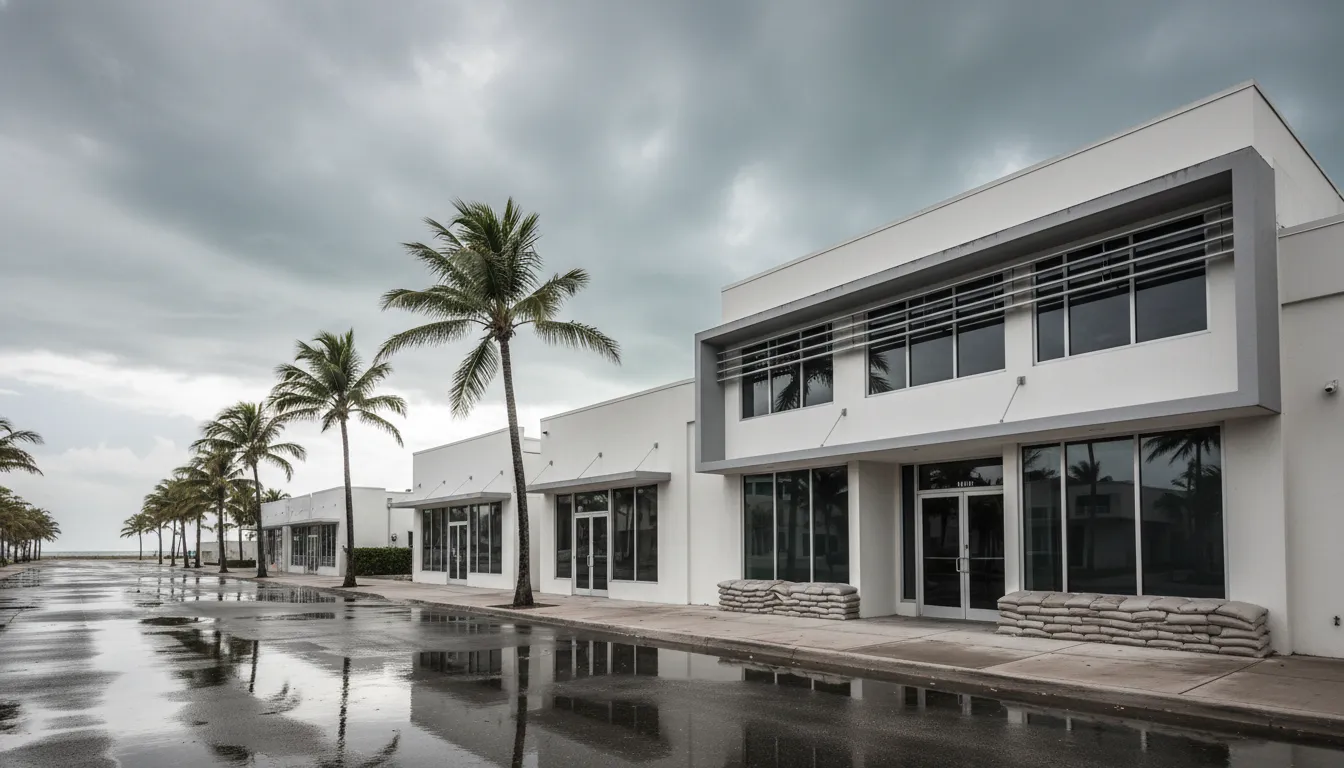
Miami Commercial Property Insurance Guide
Miami Commercial Property Insurance for Hurricane and Flood Risk
Miami commercial property insurance needs to do more than insure four walls. A South Florida business may have a building, leased improvements, inventory, equipment, signs, computers, tenant responsibilities, and income exposure tied to the same address. Hurricanes, wind-driven rain, storm surge, street flooding, and long restoration timelines can turn one severe weather event into a property claim, an operations problem, and a cash-flow problem at the same time.
Need a property insurance review before the next storm season? Request a business property insurance quote from Insurance Underwriters.
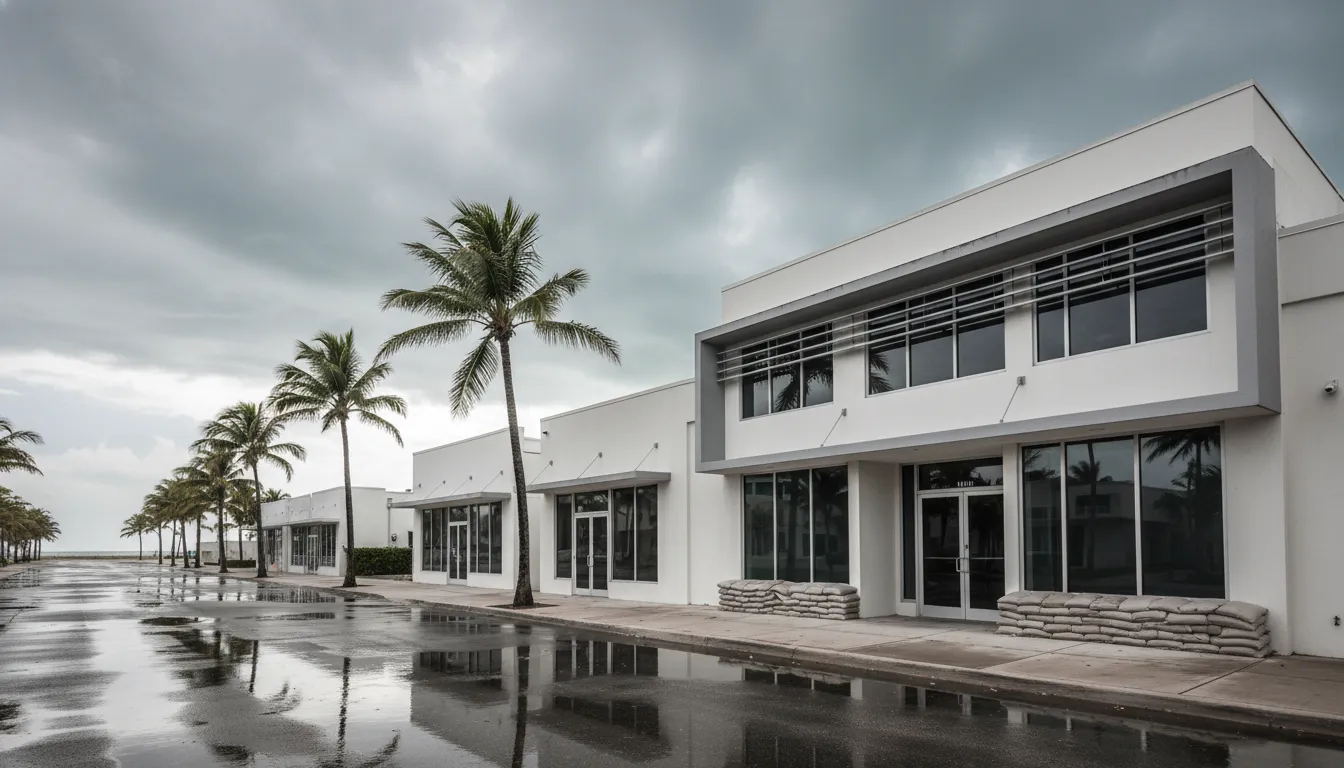
This guide explains the coverage areas Miami business owners should discuss with a broker: buildings, business personal property, windstorm, flood, business interruption, named-storm deductibles, and claim-readiness details that are easy to miss. It is written for owners, operators, landlords, and tenants who want a practical coverage conversation, not a generic checklist. If your company needs a broader coverage review beyond property, connect with a Miami commercial insurance broker who can coordinate property, liability, workers’ compensation, auto, cyber and benefits conversations around the same risk profile.
What Miami commercial property insurance is designed to protect
Commercial property coverage generally addresses direct physical loss to business property from covered causes of loss. The exact form, exclusions, endorsements, deductibles, and valuation method matter. A retail shop in Brickell, a warehouse near the Miami River, and a professional office in a leased suite may all need property insurance, but their exposures are not identical.
A property program may need to account for:
- The building: Walls, roof systems, permanently installed fixtures, and other insured building components if the business owns the structure.
- Tenant improvements and betterments: Build-outs, counters, flooring, partitions, and customized improvements in a leased space.
- Business personal property: Furniture, shelving, computers, tools, machinery, and other movable assets used in operations.
- Inventory and stock: Finished goods, raw materials, goods held for sale, and seasonal increases when applicable.
- Outdoor and attached property: Signs, awnings, fences, exterior equipment, and rooftop units, subject to policy wording and limits.
- Income exposure: Lost revenue or extra costs after a covered interruption, if business interruption and extra expense coverage are included.
Business owners who need a broader insurance program can also review commercial insurance options that connect property coverage with liability, workers compensation, auto, and specialty lines.
Why Miami property risk deserves a different conversation
Miami property insurance discussions often begin with hurricanes, but the actual underwriting picture is wider. Carriers may evaluate roof age and condition, construction type, year built, distance to coast, prior claims, flood zone information, elevation, occupancy, fire protection, protective safeguards, and continuity planning. Two buildings on the same street can produce very different submissions.
Wind and named storms can damage more than the roof
High winds can damage roof coverings, storefront glass, exterior signs, doors, rooftop mechanical equipment, and building envelope systems. Once the envelope is compromised, water intrusion can affect inventory, flooring, electrical systems, and tenant improvements. Policyholders should understand how windstorm, hurricane, or named-storm deductibles apply, and whether water damage wording creates gaps that need review.
Flood is a separate exposure
Flood risk should not be treated as a remote issue simply because a building has not flooded before. Miami businesses can face storm surge, heavy rain, drainage backups associated with area flooding, and tidal conditions that affect access and recovery. Standard commercial property insurance often does not provide the flood protection a business expects. Flood coverage commonly needs to be evaluated separately through available flood markets.
The National Flood Insurance Program commercial property form is a useful reference point: it describes flood insurance as single-peril coverage, provides separate building and personal property limits, and states that financial losses from business interruption or loss of use are not insured under that form. Owners should ask how their flood strategy addresses both direct damage and operations risk.
Which property values should a business review?
A property limit that looked reasonable three renewals ago may be outdated after construction cost changes, equipment purchases, inventory growth, or a more expensive build-out. Underinsurance can become visible only after a loss. Miami businesses should organize values by category before requesting quotes or renewing a policy.
| Exposure | Questions to ask | Why it matters |
|---|---|---|
| Building replacement cost | Would the limit support current repair or rebuild costs? | Construction, code, and labor costs may exceed older estimates. |
| Tenant improvements | Who is responsible under the lease? | Landlord and tenant assumptions often do not match. |
| Equipment | Are specialized machines, refrigeration, or electronics scheduled correctly? | Generic contents estimates may miss expensive items. |
| Inventory | Does stock fluctuate seasonally? | Peak inventory periods can create limit shortfalls. |
| Business income | How long could repairs, permits, and supply delays affect operations? | A short restoration assumption can leave a major gap. |
Mid-year growth can change property needs. If your location, inventory, equipment, or build-out has changed, start a business property quote review.
How should Miami businesses think about windstorm and flood?
Windstorm and flood are often discussed together after a hurricane, but policies can treat them very differently. That distinction matters when a claim involves damaged roofing, wind-driven openings, rising water, storm surge, or multiple causes of loss in the same event.
Review windstorm terms, not just whether wind exists
A business owner should ask whether the quoted property form includes windstorm, whether a separate wind or named-storm deductible applies, how the deductible is calculated, and whether important property categories have sublimits. A percentage deductible can create a large out-of-pocket amount because it is often based on an insured value, not the size of the claim. For example, a 5 percent deductible on a $2 million insured building equals $100,000 before covered loss payments begin, subject to the policy wording.
Evaluate flood limits for the real operation
Flood planning should consider the building, contents, inventory, and any equipment kept near grade level. A manufacturer with floor-mounted machinery, a restaurant with refrigeration, and a retailer with stock in low storage areas face different severity scenarios. NFIP limits may be helpful for some properties, while businesses with larger values may need to discuss private-market options or layered approaches with a broker.
Do not assume interruption losses follow the property loss
Business interruption coverage is often tied to direct physical loss from a covered cause of loss under the policy. If flood is excluded from a commercial property form, resulting lost income may not be covered under that form either. If a business wants to discuss income protection linked to flood, ingress or egress, civil authority, or utility service interruptions, those questions need to be raised deliberately and reviewed against actual available terms.
Business interruption matters after a South Florida loss
A damaged building is visible. A slow reopening is often more expensive than owners first expect. A restaurant may lose reservations and food stock. A distributor may miss shipments. A medical office may need temporary space. An office tenant may retain payroll while revenue slows. Business interruption and extra expense coverage can address covered income loss and necessary additional costs, but limits and waiting periods need attention.
When reviewing business interruption, discuss:
- The business income basis used in the policy.
- The expected period of restoration after a serious property loss.
- Payroll treatment and continuing expenses.
- Extra expense needs, such as temporary space, equipment rental, expedited shipping, or data recovery support.
- Whether extended periods of indemnity or dependent property concerns deserve discussion.
- How hurricane, flood, utility, and access-related scenarios line up with the selected endorsements.
Owners should bring real operating information into this conversation. Revenue history, seasonality, key vendors, specialized equipment lead times, permit considerations, and relocation feasibility help a broker challenge assumptions before a loss.
Named-storm deductibles can change the cash-flow equation
Miami commercial property insurance buyers often focus on premium first. The deductible may deserve equal attention. Named-storm, hurricane, or wind deductibles can be stated as a percentage, and the trigger language determines when that percentage applies. A business should not wait until a claim to learn whether the deductible applies per occurrence, per building, or against a specific insured value.
A deductible review checklist
- Identify every property deductible, including all-perils, wind, hurricane, named storm, water, and flood where relevant.
- Confirm whether the deductible is a flat dollar amount or a percentage.
- Ask what insured value the percentage uses in a storm scenario.
- Model the cash needed to absorb that deductible after a severe event.
- Review lender, landlord, or contract requirements that may restrict deductible choices.
- Discuss whether deductible buyback options are available and appropriate, rather than assuming they exist for every risk.
A lower premium paired with a deductible the business cannot comfortably fund may not be a better outcome. The practical question is whether the program is financeable when a hurricane creates a real claim.
What information helps a broker market the risk?
Commercial property submissions improve when the business tells a complete, organized story. Insurance Underwriters is an independent brokerage with access to many carriers, but carrier appetite still depends on the risk information provided. A better submission can help markets understand mitigation, occupancy, and replacement values instead of filling gaps with conservative assumptions.
- Property address, occupancy, and business operations at each location.
- Building construction, year built, square footage, roof details, and updates where known.
- Wind mitigation documents, inspection reports, elevation data, or flood information when available.
- Building, contents, inventory, and equipment values.
- Loss history and risk-control improvements.
- Lease provisions for tenants or landlord responsibilities for building owners.
- Business income worksheets or financial information requested for interruption analysis.
Businesses comparing broader package structures may also find the commercial package policy guide useful when evaluating how property and other commercial coverages fit together.
Common coverage gaps to ask about before hurricane season
Every policy is different, but these questions expose frequent pressure points in South Florida property reviews:
- Is flood addressed separately? Do not assume a commercial property form handles rising water or storm surge.
- Are building and contents values current? Values should reflect present operations, not an old application.
- Is inventory exposed to seasonal peaks? A static limit may not reflect busy months.
- Do business income assumptions reflect real recovery time? Permitting, parts, contractor availability, and tenant improvements can extend downtime.
- Are exterior signs, rooftop equipment, and other outdoor property handled as expected? Sublimits and exclusions matter.
- Does the insured understand the storm deductible? Convert percentage deductibles into dollars before deciding.
- Are ordinance or law, debris removal, and equipment breakdown concerns being reviewed? These can be important after a major physical loss.
If these questions are hard to answer from your current declarations page, talk with Insurance Underwriters about commercial insurance or request a property-focused quote review.
How to prepare for a more useful quote conversation
A quote request goes further when it gives the broker enough information to compare terms, not only prices. Before submitting a Miami commercial property insurance request, gather current statements of values, prior loss runs if requested, any existing property policy, lease clauses tied to insurance, flood and elevation documents if available, and updates completed since the last renewal.
Then list the business owner’s priorities. One business may want stronger flood discussion. Another may be most concerned about a large named-storm deductible. A third may need to protect expensive equipment and reduce downtime after a covered loss. That hierarchy helps a broker compare carrier responses against real operational needs.
Miami commercial property insurance FAQ
Does commercial property insurance automatically cover flood damage?
Not necessarily. Flood is commonly evaluated through separate flood coverage or specialized terms rather than assumed within a standard commercial property form. Businesses should ask specifically how rising water, storm surge, contents, and any related income exposure are handled.
What is a named-storm deductible?
A named-storm deductible is a deductible that may apply when loss is connected to a storm meeting the policy’s trigger language. It is often percentage-based in coastal markets. The policy wording determines the trigger, calculation, and application, so owners should translate the deductible into an estimated dollar amount before binding.
Should a tenant buy business property insurance if the landlord insures the building?
Often, yes. A landlord’s building policy does not automatically insure a tenant’s inventory, furniture, computers, machinery, or improvements that the lease assigns to the tenant. Tenants should review the lease and their own property needs together.
Can business interruption help after hurricane damage?
It may help when the income loss follows covered direct physical damage and the policy conditions are met. Coverage varies. Owners should confirm the covered causes of loss, waiting periods, limits, restoration assumptions, and whether flood-related interruption needs a separate discussion.
Build the coverage conversation before the storm
Miami commercial property insurance is strongest when it reflects how the business actually operates. Buildings, equipment, inventory, windstorm, flood, downtime, and deductibles should be reviewed as connected decisions. Waiting until a storm is approaching leaves little time to correct values, compare markets, or understand a difficult deductible.
Insurance Underwriters helps Florida businesses compare commercial insurance options through an independent brokerage approach. To start a property-focused review, request a business property insurance quote and share the details that shape your risk.
Comments
Comments are closed.