

PEO Insurance: A Strategic Guide for Your Business
Let’s be honest: managing insurance for a small business can feel like a full-time job. It’s expensive, complicated, and drains your time. A Professional Employer Organization (PEO) offers a fundamentally different approach. By pooling your business with thousands of others, PEOs unlock access to enterprise-level benefits at rates most small companies can’t get on their own. This is the power of PEO insurance. It’s a strategic move that helps you attract top talent, and it’s why over 170,000 U.S. businesses already use this model to cover 4.5 million employees.
PEO insurance is a co-employment arrangement where a Professional Employer Organization becomes the administrative employer for your workforce, giving your business access to group health insurance, workers’ compensation, liability coverage, and retirement plans at significantly lower rates. If your business has 5 to 150 employees and you are struggling with rising premiums or thin benefits packages, PEO insurance may be the strategic solution you need. Get a PEO insurance quote from Insurance Underwriters today.
What Exactly Is a PEO and How Does It Work?
A Professional Employer Organization is a firm that provides comprehensive human resources solutions for small and mid-sized businesses. PEOs handle payroll processing, tax administration, employee benefits, workers’ compensation, and regulatory compliance under a single service agreement.
The defining feature of a PEO relationship is the co-employment model. When you partner with a PEO, your employees become jointly employed by both your company and the PEO. You retain full control over day-to-day operations, hiring decisions, work assignments, and company culture. The PEO takes over administrative responsibilities: processing payroll, filing employment taxes, administering benefits, and managing workers’ compensation claims.
Under co-employment, the PEO becomes the employer of record for tax and benefits purposes. Your employees receive W-2s with the PEO’s Employer Identification Number (EIN), and payroll taxes are filed under the PEO’s accounts. This distinction matters because it shifts certain tax liabilities and compliance obligations to the PEO while you focus on running your business.
Here is how responsibilities typically divide:
| Your Business Handles | The PEO Handles |
|---|---|
| Hiring, firing, and promotion decisions | Payroll processing and direct deposits |
| Day-to-day employee management | Employment tax filing and compliance |
| Setting compensation and job duties | Benefits administration and enrollment |
| Business operations and strategy | Workers’ compensation coverage and claims |
| Workplace safety policies | Regulatory compliance and HR documentation |
The co-employment model is not the same as a staffing agency or employer of record (EOR) arrangement. With a PEO, your employees work at your location, under your direction, doing your work. The PEO simply handles the administrative and insurance side of the employment relationship.
The High Cost of Small Business Health Insurance
If you feel like you’re constantly fighting a losing battle against rising health insurance premiums, you’re not alone. For most small and mid-sized businesses, providing quality health benefits has become one of the biggest financial and administrative hurdles. The numbers paint a clear picture: the traditional insurance market is not built to favor small employers. This forces many business owners into a difficult position, trying to balance employee well-being with the financial health of the company. It’s a challenge that directly impacts your ability to attract top talent and plan for the future with any degree of certainty.
The Statistical Reality for Small Businesses
The challenge of managing health insurance isn’t just a feeling; it’s a statistical reality that puts immense pressure on small employers. According to a U.S. Chamber of Commerce report, an overwhelming majority of small businesses are struggling with the financial weight of providing health coverage. This isn’t a short-term problem, either. The same business owners express near-unanimous concern about the long-term sustainability of these costs. This constant financial strain and future uncertainty make it incredibly difficult to create a stable, long-term business strategy, as the goalposts for one of your largest expenses seem to be constantly moving further away.
Struggling with Costs
The data shows that a staggering 94% of small businesses find it difficult to manage the cost of offering health insurance. This isn’t just an inconvenience; it’s a significant barrier to growth and stability. When so much of your budget is consumed by premiums, it leaves less capital for investing in new equipment, expanding your team, or marketing your services. You’re forced to make tough decisions between your employees’ health and your company’s bottom line. This constant financial pressure can stifle innovation and leave you feeling like you’re always playing defense instead of focusing on the strategic vision for your business.
Facing Future Uncertainty
Looking ahead, the picture doesn’t get any brighter. An even more concerning statistic reveals that 98% of small employers worry that health insurance costs will become unsustainable within the next five to ten years. This widespread anxiety highlights a fundamental flaw in the system. How can you effectively plan for your company’s future when you can’t predict or control one of your most significant operational expenses? This uncertainty complicates everything from long-term budgeting to hiring forecasts, leaving many business leaders in a perpetual state of concern over their ability to continue providing the benefits their teams rely on.
Understanding Average Premium Costs
The high cost of health insurance doesn’t just affect the company’s balance sheet; it directly impacts your employees’ wallets. To cope with rising premiums, many small businesses have no choice but to pass a larger portion of the cost on to their team members. This creates a difficult dynamic where the benefits package, intended to be a tool for attraction and retention, becomes a source of financial strain for the very people it’s meant to support. This is especially true when it comes to family coverage, where the cost disparity between small and large companies becomes starkly apparent.
The Cost Burden on Employees
On average, employees at small companies contribute a significantly higher percentage toward their family’s health coverage—paying 38% of the premium costs compared to just 25% at larger corporations. This difference in take-home pay is substantial. For a top candidate comparing job offers, a benefits package that costs them thousands more out-of-pocket each year can easily be a dealbreaker. This puts your business at a major disadvantage in a competitive job market, making it harder to attract and retain the skilled, dedicated employees you need to drive your company forward.
What Kinds of Insurance Can a PEO Offer?
PEO insurance packages typically include several types of coverage that would be expensive or unavailable to small businesses purchasing independently. The exact offerings vary by provider, but most PEOs include these core insurance benefits.
Affordable Group Health Insurance
This is the primary driver for most businesses considering a PEO. Small group health insurance rates can be brutal, especially for businesses with fewer than 50 employees or those with prior claims history. PEOs pool employees from all their client companies into a single large group, creating substantial leverage when negotiating with insurance carriers.
The result is access to large-group health insurance plans with lower premiums, better network access, and more plan options than the small group market typically offers. According to the National Association of Professional Employer Organizations (NAPEO), businesses using PEOs gain access to benefits that would otherwise require hundreds of employees to obtain.
Through a PEO, small businesses typically gain access to:
- Medical insurance (HMO, PPO, POS, and HDHP/HSA plans)
- Dental and vision coverage
- Life and disability insurance
- Flexible spending accounts (FSAs)
- Health savings accounts (HSAs)
- Employee assistance programs (EAPs)
For businesses already struggling with group health insurance costs, PEO health plans can deliver meaningful savings. One widely cited example: a 100-employee business reported health insurance premiums of $45,000 per month without a PEO compared to $32,000 per month through a PEO arrangement, saving $156,000 annually.
Streamlining Your Workers’ Comp Coverage
Workers’ compensation insurance in Florida is mandatory for most employers, and premiums vary dramatically based on industry, claims history, and payroll volume. PEOs pool risk across their entire client base, which often results in better rates than individual employers can obtain, particularly in high-risk industries like construction, manufacturing, and healthcare.
Beyond lower premiums, PEOs bring professional claims management to the table. They handle the entire workers’ comp process: filing claims, coordinating with carriers, managing return-to-work programs, and maintaining safety programs that can further reduce premiums over time.
For small businesses in Florida, where workers’ compensation requirements are strictly enforced, partnering with a PEO can simplify compliance while reducing costs. The PEO holds the master workers’ compensation policy and adds your employees to it, eliminating the need to shop for and manage your own policy.
Protecting Your Business with EPLI
Most PEOs require their clients to carry Employment Practices Liability Insurance, which protects against claims of harassment, discrimination, wrongful termination, and other employment-related lawsuits. Many PEOs include EPLI coverage as part of their standard package.
This is significant because EPLI claims are increasing in frequency and cost. Small businesses without dedicated HR departments are particularly vulnerable. A PEO’s EPLI coverage provides a safety net, though businesses should carefully review whether the policy covers only the PEO or extends to the client company’s management decisions.
Covering Your Bases: General and Professional Liability
Some PEO packages include or can arrange access to general liability insurance and professional liability insurance at group rates. While not universal, this bundled approach simplifies insurance management by consolidating multiple policies under one relationship.
Ready to see how PEO insurance could reduce your business costs? Request a customized PEO insurance quote and discover what’s possible for your team.
Beyond the Basics: Ancillary and Voluntary Benefits
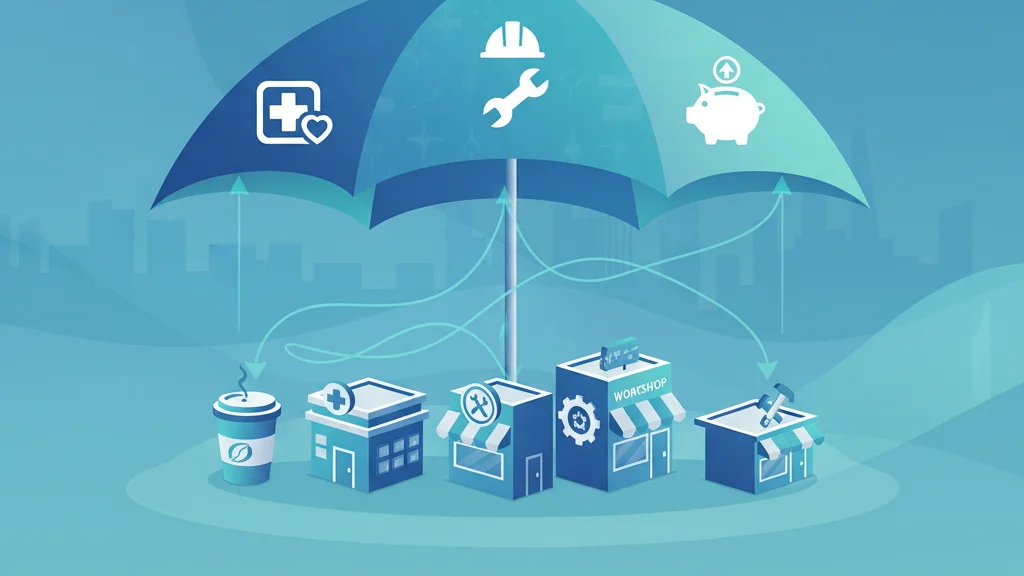
A strong benefits package goes far beyond a basic health plan. PEOs give you access to a full suite of ancillary and voluntary benefits that are crucial for attracting and retaining top talent in a competitive market. These are the kinds of perks typically reserved for large corporations. Through a PEO’s master policies, you can offer your team comprehensive dental and vision coverage, life and disability insurance, and even employee assistance programs (EAPs). This allows you to build a benefits offering that truly supports your employees’ well-being without the administrative headache of sourcing and managing multiple vendors. Offering a robust package of employee benefits demonstrates a commitment to your team, which is a powerful differentiator for any growing business.
Solving Multi-State Compliance Challenges
As your business grows, expanding your team across state lines introduces a maze of new regulations. Each state has its own rules for payroll taxes, unemployment insurance, and workers’ compensation, creating a significant compliance burden. This is where a PEO becomes an invaluable strategic partner. By acting as the employer of record, the PEO takes on the responsibility for managing these complex, state-specific requirements. They handle tax filings under their own EIN and ensure your business stays compliant with local labor laws, no matter where your employees are located. This arrangement frees your leadership team from getting bogged down in administrative details, allowing you to focus on scaling your operations and supporting your distributed team with the right commercial insurance infrastructure.
PEO Insurance vs. Traditional Plans: Which Is Right for You?
Understanding the differences between PEO-provided insurance and traditional insurance purchased directly helps you make an informed decision. Here is a side-by-side comparison:
| Factor | PEO Insurance | Traditional Insurance |
|---|---|---|
| Purchasing power | Large-group rates pooled across hundreds of businesses | Small-group or individual rates based on your company alone |
| Plan options | Multiple plans curated by the PEO from major carriers | Whatever plans are available in the small group market |
| Administration | PEO handles enrollment, billing, claims, compliance | You manage everything internally or hire an HR team |
| Workers’ comp | Master policy with pooled experience modification rating | Individual policy with your own experience mod |
| Cost structure | Service fee (2-12% of payroll or $40-$200 per employee/month) plus premiums | Premiums plus internal administrative costs |
| Compliance | PEO ensures ACA, COBRA, FMLA, and ERISA compliance | You are responsible for all regulatory compliance |
| Portability | Plans are tied to the PEO relationship | Plans are yours to keep and modify |
| Flexibility | Limited to PEO’s carrier relationships and plan menu | Full control over carriers, plans, and benefit design |
The core tradeoff is clear: PEO insurance delivers better rates and reduces administrative burden, but it comes with less flexibility and plan portability. If you leave the PEO, your employees may lose access to their current health plans and need to transition to new coverage.
For many small businesses, particularly those with fewer than 50 employees, the savings and access to better benefits outweigh the reduced flexibility. Businesses with strong existing benefits programs or highly specialized insurance needs may find traditional arrangements more suitable.
How Does a PEO Actually Lower Insurance Costs?
PEOs achieve lower insurance costs through several mechanisms that individual small businesses cannot replicate.
The Power of Group Purchasing
The fundamental advantage is scale. A PEO with 10,000+ co-employees across its client base negotiates with insurance carriers as a single large employer. Carriers offer better rates to large groups because the risk is spread across a larger, more diverse population. A 20-person company joining a PEO effectively becomes part of a 10,000-person benefits group overnight.
Smarter Workers’ Comp Through Risk Pooling
Workers’ compensation premiums are heavily influenced by your experience modification rate (EMR), which reflects your claims history relative to your industry average. A single serious claim can dramatically increase premiums for a small business. PEOs pool workers’ comp risk across all client companies, which smooths out the impact of individual claims and often results in a lower blended rate.
Letting Experts Handle Claims Management
PEOs employ professional claims managers who actively manage workers’ comp and health insurance claims. Faster claim resolution, effective return-to-work programs, and proactive safety training all contribute to lower overall costs. Businesses that partner with PEOs report lower injury rates and faster claim closures.
Gaining Efficiency and Cutting Admin Work
Managing employee benefits for a small business requires significant time and expertise. Benefits enrollment, COBRA administration, ACA reporting, and claims resolution all demand attention. When a PEO handles these tasks, you eliminate the need for dedicated benefits administration staff or expensive benefits consultants. According to NAPEO data, businesses using PEOs grow 7-9% faster than comparable non-PEO businesses, partly because owners redirect administrative time toward revenue-generating activities.
Your Checklist for Evaluating PEO Insurance
Not all PEOs deliver the same insurance value. Before signing a client service agreement, evaluate these critical factors.
1. Look Beyond the Quote: Compare Plan Documents
Do not rely on marketing materials. Request detailed plan documents, including premium schedules, deductibles, copays, network directories, and formularies. Compare these side-by-side with what you could obtain independently in the small group market. The goal is to verify that the PEO’s plans genuinely offer better value, not just different packaging.
2. Check the Carrier’s Quality and Network
Check which insurance carriers the PEO works with. Major national carriers (UnitedHealthcare, Blue Cross Blue Shield, Aetna, Cigna) generally offer broader provider networks and more reliable claims processing than smaller regional carriers. Make sure your employees’ current doctors and hospitals are in the PEO’s plan networks before committing.
3. Know Exactly What You’re Paying For
PEOs typically charge either a percentage of gross payroll (2-12%) or a flat per-employee-per-month (PEPM) fee ($40-$200). Ask for a complete fee breakdown that separates administrative fees from insurance premiums. Some PEOs bundle everything into a single opaque fee, making it difficult to determine whether you are actually saving money on insurance.
Unpacking PEO Fee Structures
PEO pricing generally falls into two categories: a percentage of your gross payroll, typically between 2% and 12%, or a flat per-employee-per-month (PEPM) fee, which usually ranges from $40 to $200. The right model depends on your payroll size and consistency. A percentage-based fee can fluctuate with overtime or bonuses, while a PEPM fee offers more predictable monthly costs. The most important step is to demand transparency. Ask for a complete fee breakdown that clearly separates the PEO’s administrative charges from the actual cost of insurance premiums. This is the only way to accurately assess the value and ensure you’re getting a fair deal.
Real-World Cost Variation
The potential savings can be substantial. For example, one 100-employee business saw its monthly health insurance premiums drop from $45,000 to $32,000 after partnering with a PEO, resulting in an annual savings of $156,000. While that’s a dramatic example, the principle holds true even for much smaller teams. For many businesses, especially those with fewer than 50 employees, the access to superior benefits and significant cost reductions makes a PEO arrangement a powerful strategic tool. It transforms insurance from a burdensome expense into a competitive advantage for attracting and retaining talent, justifying the administrative fee many times over.
4. Read the Fine Print: Review the CSA
The CSA is the contract governing the co-employment relationship. Pay close attention to:
- Termination provisions: How much notice is required? What happens to benefits upon termination?
- Insurance portability: Can employees maintain coverage through COBRA if you leave the PEO?
- Fee escalation caps: Does the contract limit annual increases in administrative or benefits fees?
- Liability allocation: Who is liable for employment-related claims, tax penalties, or compliance failures?
5. Look for CPEO Certification and Accreditation
The IRS Certified Professional Employer Organization (CPEO) designation means the PEO has met strict federal financial and tax compliance standards. CPEOs accept sole responsibility for payroll tax obligations, which provides an additional layer of protection for client businesses. Also look for accreditation from the Employer Services Assurance Corporation (ESAC), which independently verifies financial stability and operational compliance.
6. Ask for Their Claims History and Loss Ratios
A PEO’s workers’ compensation loss ratio indicates how well they manage risk. High loss ratios suggest poor safety management or adverse client selection, which could lead to premium increases. Request the PEO’s loss history and compare it to industry benchmarks.
7. Evaluate Service Quality and HR Support
The quality of service you receive can make or break your PEO experience. While some companies find their PEO partner frees up valuable time and simplifies compliance, others share stories of high costs and lackluster support. It’s critical to understand that not all PEOs are created equal. Some business owners find that the HR advice provided isn’t always robust enough for complex situations, meaning you might still need an HR consultant for specific issues. Before you commit, dig deeper than the sales pitch. Ask for client references in your industry, inquire about their client-to-support-rep ratio, and request service level agreements (SLAs) for response times. A great PEO acts as a true partner, not just a processor.
8. Identify Leading PEO Providers
As you start your research, you’ll notice several major players in the PEO space. Providers like Rippling, TriNet, Engage PEO, and ADP TotalSource are frequently recommended for their comprehensive offerings and ability to handle complex, multi-state compliance. However, bigger isn’t always better. Many business owners find that smaller, local PEOs offer more personalized customer support and a more responsive service model. The right choice depends entirely on your business’s unique needs, size, and culture. Your goal should be to find a partner—whether large or small—that aligns with your strategic goals and provides the level of support your team requires to thrive.
The Potential Risks of PEO Insurance
PEO insurance is not the right fit for every business. Understanding the potential downsides helps you make a balanced decision.
Giving Up Some Control Over Benefits
When you join a PEO, you use their insurance carriers and plan options. If you have strong preferences for specific carriers, plan designs, or benefit structures, a PEO may limit your choices. Businesses with highly customized benefits packages may find the transition disruptive.
What Happens if You Leave the PEO?
If you decide to leave the PEO, your employees lose access to the PEO’s group health plan. They would need to transition to a new employer-sponsored plan or COBRA continuation coverage, which can be expensive and administratively complex. This creates a degree of dependency on the PEO relationship that some business owners find uncomfortable.
Understanding Shared Experience Mod Rates
While risk pooling can lower workers’ compensation costs, it can also work against you. If other businesses in the PEO’s pool have poor safety records, their claims can affect the overall pool’s experience rating and potentially raise your costs. Ask the PEO how they manage risk selection and whether they segment pools by industry or risk level.
When Costs Might Not Be Lower
PEO insurance is not automatically cheaper than traditional insurance. The administrative fees charged by PEOs can offset insurance savings, particularly for businesses that already have competitive rates. A business with a strong claims history, low EMR, and existing large-group access may not see meaningful savings through a PEO.
Annual Rate Increases Still Apply
One of the biggest misconceptions about PEOs is that their insurance rates are locked in. While you’ll likely see better initial premiums thanks to their group purchasing power, PEOs are not immune to the market forces that drive up healthcare costs. Every year, insurance carriers will review the claims history of the PEO’s entire member pool and adjust rates. This means your business can still face yearly price increases. The challenge is that you have little room to negotiate when a renewal comes in high, as your costs are tied to the performance of thousands of other employees. It’s a crucial part of the PEO tradeoff: you gain access to great benefits now, but you give up some control over future costs.
How It Affects Your Employee Experience
Employees may receive W-2s from the PEO rather than your company, which can cause confusion. Benefits administration and HR inquiries may be routed through the PEO’s support team rather than your internal staff, potentially changing the employee experience. Clear communication during the transition is essential.

The “Lock-In” Effect of Co-Employment
While the co-employment model is what gives you access to enterprise-level benefits, it also creates a powerful dependency often called the “lock-in” effect. Because the PEO is the legal employer of record for benefits, your health insurance plans are tied to their master policy, not your company. If you decide to end the partnership, you can’t take those plans with you. This forces a major disruption for your team, who must either move to a new plan you secure or transition to expensive COBRA continuation coverage. This potential upheaval makes switching providers a complex and high-stakes decision, creating a strong incentive to stay put. It’s a critical factor to weigh when you evaluate a PEO partnership and its long-term implications for your business.
PEO Regulations: What Florida Businesses Need to Know
Florida has one of the most established PEO regulatory frameworks in the country, which is relevant for businesses operating in the state. Understanding these regulations helps ensure you partner with a compliant, reputable PEO.
Verifying Florida PEO Licensing
Florida requires all PEOs operating in the state to be licensed by the Florida Department of Business and Professional Regulation (DBPR). Licensed PEOs must meet specific financial requirements, including maintaining positive working capital and adequate bonding or security deposits. The state maintains a public database of licensed PEOs, which you can verify before entering into any agreement.
Understanding the Employee Leasing Act
Florida’s Employee Leasing Companies Act (Chapter 468, Part XI, Florida Statutes) governs PEO operations in the state. The law establishes requirements for:
- Financial responsibility and reporting
- Workers’ compensation coverage obligations
- Client and employee notification requirements
- Record-keeping and audit provisions
- Grounds for license revocation or suspension
Meeting Workers’ Comp Obligations in Florida
In Florida, PEOs are required to provide workers’ compensation coverage for all co-employed workers. The PEO holds the workers’ compensation policy and is responsible for premium payments and claims administration. Florida law recognizes the PEO as the employer for workers’ compensation purposes, which means the PEO’s experience modification rate applies to your employees.
This is particularly important for Florida businesses in industries with high workers’ comp costs, such as construction, healthcare, and hospitality. Partnering with a PEO that has a strong safety program and favorable experience modification rate can significantly reduce your workers’ compensation expenses.
The Importance of CPEO Status
Beyond state licensing, some PEOs hold IRS Certified Professional Employer Organization (CPEO) status. This federal certification provides additional protections: CPEOs accept sole liability for federal employment tax obligations, meaning if the CPEO fails to remit taxes, the IRS looks to the CPEO rather than the client business. Florida businesses should prioritize PEOs that hold both state licensure and CPEO certification for maximum protection.
Staying on Top of Regulatory Changes
Florida continues to strengthen its PEO regulatory framework. Recent legislative updates have increased financial security requirements for PEOs and improved transparency in reporting. Businesses should verify that any PEO they consider holds a current, active Florida license and has no pending disciplinary actions.
Navigating PEO regulations in Florida can be complex. Contact Insurance Underwriters for expert guidance on finding the right PEO insurance solution for your Florida business.
Is PEO Insurance a Good Fit for Your Business?
PEO insurance delivers the greatest value for specific business profiles. Consider whether your business matches these characteristics.
Small Businesses (5-50 Employees)
This is the sweet spot for PEO insurance value. Businesses in this size range typically face the highest small-group insurance premiums relative to larger employers and lack the administrative resources to manage benefits efficiently. The jump from small-group to large-group insurance rates through a PEO can save thousands per employee annually.
Growing Teams Facing ACA Requirements
When your business approaches 50 full-time equivalent (FTE) employees, you trigger Affordable Care Act (ACA) employer mandate requirements. PEOs absorb the complexity of ACA compliance, including tracking employee hours, calculating FTE counts, filing 1094-C and 1095-C forms, and ensuring offered plans meet minimum value and affordability standards.
Companies in High-Risk Industries
Businesses in construction, manufacturing, healthcare, and hospitality often face disproportionately high workers’ compensation premiums. PEO risk pooling can materially lower these costs, and the PEO’s safety programs and claims management expertise provide additional value that goes beyond premium reduction.
Companies Competing for Top Talent
If you are losing candidates to larger competitors because of inferior benefits, PEO insurance levels the playing field. Offering Fortune 500-caliber health insurance, dental, vision, disability, life insurance, and 401(k) retirement plans makes your compensation package competitive without building an enterprise-scale HR department.
According to NAPEO research, businesses using PEOs experience 12% lower employee turnover and are 50% less likely to go out of business. These outcomes are largely driven by the ability to offer better benefits and reduce administrative overhead.
Meeting Employee Expectations for Benefits
The Importance of a Strong Benefits Package
In the competition for talent, a strong benefits package isn’t just a perk; it’s a fundamental expectation. Research shows that for the vast majority of people, health insurance is a critical factor when choosing a job. In fact, one study found that 81% of employees consider a company’s benefits package when deciding whether to accept a job offer. This puts small businesses in a tough spot, often struggling to offer plans that can compete with those from larger corporations. A PEO partnership directly addresses this challenge by giving you access to large-group health plans. This allows you to present a benefits package that not only attracts top candidates but also helps keep your valuable employees from looking for opportunities elsewhere.
Improving the Employee Experience with Technology
Offering great benefits is only half the battle; ensuring your team can easily understand and use them is just as important. Clunky enrollment portals, confusing plan documents, and long waits for answers to simple HR questions can lead to frustration and low engagement with the benefits you worked so hard to provide. PEOs solve this by providing modern, user-friendly technology, including mobile apps and online portals for benefits management. The most forward-thinking partners, like us at Insurance Underwriters, take it a step further. We leverage AI-powered platforms that provide your employees with instant, 24/7 answers to their benefits questions, dramatically reducing the administrative burden on your team and ensuring your employees feel supported and valued.
PEO vs. Other HR Options: How Do They Compare?
Understanding how PEOs compare to alternatives helps you choose the right model for your situation.
| Option | Co-Employment? | Insurance Benefits? | Best For |
|---|---|---|---|
| PEO | Yes | Full suite (health, workers’ comp, EPLI, retirement) | Businesses wanting comprehensive HR + benefits |
| ASO (Administrative Services Organization) | No | Benefits administration only, no group purchasing power | Businesses wanting HR help but keeping their own insurance |
| EOR (Employer of Record) | Full employer transfer | Varies | Businesses hiring in states or countries where they lack an entity |
| HR Outsourcing | No | No | Businesses needing specific HR functions (recruiting, training) |
| Payroll Service Provider | No | No | Businesses needing only payroll and tax filing |
| Insurance Broker | No | Advises on plans, no group pooling | Businesses wanting insurance guidance with full control |
For businesses whose primary goal is accessing better insurance benefits while offloading HR administration, a PEO is typically the best fit. An insurance broker can complement or serve as an alternative if you want to maintain full control over your benefits program while still getting expert guidance on plan selection and carrier negotiations.
Health Reimbursement Arrangements (HRAs)
If the co-employment model of a PEO feels like too much of a commitment, but you still want to offer quality health benefits, a Health Reimbursement Arrangement (HRA) is a solid alternative. HRAs are employer-funded health benefit plans that reimburse employees, tax-free, for qualified medical expenses, including their individual health insurance premiums. You can think of it as a monthly allowance for healthcare. You set the budget, and your team chooses the coverage that fits their needs. This model gives you predictable cost control and offers your employees flexibility. The main trade-off is that it places the responsibility of shopping for insurance squarely on your employees’ shoulders, unlike the curated, large-group plans available through a PEO.
Qualified Small Employer HRA (QSEHRA)
The Qualified Small Employer HRA, or QSEHRA, is tailored for businesses with fewer than 50 full-time employees. It’s a straightforward way for smaller companies to help with healthcare costs without the administrative weight of a traditional group plan. With a QSEHRA, you offer a fixed monthly allowance that your employees can use to buy their own individual health insurance or pay for other medical expenses. The IRS sets annual limits on how much you can contribute, which makes your costs predictable year after year. While a QSEHRA is an excellent tool for managing your budget, it doesn’t offer the group purchasing power or the comprehensive administrative support that comes with a PEO partnership.
Individual Coverage HRA (ICHRA)
For businesses that need even more flexibility, the Individual Coverage HRA (ICHRA) is a powerful tool. Unlike a QSEHRA, an ICHRA is available to businesses of any size and has no contribution limits, giving you complete control over your benefits budget. The real strength of an ICHRA is its customization. You can create different classes of employees—for instance, salaried versus hourly, or based on geographic location—and offer different allowance amounts to each group. This lets you design a benefits strategy that aligns perfectly with your business goals. While an ICHRA provides unmatched flexibility, it still requires employees to find their own plans on the individual market, a task that is simplified with the expert-curated options available through a PEO.
In-House HR with a Payroll Service
Many businesses start by handling HR internally while using a third-party service for payroll. This approach seems simple enough at first: you manage your people, and a provider handles the paychecks and tax filings. However, this model often conceals a huge administrative workload. Managing employee benefits is practically a full-time job, involving open enrollment, COBRA administration, ACA reporting, and helping employees with claims. These tasks demand significant time and expertise, pulling you away from focusing on your core business. A PEO is designed to absorb this entire administrative burden, freeing up your key people to focus on what they do best.
The time saved is significant. According to data from the National Association of Professional Employer Organizations (NAPEO), businesses that partner with a PEO grow 7-9% faster than their peers. This growth is largely because owners and managers can redirect their time from administrative tasks to revenue-generating activities. While an in-house model combined with a payroll service gives you control, it also leaves you responsible for sourcing insurance, managing compliance, and handling every employee question. A PEO consolidates these functions, providing not just insurance access but a complete HR infrastructure that supports your growth and protects your most valuable asset: your time.
Frequently Asked Questions About PEO Insurance
What is a PEO in insurance?
A PEO (Professional Employer Organization) in insurance refers to the co-employment model where a PEO provides and administers insurance benefits, including group health, workers’ compensation, EPLI, and retirement plans, for the employees of its client businesses. The PEO leverages its pooled employee base to negotiate better insurance rates than small businesses could obtain independently.
Does a PEO replace my existing insurance?
Yes. When you enter a PEO relationship, your employees transition to the PEO’s insurance plans. Your existing health insurance, workers’ compensation, and related policies are typically canceled and replaced with the PEO’s group coverage. Always compare the PEO’s plans against your current coverage before making the switch.
Can I leave a PEO and keep my insurance?
No. PEO insurance is tied to the co-employment relationship. If you terminate the PEO agreement, your employees lose access to the PEO’s group plans. COBRA continuation coverage may be available for health insurance, but you will need to secure new employer-sponsored coverage. Plan your exit carefully to avoid gaps in coverage.
How much can a PEO save on health insurance?
Savings vary depending on your current rates, employee count, industry, and the specific PEO. Small businesses with 10-50 employees typically see health insurance savings of 10-30% compared to small group market rates. Some businesses report saving $1,000-$3,000 per employee annually. Request actual premium comparisons from the PEO rather than relying on general estimates.
Are PEOs regulated in Florida?
Yes. Florida requires PEOs to be licensed by the Department of Business and Professional Regulation under the Employee Leasing Companies Act. Licensed PEOs must meet financial security requirements, provide workers’ compensation coverage, and comply with reporting and audit obligations. Florida businesses should verify a PEO’s license status before entering any agreement.
What is the difference between a PEO and an insurance broker?
An insurance broker advises you on plan selection and helps you shop for coverage, but you purchase and manage the insurance directly. A PEO becomes your co-employer and provides insurance as part of a comprehensive HR services package. The PEO holds the master policies and administers all benefits. Both models have advantages depending on your needs. Insurance Underwriters offers benefits and payroll support for both approaches.
Building Your PEO Insurance Strategy
Choosing the right insurance structure is one of the most consequential decisions a small business owner makes. PEO insurance offers a proven path to better benefits, lower costs, and reduced administrative burden, but it requires careful evaluation to ensure it aligns with your business needs, growth plans, and risk tolerance.
The key is to compare actual plan documents, verify carrier quality, understand the fee structure, and confirm regulatory compliance before committing. Florida businesses benefit from one of the strongest PEO regulatory frameworks in the country, which provides meaningful protections for employers and employees alike.
Whether you are exploring PEO insurance for the first time or evaluating whether your current arrangement still delivers value, Insurance Underwriters can help. Our team specializes in employee benefits, workers’ compensation, group health insurance, and PEO structuring, with an AI-powered Benefits Administration platform that eliminates up to 99% of repetitive HR and benefits questions. Employers comparing benefit options can also request a group health insurance quote.
Get your customized PEO insurance quote today and discover how the right insurance strategy can transform your business.
Key Takeaways
- Level the Playing Field on Benefits: A PEO gives your business access to large-group health insurance and workers’ comp rates typically reserved for major corporations. This allows you to offer a competitive benefits package that helps attract and retain top talent.
- Weigh Convenience Against Control: Partnering with a PEO means you offload HR administration but give up some control over your specific insurance plans. Since coverage is tied to the PEO, ending the relationship requires you to secure new plans for your employees, a significant consideration for your long-term strategy.
- Do Your Due Diligence: A PEO is a major business partner, not just a vendor. Scrutinize the plan documents, verify provider networks, demand a transparent fee structure, and confirm the PEO holds key credentials like state licensing and IRS certification before you sign an agreement.
Comments
Comments are closed.