

Business Interruption Insurance Florida: A Small Business Guide
A hurricane, fire, or other covered property loss can stop a small business before its bills stop arriving. A restaurant may lose sales while repairs are underway, while a contractor still has payroll, utilities, and equipment costs to manage. That gap between interrupted operations and ongoing obligations is where the right coverage matters.
Request a free business insurance quote to have a Florida insurance advisor review your coverage.
In Florida, business interruption insurance Florida coverage can replace income and help pay continuing operating expenses when covered property damage forces a business to temporarily close or leave its premises. It is generally added to a commercial property policy or included in a package policy, rather than purchased as a standalone policy. Coverage depends on the covered cause of damage, policy limits, and the restoration period.
Before choosing limits, it helps to understand what this coverage is designed to protect, what it leaves out, and how Florida’s hurricane and flood risks affect the answer.
What Is Business Interruption Insurance for Florida Businesses?
For a small business owner, business interruption insurance Florida coverage is designed to help replace income when a covered event forces the business to stop operating. It typically applies after covered property damage makes you vacate your premises, such as hurricane-related damage covered by the underlying property policy. The purpose is not to insure the building itself. It helps protect the financial activity that the building normally supports.
For example, imagine a Florida restaurant whose kitchen and dining area are damaged by a covered hurricane loss. Even after the immediate property damage is documented, the business may be unable to serve customers while repairs are completed. Business interruption coverage can help compensate for the income the restaurant would have earned during that period. Subject to the policy’s terms, limits, deductible, and covered cause of loss. The same principle can apply to a contractor, retailer, or service company that cannot use its insured location.
Government guidance describes this coverage as compensation for lost income when a company must vacate its premises because of disaster-related damage covered under its property policy. Including damage from a hurricane. Read the Palm Beach County emergency management insurance guidance for the underlying explanation.
Business interruption insurance is also called business income insurance
You may see this protection called business income insurance instead of business interruption insurance. The names generally refer to coverage intended to address the income impact of a covered interruption. In practical terms, the calculation is based on the profits your business would have earned, using your financial records, had the damaging event not occurred. Accurate revenue, expense, payroll, and tax records therefore matter when setting limits and documenting a claim.
It is added to property or package coverage
Business interruption insurance is not normally purchased as a stand-alone policy. It is added to a commercial property policy or included in a package policy. That connection is important because the interruption generally must result from a type of property damage the policy covers. A business income endorsement cannot turn an excluded cause of loss into a covered one.
When reviewing coverage, ask how the policy defines covered damage, the period for which income may be paid, and the records needed to support the projected profits. A Florida business may also need to examine hurricane, wind, and flood provisions separately, because the details of the property coverage determine whether the resulting interruption can respond.
What Business Interruption Insurance Covers and Excludes
Business interruption coverage is designed to help keep a company financially steady while it recovers from covered physical damage. The policy does not simply pay every bill after a closure. It responds to a covered event, the terms and limits of the policy, and the financial records used to calculate the loss.
What can be covered during the interruption?
Covered business income may include the revenue or profit the business would reasonably have earned if the damage had not occurred. It can also help with continuing operating expenses, such as electricity, that remain due even when normal business activity has stopped. These costs matter for a restaurant with refrigeration, a contractor maintaining a leased office, or a retailer keeping essential utilities active. The Florida emergency management guidance explains that operating expenses can continue to be covered during a temporary halt, subject to the policy terms: Florida business interruption guidance.
Depending on the policy, coverage may also help pay for:
- Temporary relocation: Moving to and operating from a short-term location while the original premises are repaired.
- Short-term payroll gaps: Maintaining essential employee pay when a brief closure interrupts normal cash flow.
- Extra expense: Paying reasonable costs above normal operating expenses to avoid a full shutdown during restoration. For example, a business might rent temporary equipment, arrange expedited repairs, or use another workspace. In some situations, extra expense coverage alone may be sufficient, but that depends on the business’s recovery plan and policy design.
What is usually excluded?
Standard business interruption coverage generally requires covered physical damage to trigger the claim. A slowdown, loss of customers, or voluntary closure by itself may not qualify. The underlying property policy and its covered perils are therefore just as important as the income limit.
Flood is a critical Florida distinction. Flood damage is typically excluded from standard commercial property and business interruption coverage, so a flood-related closure may not qualify unless the business has the appropriate separate protection. Review commercial flood insurance options rather than assuming hurricane or property coverage includes rising water.
It is also wise to review the property policy alongside commercial property insurance. Ask how the policy defines covered damage, restoration period, payroll, relocation, extra expense, deductibles, and exclusions before an event occurs. Those details determine whether the coverage reflects how the business actually operates.
Why Do Florida Small Businesses Need Business Interruption Coverage?
Florida business owners plan around hurricane season, but a company can also be disrupted by flooding, severe storms, wind damage, or a government-ordered closure. The financial problem is not limited to repairing walls, equipment, or inventory. A restaurant may lose weeks of sales while its kitchen is restored. A contractor may be unable to dispatch crews when its office or storage yard is damaged. A retail shop may keep paying rent, utilities, and employees even while customers cannot enter.
Weather can stop revenue while expenses continue
Florida’s exposure to hurricanes, floods, and other natural disasters makes business interruption coverage an important part of a broader risk plan. It is intended to help mitigate the financial impact when covered property damage forces a business to vacate or stop operating. The coverage can replace eligible income and help with continuing operating expenses, depending on the policy terms. Florida businesses face recurring weather-related interruption risks, even when the owner has taken sensible steps to protect the property.
Florida’s emergency conditions can also affect access, utilities, suppliers, and customers beyond the business’s own four walls. Some policies may extend coverage when a governmental body mandates a shutdown, but that protection is not automatic. The cause of the shutdown, the policy wording, and any applicable exclusions matter. Flood is a separate concern as well, so do not assume standard property or business interruption coverage handles every flood-related loss.
Fast recovery protects your place in the market
Business interruption coverage can be as vital to survival as fire insurance. A closed restaurant can lose regular customers to another neighborhood location. A contractor may miss project deadlines and send work to a competitor. A retail shop may lose seasonal sales that cannot be recovered after reopening. Quick resumption matters because a business that remains closed while repairs continue may lose customers and market position. Coverage may help fund reasonable steps to resume operations, such as temporary space or other approved extra expenses, when those options are included in the policy.
Owners who depend on a specialized supplier or another nearby business should also ask whether contingent business interruption coverage is appropriate. A disaster affecting a key supplier, distributor, or customer can interrupt operations even when the insured premises is undamaged.
Check the limit against a realistic recovery period
Do not set the limit based only on how long you expect a minor repair to take. Major disasters can delay permits, contractors, equipment, utilities, and supply deliveries. Florida’s consumer guidance recommends checking that limits cover more than a few days because recovery can take longer than anticipated. Review sales, fixed expenses, payroll needs, seasonal fluctuations, and the time required to rebuild or relocate. A discussion of parametric hurricane insurance can also help you compare tools designed to provide funds after defined hurricane conditions, while keeping the distinctions between products clear.
How Hurricane and Flood Coverage Differ in Florida
Hurricane and flood losses can happen during the same storm, but insurance policies do not treat them as the same cause of damage. That distinction matters when a restaurant, contractor, retailer, or service company is trying to replace lost income and keep paying its bills.
| Coverage | What may trigger it | What it may help pay for |
|---|---|---|
| Standard business interruption | Covered physical damage to the insured property that forces the business to suspend or reduce operations. | Lost income and continuing operating expenses during the covered restoration period. |
| Flood coverage | Flood damage, including rising or storm-driven water, when the business has a policy that specifically covers flood. | Covered physical flood damage and, depending on the policy, related business income losses. |
| Hurricane-triggered business interruption | Hurricane-related property damage covered under the business property policy, rather than flood damage excluded by that policy. | Lost income, ongoing expenses, and potentially extra expenses used to avoid a complete shutdown. |
When hurricane damage can trigger business income coverage
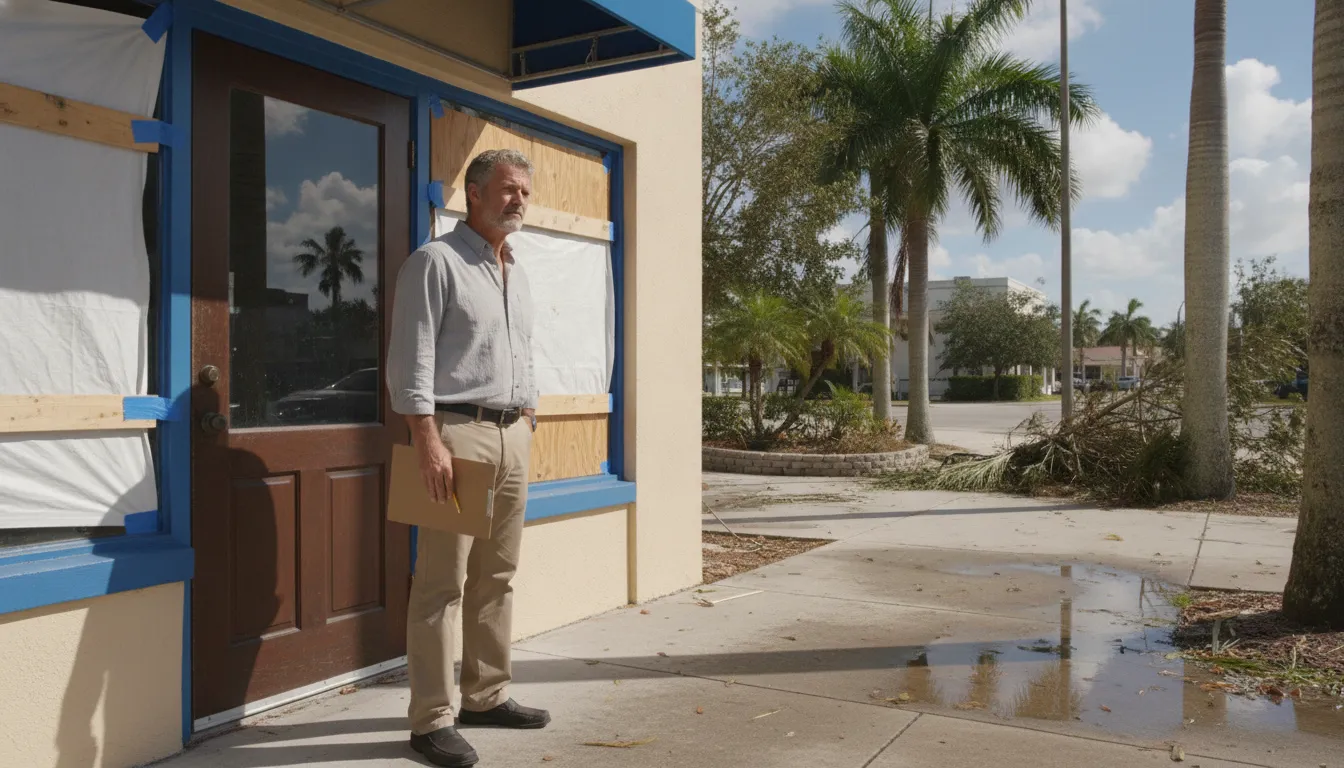
Standard business interruption coverage generally responds only after covered physical damage. Florida emergency guidance describes coverage for lost income when a business must leave its premises because of disaster-related damage covered by its property policy, such as a hurricane. It may also address operating expenses that continue while operations are temporarily halted. Review the public hurricane insurance guidance for the covered-damage requirement.
Extra expense coverage can be especially practical after a hurricane. If a contractor rents temporary space, a restaurant uses another kitchen, or a retailer pays for expedited repairs to keep serving customers. This coverage may reimburse reasonable costs above normal expenses that help avoid a shutdown.
Why flood requires a separate question
Flood is typically excluded from standard commercial property and business interruption coverage. A business may therefore have hurricane wind damage covered while water damage from flooding is not. Review your commercial flood insurance options separately, and confirm whether the flood policy includes business income protection or only physical property coverage.
Also check the waiting period. Business interruption coverage generally has a 48-hour waiting period after a covered loss before benefits begin. Finally, a company that depends on a supplier, landlord, or key customer may need contingent business interruption coverage when that other business is affected by a disaster. The policy language controls, so compare the covered peril, exclusions, waiting period, limits, and extra expense provisions before hurricane season.
The Main Types of Business Interruption Coverage
Business interruption coverage is not one single design. Policies can address a shutdown at your own premises, a disruption involving a key supplier or customer, or the slower recovery that follows reopening. The three main types are standard business interruption insurance, contingent business interruption insurance, and extended business interruption insurance.
Standard business interruption insurance
Standard business interruption insurance responds when covered property damage forces your business to stop operating or move out temporarily. For example, a hurricane could damage a contractor’s office, a restaurant, or a retail location. If the damage is covered under the related property policy, the business interruption portion may help replace lost income and address eligible ongoing expenses during the restoration period. The policy wording controls what qualifies, how the loss is calculated, and how long coverage lasts.
This coverage is usually added to commercial property insurance or included in a package rather than purchased as a stand-alone policy. A business owners policy may package property and business income protection for eligible small businesses, but the limits and covered causes of loss still need to be reviewed carefully.
Contingent business interruption insurance
Contingent business interruption insurance addresses a different problem: your location may be usable, but another business you rely on is affected by a disaster. A supplier may be unable to deliver materials, a key customer may suspend operations, or a service provider may be offline. If that interruption prevents your business from earning income, contingent coverage may respond when the policy’s requirements are met. It is especially worth discussing if your operations depend on a small number of suppliers, distributors, or major commercial customers.
Extended business interruption insurance
Reopening the doors does not always mean revenue immediately returns to normal. Customers may have changed buying habits, employees may still be rebuilding their routines, or repairs and neighborhood damage may continue to affect traffic. Extended business interruption insurance can continue coverage for a defined period after operations resume when income has not yet returned to pre-disaster levels.
Florida’s Office of Insurance Regulation collects catastrophe claims information from insurers, including business interruption claims, after qualifying events. That reporting recognizes how disruptions can affect businesses beyond the initial property damage. Ask an independent insurance professional to compare these coverage types with your revenue cycle, supply chain, and recovery timeline before choosing limits.
How Much Business Interruption Insurance Costs in Florida
There is no responsible one-size-fits-all premium for business interruption coverage. The price is tied in part to the risk that a covered disaster will damage the insured premises. All else being equal, a restaurant may cost more to insure than a real estate agency because cooking equipment and other conditions can create a greater fire risk. Florida exposure, the building, operations, policy limits, deductible, and related property coverage also matter. The Palm Beach County emergency management guidance explains the connection between premises risk and pricing.
Choose the limit around the loss you can afford
Instead of starting with a premium quote, start with the financial gap a shutdown could create. Estimate the income you would lose while operations are interrupted, then account for expenses that continue, such as rent, utilities, debt payments, and essential payroll. A practical rule of thumb from the same public guidance is to calculate the maximum financial loss your business can afford. The amount above that tolerance is what you should consider insuring, subject to the policy’s terms and underwriting requirements.
Check the waiting period and coverage duration
Business interruption coverage generally has a waiting period of about 48 hours before it begins after a disaster. That means the first two days of lost income may not be covered, depending on the policy language and how the waiting period is defined. Keep enough cash reserves to handle that gap.
Also verify how long benefits can continue. Some plans may limit coverage to a short period, such as approximately two consecutive weeks. That could be inadequate if a hurricane, fire, or major property loss requires lengthy repairs, permitting, equipment replacement, or restocking. Public guidance recommends checking that limits cover more than a few days because recovery can take longer than expected. Confirm the period of restoration, maximum benefit period, and any extended coverage before choosing a policy.
An independent broker can compare the available options and tailor the coverage to your building, industry, financial records, and realistic recovery timeline. The goal is not simply to buy the cheapest option. It is to avoid paying for limits that do not match your risk while avoiding a coverage gap that could put the business under pressure after a covered loss.
How Do You File a Business Interruption Claim in Florida?
Filing a business interruption claim is easier when you treat it as both an insurance notice and a financial documentation project. Start promptly, preserve records, and keep your agent informed as the situation develops. Your policy wording controls the claim, but the following process can help you organize the first steps after a serious loss.
A practical claim process
- Confirm the shutdown followed covered physical damage. Business interruption coverage generally responds when you must vacate or suspend operations because of disaster-related damage covered by your property policy, such as hurricane damage. A loss of income by itself may not satisfy this requirement. Photograph the property, protect it from further damage when safe, and report the underlying property claim promptly. Keep copies of notices, estimates, invoices, and correspondence.
- Confirm what the covered loss allows you to claim. When the physical damage is covered, business interruption coverage can compensate for income you would have earned during the restoration period. Coverage may also address continuing operating expenses, depending on the policy. Ask your agent to explain the waiting period, covered perils, restoration-period definition, deductibles, and any extra-expense provisions before committing to major mitigation costs. The Palm Beach County Office of Emergency Management notes that a waiting period of about 48 hours is common, but your policy may differ. Review the source guidance.
- Document lost profits and ongoing expenses. Gather financial records that show normal revenue, expected profit, payroll, rent, utilities, invoices, tax filings, and other continuing expenses. Business interruption compensation is generally based on profits the business would have earned, supported by its financial records. Keep a separate file for temporary repairs, alternate operating arrangements, and other expenses connected to recovery. Do not estimate from memory when your bookkeeping, point-of-sale system, bank statements, and tax records can provide stronger support.
- Stay in close touch with your insurance agent. Your agent can help you understand how the coverage, limits, endorsements, and claim requirements apply to the loss. Share the steps you are taking to prevent additional damage, preserve customers, or resume limited operations. Ask for written clarification when an issue is unclear, and maintain a dated log of calls, emails, inspections, receipts, and decisions. Early communication can reduce avoidable misunderstandings while the claim is being reviewed.
- Check that the limits allow enough recovery time. Do not assume a few days of coverage will be enough. Major disasters can delay repairs, equipment replacement, permitting, staffing, and the return of customers. Review the policy limit and restoration period with your agent before a disaster, and compare them with realistic recovery scenarios for your Florida business. The Florida Office of Insurance Regulation collects business interruption claims information after catastrophic events, which reinforces how important this coverage line is during widespread losses. See Florida catastrophe reporting information.
Keep the claim focused on verifiable damage, documented financial impact, and clear communication. If the policy language or accounting calculation is difficult to interpret, ask qualified insurance and financial professionals for help before signing a settlement.
Request a free business insurance quote before you set limits, and confirm how a covered Florida loss would affect your income and expenses.
Frequently Asked Questions
What does business interruption insurance cover in Florida?
It can replace lost income and help pay continuing operating expenses, such as electricity, when covered property damage temporarily prevents your business from operating. Depending on the policy, extra expense coverage may also reimburse reasonable costs you incur to keep operating during restoration. See the policy’s covered perils, limits, waiting period, and restoration period for the details. Florida emergency management guidance explains these coverage basics.
Is business interruption insurance required in Florida?
It is not automatically required for every Florida business. It is usually an optional coverage added to a commercial property policy or package policy, rather than purchased on its own. A lender, landlord, contract, or specific industry requirement may still make it necessary for your situation, so review those obligations alongside your policy before deciding to decline it.
How much does business interruption insurance cost in Florida?
There is no single Florida-wide price. Premium depends partly on the risk of a disaster damaging the premises and the type of operation. For example, official Florida guidance notes that, all else equal, a restaurant may cost more to insure than a real estate agency because of greater fire risk. Your income, operating expenses, coverage limit, location, deductible, and selected perils also affect the quote. Review the risk factors with your insurance advisor.
Does business interruption insurance cover hurricanes in Florida?
It may cover lost income when a hurricane causes property damage that is covered under the policy and the damage forces you to vacate or stop operating. It does not automatically cover every hurricane-related loss. Flood is typically excluded from standard property and business interruption coverage and generally requires separate flood insurance. Also check the waiting period, which is generally 48 hours after a disaster, and confirm the limits can support a longer recovery.
Ready to Request Your Business Insurance Quote?
A tailored review can help you see whether your current property and business income coverage fits the risks your Florida business faces. Request a free business insurance quote from Insurance Underwriters, and get straightforward guidance on the next step for your business.
Comments
Comments are closed.