
Commercial Flood Insurance Florida: Business Guide
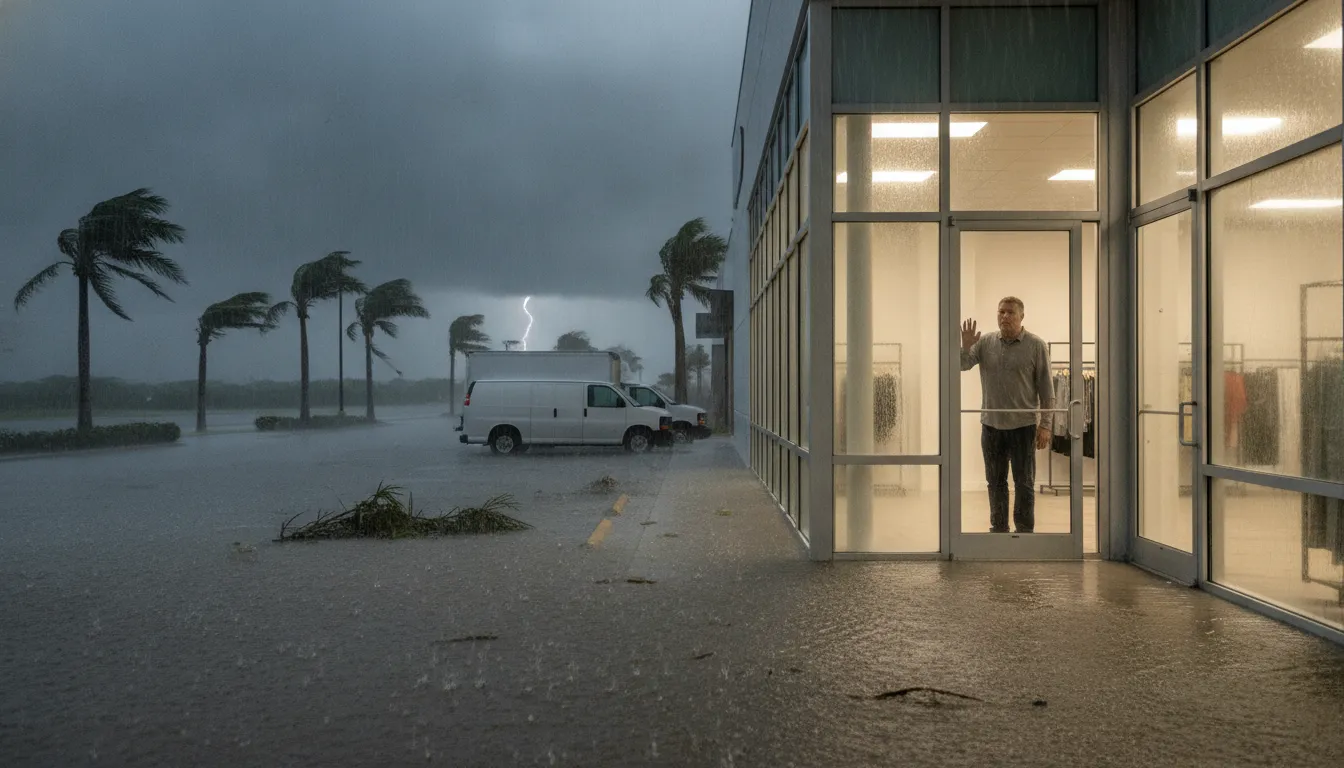
A Florida business can be prepared for wind damage and still face a serious coverage gap when water rises. Storm surge, heavy rainfall, and overflowing waterways can affect a storefront, warehouse, inventory, or equipment with little warning. Schedule a coverage review before the next storm exposes what your current policy leaves out.
Commercial flood insurance Florida is separate coverage designed to protect eligible business buildings, contents, or both from direct physical loss caused by flooding. Most standard business insurance policies do not cover flood damage, according to FEMA, so a commercial property policy alone may not be enough for a Florida business.
The right solution depends on your location, building, contents, financing, and exposure to coastal or inland water. First, it helps to understand why standard commercial policies generally treat flood as a separate peril.
Why Standard Commercial Policies Don’t Cover Flood Damage in Florida
A commercial property policy can protect your building from many covered causes of loss, but flood is usually treated separately. The same gap can apply to a commercial auto policy when water damages vehicles while they are parked at a lot, warehouse, or job site. FEMA explains that most standard business insurance policies do not cover flood damage. So businesses that assume their existing package policy handles every water-related event may discover a serious coverage gap after a storm.
Storm surge is not the same as wind damage
For a Florida business near the coast, a hurricane can create both wind damage and storm surge. Wind may damage a roof, siding, or equipment, while surge pushes seawater inland and inundates property. Those causes of loss are evaluated differently, and a wind-focused commercial policy does not automatically provide flood protection for the water that follows a storm.
Inland businesses are not outside the risk. Heavy rain can overwhelm drainage systems, rivers and canals can overflow, and runoff can move into a building far from the shoreline. Flooding can also affect vehicles and inventory stored in low-lying areas. Whether the water comes from tidal surge, inland overflow, or surface runoff. The relevant question is how the policy defines and covers flood, not simply how close the property is to the beach.
Flood insurance is a separate, single-peril policy
FEMA describes flood insurance as a single-peril policy. It pays for direct physical loss caused by flood as defined by the policy, rather than serving as a broad replacement for commercial property insurance. That distinction matters when deciding whether the building, contents, equipment, inventory, and vehicles need separate protection. Review the policy wording with an advisor instead of assuming that a general water-damage provision responds to flood.
The financial impact can be substantial even after a relatively shallow event. Amwins reports that one inch of water can cause as much as $25,000 in damage. For a contractor with tools, a distributor with stock, or a service company with several commercial vehicles, a small amount of water can interrupt operations quickly.
Understanding the difference between commercial property insurance and flood risk is a practical first step. A Florida risk review should consider both coastal storm surge and inland flooding. Then identify which assets require separate flood coverage and which policy responds to each cause of loss.
NFIP vs Private Commercial Flood Insurance: What’s the Difference
For a Florida business, the right commercial flood insurance Florida solution depends on the property’s value. Flood zone, lender requirements, waiting period, and how much protection the business needs beyond a standard policy. The NFIP offers a federally backed option with defined limits and forms. Private coverage can provide higher limits and broader terms, subject to carrier underwriting and risk assessment.
| Feature | NFIP | Private coverage, such as Amwins FloodFLEX |
|---|---|---|
| Building and contents limits | Up to $500,000 for the building and $500,000 for contents. | FloodFLEX advertises first-dollar building and contents coverage up to $10 million, depending on eligibility and underwriting. |
| Policy form | The General Property Form is designed for non-residential buildings, including many commercial properties, and the contents within them. See FEMA’s commercial coverage summary. | Terms and covered property definitions vary by carrier and policy. Review the wording carefully for buildings, inventory, equipment, and business property. |
| Waiting period | A 30-day waiting period is typical, although exceptions may apply in specific circumstances. | Some private policies offer shorter waiting periods, but the actual effective date depends on the insurer and the risk. |
| Flood zones | Available through the NFIP for eligible properties in participating communities, subject to program rules. | FloodFLEX materials describe availability in A, X, and V zones, including many coastal properties, subject to underwriting. |
| Lender requirement | Businesses in high-risk flood areas with mortgages from government-backed lenders are required to carry flood insurance. FEMA explains the mandatory purchase rule. | A private policy may satisfy a lender’s requirement if it meets the lender’s conditions. Confirm acceptance before binding coverage. |
| Program scale | The NFIP serves approximately 4.7 million policyholders nationwide through 47 Write Your Own insurance companies. | Private coverage is placed through participating insurers and is evaluated on the property’s location, construction, value, and exposure. |
Neither option is automatically better for every Florida business. An NFIP policy may provide a clear solution when its limits fit the building and contents values or when a lender requires coverage. Private insurance may be worth comparing when a warehouse, contractor yard, restaurant, or service operation needs higher limits, a shorter wait, or different coverage definitions. Availability and terms remain subject to the carrier’s review.
Flood coverage should also be considered alongside broader hurricane planning. For businesses evaluating rapid-response protection for certain storm-related triggers, parametric hurricane insurance may be a separate strategy, not a substitute for examining the flood policy wording.
What Commercial Flood Insurance Covers
For a Florida business, flood coverage is usually built around two questions: what physical property needs protection, and what financial disruption could follow a flood. The policy form matters, so review the declarations and endorsements rather than assuming every flood policy covers the same losses.
Covered
The NFIP General Property Form is designed for non-residential buildings and the contents within them. For a qualifying commercial property, building coverage can include the structure and permanently installed components such as the foundation. Electrical wiring, plumbing, heating and cooling equipment, and other built-in systems. Coverage is subject to the policy’s definitions, limits, deductibles, and exclusions.
Contents coverage protects business property kept inside the insured building. Depending on the policy and selected limit, that may include inventory, stock, furniture, equipment, computers, and supplies. A retailer might need protection for merchandise and shelving, while a contractor may need to account for tools, materials, and equipment stored at the premises. Documenting those assets before a storm can make a claim easier to support.
Some private commercial flood policies can also address business interruption, loss of use, or extra expenses after a covered flood. These benefits may help replace income or pay necessary costs while the business repairs and reopens. They are not automatic. Confirm whether the policy includes them, how the waiting period works, and whether coverage applies to the specific cause of interruption.
Flood insurance is separate from commercial auto insurance. Vehicles, mobile equipment, and property away from the insured premises may require different coverage.
Not Covered
Common limitations include sewer backup that is not caused by a covered flood, gradual moisture or seepage, and damage from poor maintenance. Temporary housing or relocation expenses may also be excluded or unavailable under a standard policy. Outdoor property, landscaping, signs, fences, and similar items often have limited coverage or are excluded, depending on the form.
Before buying commercial flood insurance, ask specifically about inventory stored outside, vehicles, detached structures, spoiled goods, cleanup costs, and income loss. A clear comparison of covered property, exclusions, limits, and endorsements helps you close gaps before Florida’s next heavy rain or storm surge.
Flood Zones, Elevation Certificates, and Your Premium
Flood-zone maps are a useful starting point for evaluating a Florida commercial property, but they are not the whole pricing picture. A building’s location, construction, elevation, and expected rebuilding cost can all affect the premium for commercial flood insurance Florida businesses need.
What the A, V, and X zones mean
Zone A generally indicates a high-risk area with a 1% chance of flooding in any given year, often associated with rivers, lakes, drainage basins, or coastal flooding. Zone V is a high-risk coastal area where wave action from storm surge adds a serious hazard. Many coastal commercial properties in Florida fall into A or V zones, which can mean higher premiums and stronger purchase requirements.
Zone X generally represents a moderate-to-low mapped flood risk. It does not mean the property cannot flood. Heavy rainfall, drainage problems, storm surge, and changes in local conditions can still create losses outside the areas considered highest risk. Standard business insurance commonly excludes flood, so a lower-risk zone should not be treated as a reason to skip a risk review.
When a business property is in a high-risk flood area and has a mortgage from a government-backed lender, federal rules require the owner to carry flood insurance. FEMA explains the mandatory purchase requirement, although the lender, policy form, and property circumstances still need to be reviewed individually.
How an elevation certificate can change the quote
An elevation certificate documents important information about a building’s position, including the lowest floor and the base flood elevation. The relationship between those two measurements helps insurers evaluate how likely floodwater is to reach the structure. A lowest floor that sits above the base flood elevation may support a different risk assessment than a building at or below that level.
An elevation certificate is not a guarantee of a lower premium, and its availability does not automatically determine eligibility. It gives an insurer more property-specific information than a zone designation alone. If an older certificate does not reflect renovations, additions, or current conditions, ask whether an updated survey or other documentation is appropriate.
Risk Rating 2.0 looks beyond the map
FEMA’s Risk Rating 2.0 approach moved NFIP pricing toward more individualized property-level factors. Shutts & Bowen describes factors including distance to the coast, the source and type of flood risk. Rebuilding cost, lowest-floor height relative to base flood elevation, and foundation type. The methodology can distinguish coastal storm surge from inland flooding rather than treating every property in the same zone identically. Read the Shutts & Bowen analysis of Risk Rating 2.0.
For a Florida business, the practical takeaway is to evaluate the actual building and its surroundings, not just the letter on a flood map. An independent advisor can review the elevation information, structure, contents, and financing requirements before comparing available coverage.
How Much Does Commercial Flood Insurance Cost in Florida
There is no single commercial flood insurance rate for Florida businesses. Premiums are based on the property’s location, construction, exposure, and the amount of protection selected. Two buildings on the same street can receive different quotes because their elevation, replacement cost, contents, and flood characteristics are not identical.
Flood zone and elevation
Flood zone is an important starting point. Zone A generally indicates higher inland flood risk, Zone V indicates higher coastal risk, and Zone X represents moderate-to-lower mapped risk. The zone is not the whole pricing decision, however. Risk Rating 2.0 evaluates property-level details, including distance from the coast, the source and type of flood risk, and structural characteristics.
An elevation certificate can help show how the lowest floor compares with the base flood elevation. A building that sits higher relative to the expected flood level may present a different risk than a similar building at a lower elevation. Foundation type, drainage conditions, and the age and construction of the building can also affect how an insurer evaluates the property.
Building, contents, and deductible choices
The building limit should reflect the cost to repair or replace the structure, not simply its market value. Contents coverage is priced separately and may include equipment, inventory, furniture, and other business property. A warehouse with expensive stock or specialized equipment can therefore cost more to insure than a similar building with minimal contents.
Your deductible also changes the premium and the amount your business must absorb after a loss. Private commercial flood programs may offer deductible options from $5,000 to $500,000, subject to underwriting and policy terms. A higher deductible can reduce the premium, but it should be an amount your business can fund after a major flood.
Why Florida quotes can vary
Risk Rating 2.0 has made NFIP pricing more individualized. Some Florida commercial properties have seen increases, while others have decreased, depending on their underlying risk characteristics. For higher-value properties, private insurers may provide more competitive rates or higher limits than the NFIP, but eligibility, coverage terms, and carrier appetite vary by property.
An independent review can compare those options alongside your broader business needs. If you are also reviewing vehicle or fleet coverage, you can request a commercial insurance quote and discuss how the policies fit together.
How to Get Commercial Flood Insurance for Your Florida Business
Buying coverage is easier when you treat it as a risk review rather than a last-minute policy request. Use these steps to identify the protection your property, inventory, equipment, and operations may need.
- Assess your flood risk. Start by locating the property on FEMA flood maps and noting whether it falls in a high-risk zone such as A or V, or a moderate-to-low-risk X zone. Do not assume an X-zone property is immune to flooding. Review exposure from storm surge, heavy rainfall, canals, drainage systems, and nearby water. Also check your loan documents. A lender may require flood insurance when a business property is in a high-risk zone and financed with a government-backed mortgage. Gather your building address, replacement value, contents value, inventory details, and any prior loss information before requesting quotes.
- Obtain an elevation certificate when appropriate. A licensed surveyor can document the elevation of the building’s lowest floor in relation to the area’s base flood elevation. The certificate may help insurers evaluate the property’s construction and flood exposure, although it does not guarantee a lower premium or replace an insurance application. If an existing certificate is available, provide it to your agent along with building plans and any mitigation improvements, such as raised utilities or flood openings.
- Compare NFIP and private options. The National Flood Insurance Program can be a useful baseline, particularly when a lender requires coverage. Commercial NFIP limits are generally up to $500,000 for the building and $500,000 for contents, and a 30-day waiting period is typical. Private policies may offer higher limits, different deductibles, broader terms, or a shorter waiting period, subject to underwriting. Compare more than premium. Review building and contents limits, business income protection, exclusions, deductibles, waiting periods, and how equipment and inventory are valued.
- Work with an independent agent. Florida’s insurance market can be difficult to navigate, and carrier appetite changes by property, location, construction, and loss history. An independent brokerage can compare options across a network of more than 200 carriers, subject to each carrier’s underwriting requirements, instead of presenting one company’s terms. This is also an opportunity to coordinate flood protection with your property, commercial auto, and fleet policies. If your business operates multiple vehicles, you can get a fleet insurance quote while reviewing the wider insurance program.
Frequently Asked Questions
What does commercial flood insurance cover?
It can cover direct physical flood damage to an eligible business building, its contents, or both, depending on the policy and limits selected. Coverage may apply to items such as permanently installed equipment, inventory, and building systems, while exclusions and coverage conditions vary. The NFIP describes flood insurance as a single-peril policy that responds to direct physical loss caused by flood, not every type of water damage (FEMA NFIP Summary of Coverage).
What is the 30-day waiting period for flood insurance?
A 30-day waiting period is typical for a new NFIP policy, meaning coverage generally does not begin immediately after purchase. Exceptions may apply in specific circumstances, such as when insurance is required for a newly originated loan, so confirm the effective date with your agent and lender. Do not wait until a storm is approaching to start the process.
What is the maximum commercial flood coverage available through FEMA?
For an NFIP commercial policy, the standard maximum is generally $500,000 for the building and $500,000 for contents. Businesses with higher property values, specialized equipment, or substantial inventory may need to compare private flood insurance or excess options, subject to underwriting and carrier availability.
Is flood insurance required for businesses in Florida?
It can be required when a business is located in a high-risk flood area and has a mortgage from a government-backed lender. Even when it is not legally or contractually required, a separate policy may be important because most standard business insurance does not cover flood damage (FEMA flood insurance guidance).
How much does commercial flood insurance cost in Florida?
There is no reliable statewide average for every business. Premiums can depend on the flood zone, distance to water, elevation, lowest-floor characteristics, building value, contents, deductible, and the property’s replacement cost. Request a property-specific comparison rather than relying on a ZIP-code estimate or choosing a policy solely by price.
Ready to review flood protection for your Florida business?
Flood exposure can affect your building, contents, and daily operations, so a policy review can help you identify coverage gaps and compare appropriate options. Call Insurance Underwriters at 305-900-2823 to schedule a commercial insurance review and discuss a flood insurance quote for your business.
Comments
Comments are closed.