
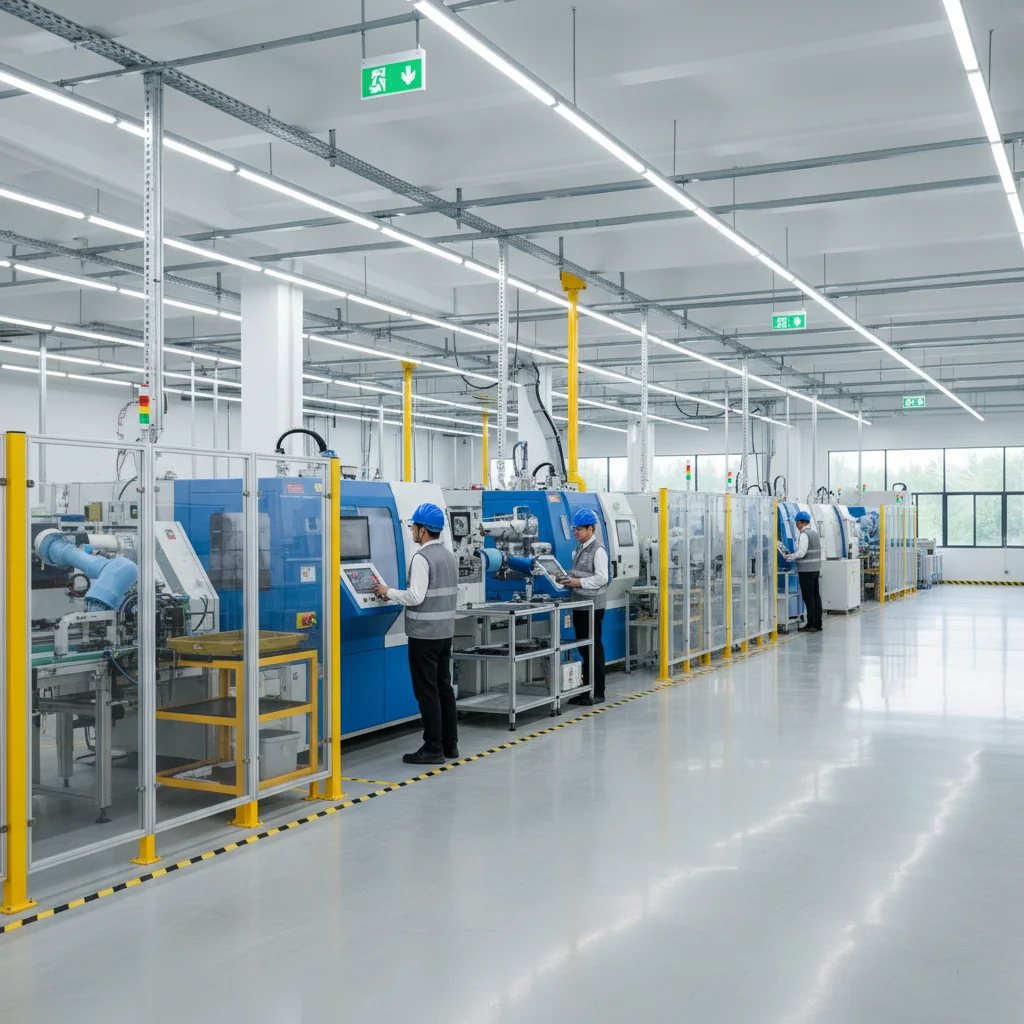
The Executive’s Guide to Manufacturing Insurance
Your biggest risks may not be the ones you see every day on the factory floor. What happens if your primary raw material supplier has a fire and can’t deliver for three months? What if a cyberattack shuts down your networked production line? Or what if a subtle product defect forces a nationwide recall? These are the hidden liabilities that can cripple a business, and they are almost always excluded from basic insurance policies. A comprehensive manufacturing insurance strategy is designed to find and fill these exact gaps. It goes beyond covering slips and falls to protect your entire value chain. This guide will illuminate these often-overlooked risks and introduce the specialized coverages needed to build a truly resilient operation.
What Is Manufacturing Insurance?
Manufacturing insurance is a combination of specialized policies designed to protect businesses that make, assemble, or process goods from the unique financial risks they face daily. From product defects and equipment failures to workplace injuries and environmental hazards, manufacturers operate in one of the highest-risk business environments in the country.
Whether you run a food processing plant in Miami or a metal fabrication shop in Tampa, the right insurance package can mean the difference between surviving a major claim and closing your doors. Contact Insurance Underwriters today for a free manufacturing insurance consultation and make sure your operation is fully protected.
Manufacturing insurance is not a single policy. It is a tailored bundle of coverages that addresses the specific risks your operation faces. The average product liability claim in manufacturing exceeds $7 million, and over 37,900 fires occur at industrial and manufacturing properties each year, causing $1.2 billion in direct property damage. These numbers make comprehensive coverage essential for every manufacturer, regardless of size.
Manufacturing insurance typically covers physical assets like buildings and equipment, liability for injuries caused by your products or operations, lost income during shutdowns, employee injuries, and environmental contamination. The exact policies you need depend on what you manufacture, your facility size, your workforce, and your supply chain complexity.
Manufacturing insurance is a bundled set of commercial policies that protects businesses making, assembling, or processing goods. Core coverages include general liability, commercial property, product liability, workers’ compensation, equipment breakdown, business interruption, and environmental liability. Most manufacturers need at least five of these policies working together to fully protect their operations, employees, and financial stability.
How Insurance Is Treated as a Manufacturing Cost
Savvy manufacturers treat insurance as a core production cost, not just an overhead expense. This is because the financial risks—from equipment failure to product liability—are directly tied to the manufacturing process. By factoring insurance into the cost of goods sold, you can set more accurate prices and build a more resilient business model. It’s a strategic shift from viewing insurance as a simple bill to seeing it as a tool for financial stability, ensuring your operation can withstand unexpected events without compromising its financial health.
The reality is that manufacturing faces significant threats. With the average product liability claim exceeding $7 million and fires causing billions in damages each year, comprehensive coverage isn’t optional—it’s essential for survival. This is why a one-size-fits-all policy doesn’t work. At Insurance Underwriters, we specialize in creating customized insurance solutions that align with your specific operational risks. We help you structure your coverage as a strategic asset that protects your bottom line and ensures you can get back to business quickly after a disruption.
Core Coverages Every Manufacturer Should Have
Building the right insurance program starts with understanding the core policies that form the foundation of manufacturing protection. Here are the six essential coverages every manufacturer should carry.
When Your Product Causes Harm: Product Liability
Product liability insurance is arguably the most critical coverage for any manufacturer. It protects your business when a product you make, assemble, or distribute causes bodily injury or property damage to a consumer or end user. This includes claims arising from design defects, manufacturing defects, and failure to warn about potential dangers.
For manufacturers, product liability exposure never truly ends. A product you made five years ago can still generate a claim today. Consider the toy manufacturer whose product breaks and creates a choking hazard, or the food processor whose contaminated batch causes illness. These claims regularly reach into the millions. Product liability insurance covers legal defense costs, settlements, and court judgments, keeping a single defective product from destroying your entire business.
Most general liability policies include products-completed operations coverage, but manufacturers with higher risk profiles often need standalone product liability policies with limits of $2 million or more per occurrence.
Understanding the Link Between Insurance and Product Warranties
It’s easy to confuse a product warranty with product liability insurance, but they serve very different purposes. Think of a warranty as your promise to the customer that your product will work as intended. If it breaks, you agree to repair or replace it. This is a predictable cost of doing business and a key part of your customer service strategy. Product liability insurance, however, protects you when that faulty product causes bodily injury or property damage to someone else. For example, if a kitchen appliance you manufacture has a defect that starts a fire, your warranty covers the cost of the appliance. Your product liability insurance is what covers the extensive damage to the home and any resulting injuries. While a strong warranty builds trust, it doesn’t shield you from the catastrophic financial risk of a liability lawsuit.
Protecting Your Buildings and Physical Assets
Your manufacturing facility likely represents your largest capital investment. Commercial property insurance protects your building, machinery, equipment, raw materials, finished inventory, and other business property against damage from fire, theft, vandalism, storms, and other covered perils.
Manufacturing properties face elevated risks compared to standard commercial buildings. Heavy machinery generates heat, chemical processes create fire hazards, and large inventories concentrate financial exposure in a single location. A comprehensive commercial property policy should cover the full replacement cost of your facility and its contents, not just the depreciated value.
Pay close attention to policy exclusions. Standard commercial property policies often exclude flood damage and earthquake damage, both of which require separate coverage. In Florida, where hurricane risk is significant, windstorm coverage is a critical addition to any manufacturing property policy.
What Happens When Your Key Machinery Fails?
Also known as boiler and machinery insurance, equipment breakdown coverage picks up where commercial property insurance leaves off. While property insurance covers external causes of damage like fire and storms, equipment breakdown insurance covers internal mechanical and electrical failures.
For manufacturers, this distinction matters enormously. A CNC machine that suffers a catastrophic bearing failure, a refrigeration unit that stops working and spoils an entire inventory of raw materials, or an electrical surge that damages your production line computer systems are all situations where equipment breakdown insurance applies and standard property insurance does not.
Equipment breakdown policies typically cover the cost of repairs or replacement, spoilage of materials, lost income during the repair period, and the cost of temporary equipment rentals. Given that a single piece of specialized manufacturing equipment can cost hundreds of thousands of dollars, this coverage is essential for any operation that relies on machinery.
Taking Care of Your Team When They’re Injured
Workers’ compensation insurance covers medical expenses, lost wages, and rehabilitation costs for employees who suffer work-related injuries or illnesses. In Florida, any business with four or more employees (or one or more in construction) is required by law to carry workers’ compensation coverage.
Manufacturing accounts for approximately 15% of all nonfatal workplace injuries in the United States. Workers operate heavy machinery, handle hazardous materials, perform repetitive motions, and work in environments with elevated noise, heat, and chemical exposure. Common manufacturing injuries include crush injuries from machinery, repetitive strain injuries, chemical burns, hearing loss, respiratory illnesses from dust or fume exposure, and slip-and-fall accidents.
Workers’ compensation premiums for manufacturing businesses are significantly higher than most other industries because of this elevated risk profile. However, manufacturers can reduce their premiums through robust safety programs, return-to-work programs, and claims management strategies. In Florida, the workers’ compensation system uses industry classification codes to set base premium rates, and manufacturing classifications carry some of the highest rates.
Protecting your workforce is both a legal requirement and a smart business decision. Get a workers’ compensation quote from Insurance Underwriters to ensure your employees and your business are covered.
How to Maintain Cash Flow After a Shutdown
Business interruption insurance replaces lost income and covers ongoing expenses when a covered event forces your manufacturing operation to shut down temporarily. If a fire damages your production floor, a hurricane floods your facility, or a critical piece of equipment fails catastrophically, business interruption coverage keeps your cash flow alive while you recover.
This coverage typically pays for lost net income based on your historical financial records, continuing fixed expenses like rent, loan payments, and utility bills, temporary relocation costs if you need to move operations, and extra expenses incurred to resume operations more quickly. For manufacturers, the financial impact of even a brief shutdown can be devastating. Supply contracts may include penalty clauses for late delivery, customers may switch to competitors, and skilled workers may seek employment elsewhere during extended closures.
Business interruption coverage usually activates after a waiting period (typically 48 to 72 hours) and continues for a defined restoration period, often 12 months. Manufacturers should carefully evaluate whether their restoration period is long enough, since rebuilding a specialized production facility can take considerably longer than restoring a standard office or retail space.
Covering Your Environmental Footprint
Standard general liability policies exclude pollution-related claims. For manufacturers that use, store, or generate hazardous materials, chemicals, or waste products, environmental liability insurance fills this critical gap.
Environmental liability coverage protects against claims arising from pollution events both on and off your premises. This includes cleanup costs for contamination at your facility, third-party bodily injury claims from chemical releases, natural resource damage, regulatory fines and penalties, and legal defense costs. Manufacturing processes in sectors like chemical production, metal finishing, plastics manufacturing, and electronics assembly generate hazardous waste that requires careful handling, storage, and disposal.
Even manufacturers that do not consider themselves “heavy polluters” may need this coverage. A ruptured fuel tank, an accidental chemical spill during material handling, or improper disposal by a third-party waste hauler can all create environmental liability. The federal Comprehensive Environmental Response, Compensation, and Liability Act (CERCLA) can hold manufacturers strictly liable for contamination, meaning you can be held responsible even without negligence.
Environmental liability insurance covers pollution-related claims that standard general liability excludes. Manufacturers handling hazardous materials, chemicals, or waste products need this coverage to protect against cleanup costs, third-party injury claims, regulatory fines, and legal defense expenses. Under CERCLA, manufacturers face strict liability for contamination, making this coverage essential even for operations that do not consider themselves heavy polluters.
Bundling Your Coverage: The Business Owner’s Policy (BOP)
A Business Owner’s Policy, or BOP, is a common starting point that bundles general liability and commercial property insurance into one package. While it’s a solid foundation, manufacturing operations face risks that extend far beyond what a standard BOP covers. A typical policy won’t help with a product recall, a critical equipment failure, or an environmental cleanup. That’s why manufacturers need a more robust, tailored strategy. Instead of a one-size-fits-all policy, you need a program that bundles the core coverages we’ve discussed—from product liability to business interruption—into a cohesive plan. We can help you build a program that protects your entire operation, not just parts of it.
Production Insurance: Covering Your Core Processes
Beyond protecting your physical assets and finished goods, it’s critical to insure the production process itself. This is where a strategic approach to “production insurance” comes in. It’s not a single policy, but a way of thinking about how coverages like equipment breakdown and business interruption work together to protect your workflow from start to finish. For example, what happens if your main raw material supplier has a fire and can’t deliver for three months? A specialized coverage called contingent business interruption can replace your lost income. This is how you move from simply buying policies to building a resilient operation. A well-designed insurance program protects your ability to produce and deliver, no matter what disruptions occur in your supply chain or on your factory floor.
Specialized Insurance for Modern Manufacturing Risks
Beyond the six essential policies, many manufacturers need supplemental coverages to address specific operational risks.
Covering Everyday Slips, Falls, and Accidents
General liability insurance is the foundation of any business insurance program. It covers third-party bodily injury, property damage, and advertising injury claims. If a delivery driver trips over equipment in your warehouse, a client touring your facility is injured, or a competitor claims your marketing infringes on their trademark, general liability responds.
For manufacturers, standard general liability limits of $1 million per occurrence and $2 million aggregate are often insufficient. Many operations require $2 million per occurrence with $4 million aggregate limits, or supplement their coverage with an umbrella policy to reach $5 million or more in total protection.
Are You Prepared for a Data Breach?
Modern manufacturing increasingly relies on networked systems, industrial control systems, and IoT-connected equipment. Cyber liability insurance covers costs related to data breaches, ransomware attacks, business interruption from cyber events, and regulatory investigations. Manufacturers that store customer data, maintain trade secrets, or use connected production systems should strongly consider this coverage.
Protecting Goods and Equipment in Transit
Inland marine insurance covers materials, products, and equipment in transit or at off-site locations. For manufacturers that ship raw materials, finished goods, or equipment between facilities, warehouses, and customers, this coverage protects against damage or loss during transportation.
Insuring Your Company’s Fleet of Vehicles
If your manufacturing operation owns or operates trucks, vans, or delivery vehicles, commercial auto insurance is required. It covers accidents, injuries, and property damage involving your business vehicles.
What If Your Supply Chain Breaks?
Manufacturing businesses depend on complex networks of suppliers and distributors. Supply chain insurance, sometimes called contingent business interruption insurance, covers losses that result from disruptions at your key suppliers or customers. If a critical raw material supplier suffers a fire and cannot deliver, or if a major customer’s facility is damaged and they cannot accept your shipments, supply chain insurance covers your resulting lost income.
Recent global supply chain disruptions have highlighted the importance of this coverage. Events like the COVID-19 pandemic, the Suez Canal blockage, and semiconductor shortages demonstrated how quickly supply chain failures can cascade through manufacturing operations. When evaluating supply chain insurance, identify your single points of failure, meaning suppliers for whom there is no readily available alternative, and ensure your coverage addresses those specific dependencies.
Protecting Your Leadership: Directors and Officers (D&O)
Your company’s leaders make critical decisions every day, but what happens if one of those decisions leads to a lawsuit? Without the right protection, your directors and officers could be held personally liable, putting their homes, savings, and other assets at risk. Directors and officers (D&O) liability insurance is designed to shield them from this exact scenario. It covers their personal financial losses, including legal defense costs and settlements, if they are sued for alleged wrongful acts while managing the company.
This coverage is not just a defensive measure; it’s a strategic tool for attracting and retaining top-tier executive talent. The best leaders are unwilling to take on the personal financial exposure that comes with a board seat or C-suite role without a strong D&O policy in place. For manufacturers, where decisions about product safety, environmental compliance, and financial reporting carry significant weight, D&O insurance provides the confidence your leadership team needs to guide the company effectively without fear of personal ruin.
Securing Your Revenue: Trade Credit Insurance
As a manufacturer, you likely extend credit terms to your customers, giving them 30, 60, or even 90 days to pay for large orders. While this is a standard business practice, it exposes your company to a significant risk: customer non-payment. If a major client declares bankruptcy or simply defaults on their invoice, your cash flow can take a serious hit. Trade credit insurance protects your accounts receivable from this very risk.
Think of it as insurance for your revenue. If a customer fails to pay due to insolvency or other specified reasons, your trade credit policy will reimburse you for the loss. This coverage is vital for manufacturers who depend on a few large clients, as it stabilizes cash flow and protects your balance sheet from unexpected credit losses. It also allows you to confidently extend competitive credit terms to new customers, helping you grow your business while managing financial risk.
Other Essential Coverages to Consider
While the core policies provide a strong foundation, the complex nature of modern manufacturing often calls for more specialized protection. Depending on your contracts, global footprint, and operational environment, you may need additional coverages to address unique and potentially catastrophic risks.
Commercial Surety Bonds
If your company bids on large supply contracts, particularly for government or construction projects, you may be required to secure a commercial surety bond. Unlike insurance, a surety bond is a three-party agreement between your company (the principal), your client (the obligee), and a surety company. The bond guarantees that you will fulfill your contractual obligations, such as delivering a specific quantity of goods by a certain date. If you fail to perform, the surety company compensates your client for their losses, and you are then responsible for reimbursing the surety. These bonds provide your clients with financial assurance and are often a prerequisite for winning major manufacturing contracts.
War and Terrorism Risk Insurance
Standard commercial property policies almost universally exclude damage from acts of war and terrorism. For manufacturers with facilities in politically unstable regions or even in major domestic cities, this creates a significant coverage gap. War and terrorism risk insurance is a specialized policy that fills this void, covering property damage, business interruption, and liability losses resulting from these events. In an unpredictable world, this coverage protects your physical assets and operational continuity from politically motivated violence that is otherwise uninsured, ensuring your business can recover from a worst-case scenario.
Global Risk Policies for International Operations
When your manufacturing operations cross international borders, your risk profile becomes exponentially more complex. You face challenges like political instability, currency fluctuations, and a maze of local regulations and compliance standards. Global risk policies are designed to create a seamless insurance program that addresses these international challenges. By bundling coverages for foreign liability, property, transit, and political risk, these policies eliminate dangerous gaps that can exist between your domestic insurance and local policies purchased abroad. This ensures your supply chain, foreign assets, and international team members are consistently protected under one cohesive strategy.
Does Your Insurance Match Your Industry?
Not all manufacturing operations face the same risks. Your specific insurance needs depend heavily on what you produce and how you produce it. Here is a breakdown of risk profiles and insurance priorities by manufacturing sector.
Key Risks for Food and Beverage Makers
Food and beverage manufacturers face contamination risks, product recall exposure, spoilage losses, and strict regulatory compliance requirements from the FDA and USDA. Priority coverages include product liability with high limits, product recall insurance, food spoilage coverage, equipment breakdown (especially refrigeration), and environmental liability for waste discharge.
Food Spoilage Insurance
For any business working with perishable goods, food spoilage insurance is a non-negotiable part of your risk management strategy. This coverage protects you from the financial fallout when your inventory spoils due to a power outage or a mechanical failure in your temperature-control systems. Imagine a simple power surge knocks out your walk-in freezer overnight; without this protection, you could lose tens of thousands of dollars in raw materials or finished products instantly. That’s why food spoilage coverage works hand-in-hand with equipment breakdown insurance. While equipment breakdown helps pay to repair or replace the faulty freezer, food spoilage insurance covers the value of the lost inventory inside, ensuring one mechanical issue doesn’t create a massive financial hole in your business.
Key Risks for Metal Fabricators and Machine Shops
These operations face high workplace injury rates from cutting, welding, and grinding operations, along with fire risks from sparks and metal dust. Priority coverages include workers’ compensation with robust safety programs, commercial property with fire-specific riders, equipment breakdown, and inland marine for materials in transit.
Key Risks in Chemical and Plastics Production
Chemical manufacturers face the highest environmental liability exposure of any manufacturing sector. Explosion risks, toxic chemical releases, and long-term contamination are all significant concerns. Environmental liability insurance is non-negotiable, and manufacturers should also carry high limits on general liability, property insurance with hazardous materials riders, and business interruption with extended restoration periods.
Key Risks for Electronics Manufacturers
Electronics manufacturers face product liability risks from defective components, cyber liability from connected production systems, and intellectual property exposure. Priority coverages include product liability, cyber liability, professional liability (errors and omissions), and inland marine for high-value components in transit.
Key Risks for Pharma and Medical Devices
This sector faces the highest product liability exposure of any manufacturing type. A single defective medical device or contaminated pharmaceutical batch can generate claims in the hundreds of millions. Priority coverages include product liability with high limits ($5 million or more), product recall insurance, medical malpractice insurance, and regulatory compliance coverage.
Coverage for Other Manufacturing Sectors
Wood, Furniture, and Masonry Products
If you work with wood, furniture, or masonry, fire is one of your most significant risks. Sawdust, flammable finishes, and curing chemicals create a hazardous environment where a single spark can lead to a catastrophic loss. Beyond fire, you also face liability for the products you create. A chair that collapses or a stone veneer that detaches can cause serious injury or property damage, leading to expensive claims. To protect your business, you need a robust insurance plan that starts with commercial property coverage for fire and equipment breakdown, along with product liability insurance. You should also carry general liability insurance for third-party claims and consider environmental liability coverage if you use chemicals in your finishing and treatment processes.
Clothing, Textiles, and Printed Materials
In the textile and clothing industry, your machinery is both your greatest asset and a significant source of risk. The fast-moving equipment used for weaving, cutting, and sewing can cause severe workplace injuries. This makes workers’ compensation insurance a top priority to cover your employees. You also face product liability claims if your goods are defective—for example, if dyes cause skin irritation or if children’s clothing fails to meet flammability standards. Furthermore, the dyes and chemicals used in production can create environmental concerns. A comprehensive insurance strategy should include workers’ compensation, product liability, general liability for third-party claims, and commercial property insurance to protect your facility and valuable equipment from damage.
Cosmetics, Toys, and Consumer Goods
Manufacturers of cosmetics, toys, and other consumer goods operate in a high-stakes environment defined by strict regulations and immense product liability exposure. An allergic reaction to a cosmetic product or a safety issue with a toy can trigger widespread claims and a public relations crisis. Product liability insurance is absolutely critical, but it’s often not enough. You should also secure product recall insurance to cover the significant costs of pulling a dangerous item from the market. This includes expenses for notification, shipping, and replacement. Pairing these policies with a strong general liability policy provides a safety net for other third-party claims, while environmental liability may be needed if you use any hazardous materials in your production line.
How OSHA Compliance Impacts Your Insurance Rates
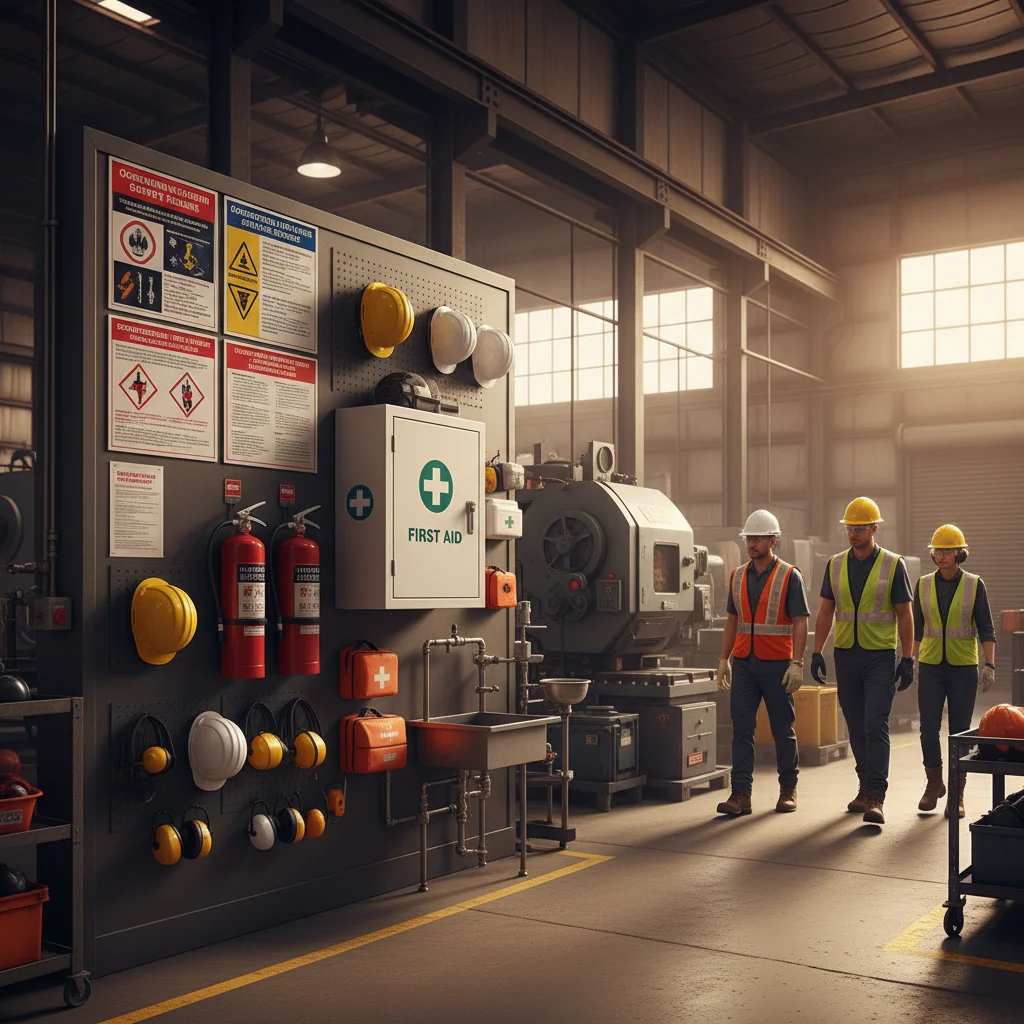
The Occupational Safety and Health Administration (OSHA) sets and enforces workplace safety standards for manufacturing facilities across the United States. OSHA compliance and your insurance program are closely connected, because your safety record directly affects your insurance costs and your ability to obtain coverage.
OSHA Standards Every Manufacturer Must Know
Manufacturers must comply with OSHA standards covering machine guarding (29 CFR 1910.212), hazard communication for chemicals (29 CFR 1910.1200), lockout/tagout procedures for equipment servicing (29 CFR 1910.147), personal protective equipment (29 CFR 1910.132-138), electrical safety (29 CFR 1910 Subpart S), walking and working surfaces (29 CFR 1910 Subpart D), and respiratory protection (29 CFR 1910.134).
OSHA violations carry significant penalties. As of 2026, serious violations can result in fines of up to $16,550 per violation, while willful or repeated violations can reach $165,514 per violation. Beyond the fines, OSHA violations can increase your workers’ compensation premiums, make it harder to obtain liability coverage, and expose you to negligence claims in personal injury lawsuits.
Lower Your Premiums with a Strong Safety Program
Insurance carriers evaluate your safety record when setting premiums and determining coverage availability. Manufacturers with strong safety programs, low experience modification rates (EMR), and documented OSHA compliance typically receive more favorable insurance terms. Key strategies that reduce insurance costs include implementing a formal written safety program, conducting regular safety training and documentation, performing routine equipment inspections and maintenance, maintaining detailed incident records and near-miss reports, establishing a safety committee with employee participation, and working with your insurance carrier’s loss control team.
Your experience modification rate (EMR) is a numerical representation of your claims history compared to other businesses in your industry. An EMR below 1.0 means you have fewer claims than average and qualifies you for premium discounts. An EMR above 1.0 means you have more claims than average, resulting in premium surcharges. For manufacturers, even small improvements in EMR can translate to significant premium savings given the high base rates for manufacturing classifications.
OSHA compliance directly impacts manufacturing insurance costs and availability. Manufacturers with documented safety programs, low experience modification rates, and clean OSHA records qualify for lower premiums and broader coverage. Key OSHA standards for manufacturers cover machine guarding, hazard communication, lockout/tagout, PPE, electrical safety, and respiratory protection, with penalties reaching $165,514 per willful violation.
Managing Costs and Workforce Strategy
For manufacturers, insurance is one of the most significant operational costs, but it’s also one of the most controllable. By understanding the key drivers behind your premiums and implementing smart risk management strategies, you can protect your bottom line without sacrificing essential coverage. At the same time, addressing modern workforce challenges—from labor shortages to employee retention—requires a strategic approach that goes beyond traditional safety protocols. A well-designed insurance and benefits program can be a powerful tool for both cost containment and talent management, turning a necessary expense into a competitive advantage.
Key Factors That Influence Your Insurance Costs
Insurance carriers don’t pull premium numbers out of thin air. They use a complex set of data points to assess your operation’s specific risk profile. While some factors, like your location, are fixed, many others are within your control. Understanding what underwriters look for is the first step toward managing your insurance expenses. The two most significant areas they scrutinize in manufacturing are your physical work environment and your use of company vehicles. Both present substantial liability and property exposures that directly influence your final premium.
Your Machinery and Work Environment
The core of your manufacturing operation is also a primary source of risk. As noted in our guide to manufacturing insurance, properties with heavy machinery, chemical processes, and large inventories face much higher risks than typical commercial buildings. The heat from machinery and potential for chemical reactions can create significant fire hazards. Because of this, both your commercial property and workers’ compensation premiums will be higher than in most other industries. Insurers will look closely at your equipment’s age and condition, your maintenance schedules, and the safety features you have in place to mitigate these inherent dangers.
Your Company Vehicles and Fleet
If your business uses vehicles to transport raw materials, deliver finished goods, or for any other operational purpose, you’ll need a commercial auto insurance policy. The cost of this coverage depends on several factors, including the number and type of vehicles in your fleet, how they are used, and the driving records of your employees. A single accident involving a company truck can lead to millions in liability claims, so insurers price these policies carefully. Maintaining a clean driving record, implementing a formal driver safety program, and using telematics to monitor vehicle use can all help control your commercial auto premiums.
Strategies for Controlling Insurance Premiums
While the risks in manufacturing are high, you have significant power to influence your insurance costs. Proactive risk management not only makes your workplace safer but also demonstrates to carriers that you are a responsible partner, which often translates directly into lower premiums. From bundling policies to structuring your coverage for optimal cash flow, a strategic approach can yield substantial savings. It’s about moving from a reactive to a proactive stance on risk and finance.
The Financial Benefits of Bundling Policies
One of the most straightforward ways to save is by bundling multiple policies with a single carrier or broker. This often provides a discount and simplifies administration. However, the most significant financial benefits come from demonstrating a commitment to safety. As we detail in our OSHA compliance guide, insurance carriers reward manufacturers with strong safety programs and low experience modification rates (EMR) with more favorable terms. Documenting your safety protocols and maintaining a low EMR shows underwriters that your operation is a lower-than-average risk, which is the single most effective way to secure better pricing and broader coverage options.
Flexible Payment and Plan Structures
Effectively managing insurance costs also involves structuring your plans and payments to support your cash flow. This can mean choosing higher deductibles to lower your premium or opting for pay-as-you-go workers’ compensation plans. It also means ensuring your coverage is structured to respond when you need it most. For example, a well-structured business interruption insurance policy is a critical financial tool. It should be set up to cover not just your lost net income during a shutdown but also ongoing fixed expenses like rent and loan payments, ensuring your business remains financially stable during recovery.
Addressing Today’s Workforce Challenges
Your workforce is your most valuable asset, but it also presents complex challenges that extend far beyond physical safety. While preventing injuries remains a top priority, manufacturers today are also grappling with skilled labor shortages, an aging workforce, and intense competition for talent. A strategic approach to workforce management integrates safety, benefits, and operational efficiency to create an environment where employees feel valued and protected, making your company an employer of choice.
Beyond Injuries: Labor Shortages and an Aging Workforce
With manufacturing accounting for about 15% of all nonfatal workplace injuries, protecting your team is a legal and moral imperative. But a comprehensive workforce strategy must also address recruitment and retention. In a tight labor market, a competitive employee benefits package is essential. At Insurance Underwriters, we help clients move beyond standard offerings by integrating advanced technology. Our proprietary AI-powered Benefits Administration platform transforms the employee experience by providing instant answers to benefits questions, which reduces administrative burdens on your HR team and enhances employee engagement—delivering a measurable return on investment.
Manufacturing Insurance in Florida: What to Know
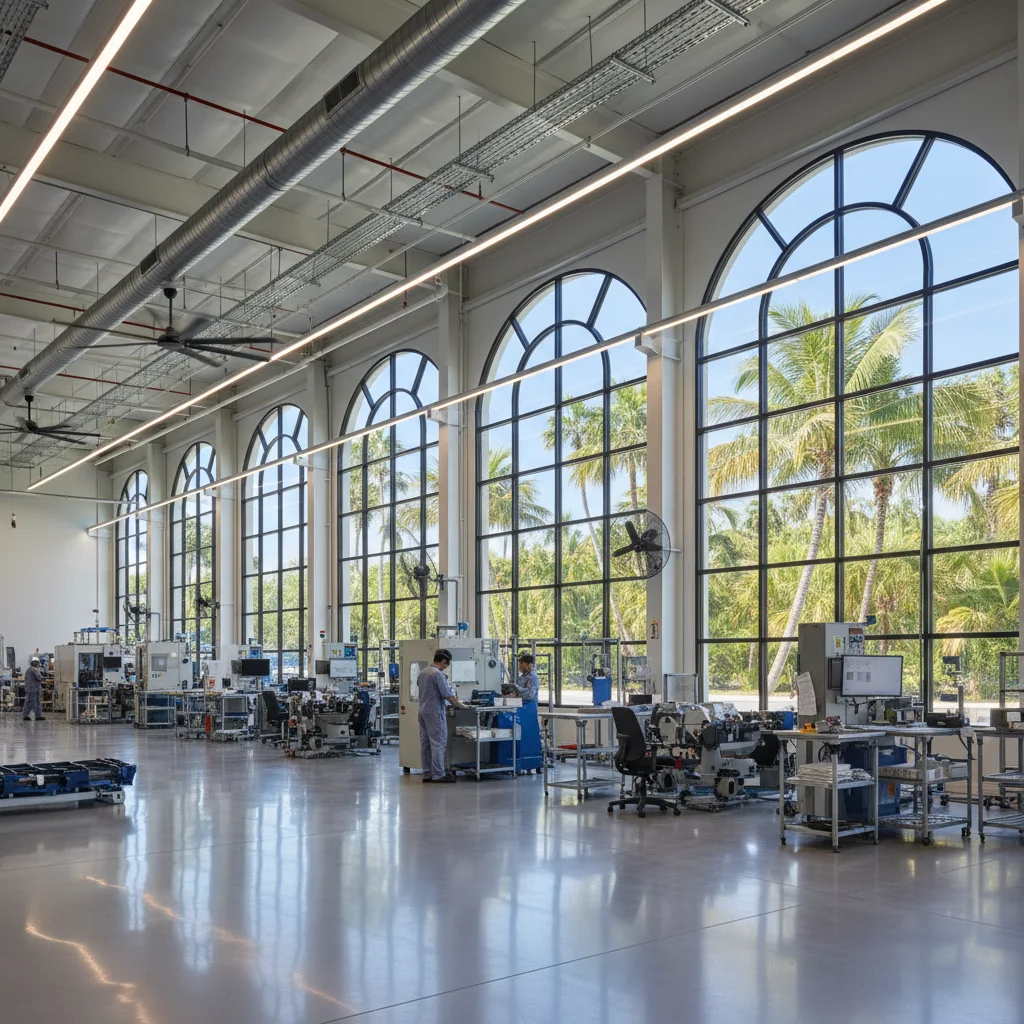
Florida’s manufacturing sector is one of the state’s most powerful economic engines, contributing more than $80 billion to the state’s annual GDP and supporting over 430,000 high-wage jobs with average salaries exceeding $78,000. With more than 27,000 manufacturers, most of them small businesses with fewer than 20 employees, Florida ranks third in the nation for the number of manufacturing establishments.
The state’s manufacturing sector is growing rapidly. From 2022 to 2024, manufacturing employment increased by 4.7% with the addition of over 2,700 new manufacturing establishments. Projections indicate an additional 6% growth in manufacturing jobs from 2024 to 2028. Transportation and equipment manufacturing saw the largest employment gains, growing by 7% and outpacing the national growth rate of 4%.
What Insurance Does Florida Law Require?
Florida manufacturers face several state-specific insurance requirements and risk factors that distinguish them from manufacturers in other states.
Workers’ Compensation: Florida law requires workers’ compensation for businesses with four or more employees (one or more in construction). The Florida Division of Workers’ Compensation administers the system, and manufacturers must use carriers authorized by the Florida Office of Insurance Regulation. Florida’s workers’ compensation rates for manufacturing classifications reflect the state’s claim history and medical costs.
Hurricane and Windstorm Risk: Florida’s geographic location exposes manufacturing facilities to significant hurricane risk. Standard commercial property policies may exclude windstorm damage in coastal areas, requiring separate windstorm coverage, potentially through Citizens Property Insurance Corporation for hard-to-place risks. Manufacturers should ensure their business interruption coverage includes hurricane-related shutdowns and that their restoration periods account for the extended recovery times common after major storms.
Flood Insurance: Many Florida manufacturing facilities are located in flood-prone areas. Flood insurance through the National Flood Insurance Program (NFIP) or private carriers is essential for protecting manufacturing property, equipment, and inventory. Standard commercial property policies do not cover flood damage.
Environmental Regulations: Florida’s Department of Environmental Protection (FDEP) enforces state environmental regulations that often exceed federal standards. Manufacturers handling hazardous materials must comply with both federal RCRA requirements and Florida-specific storage, treatment, and disposal regulations. Environmental liability insurance is particularly important in Florida given the state’s emphasis on groundwater protection and wetland preservation.
Understanding Florida’s Top Manufacturing Industries
Florida’s diverse manufacturing base spans several major sectors, each with distinct insurance needs. Aerospace and defense manufacturing is concentrated in Central Florida and the Space Coast, with significant product liability and government contract requirements. Food and beverage processing is a major sector, particularly citrus processing, seafood, and packaged goods, with contamination and spoilage risks. Marine manufacturing, including boat building and repair, is concentrated in South Florida with unique environmental and product liability exposures. Medical device manufacturing is growing rapidly, with strict FDA compliance requirements driving specialized insurance needs. And electronics and technology manufacturing continues to expand, driven by semiconductor demand and defense contracts.
How Do I Choose the Right Manufacturing Insurance?
Building the right insurance program for your manufacturing operation requires a methodical approach. Here is a step-by-step process.
Step 1: Identify Your Unique Business Risks
Identify every significant risk your operation faces. Walk your facility, review your processes, examine your supply chain, and evaluate your products. Consider physical risks (fire, flood, equipment failure), liability risks (product defects, workplace injuries, environmental contamination), financial risks (business interruption, supply chain disruption), and regulatory risks (OSHA compliance, environmental permits, product safety standards).
Step 2: Pinpoint the Coverage You Actually Need
Based on your risk assessment, identify which policies are legally required (like workers’ compensation), contractually required (many contracts specify minimum insurance limits), and operationally essential (coverages that protect against risks that could shut down your business).
Step 3: Choose the Right Coverage Limits
Work with an experienced insurance broker who understands manufacturing risks to set coverage limits that reflect your actual exposure. Consider the replacement cost of your facility and equipment, your annual revenue and profit margins, the potential severity of product liability claims in your sector, and your contractual insurance requirements from customers and suppliers.
Step 4: Partner with an Insurance Specialist
Manufacturing insurance is complex. A broker or agent who specializes in manufacturing can identify coverage gaps that generalist agents might miss, negotiate better terms with carriers that have manufacturing expertise, provide risk management guidance specific to your operations, and help you build a comprehensive program that balances coverage with cost.
Insurance Underwriters specializes in commercial insurance for manufacturers across Florida and nationwide. Request a manufacturing insurance quote today and work with a team that understands the risks your business faces every day.
Frequently Asked Questions
What types of insurance does a manufacturing company need?
Most manufacturing companies need at minimum six core coverages: general liability, commercial property, product liability, workers’ compensation, equipment breakdown, and business interruption insurance. Depending on your operations, you may also need environmental liability, cyber liability, inland marine, commercial auto, and supply chain insurance. The exact combination depends on what you manufacture, your facility size, your workforce, and your regulatory requirements.
How much does manufacturing insurance cost?
Manufacturing insurance costs vary widely based on your industry sector, annual revenue, number of employees, claims history, and the coverages you select. General liability alone typically costs $2,000 to $5,000 or more annually for manufacturers. A comprehensive manufacturing insurance package including property, liability, workers’ compensation, and specialty coverages can range from $10,000 to $100,000 or more per year for mid-sized operations. Your experience modification rate (EMR) and safety record significantly affect your premiums.
Is product liability insurance required for manufacturers?
While product liability insurance is not legally required in most states, it is effectively mandatory for manufacturers. Most retailers, distributors, and commercial customers require proof of product liability coverage before entering into contracts. Without it, a single defective product claim, which averages over $7 million in manufacturing, could bankrupt your business. Product liability coverage is typically included in a general liability policy but may need to be enhanced with higher limits or a standalone policy for higher-risk manufacturers.
What is an experience modification rate and how does it affect my premiums?
An experience modification rate (EMR) is a numerical score that compares your workers’ compensation claims history to other businesses in the same industry. An EMR of 1.0 means your claims are average. Below 1.0 means fewer claims than average, earning you premium discounts. Above 1.0 means more claims, resulting in surcharges. For manufacturers with high base workers’ compensation rates, even a small improvement in EMR, say from 1.1 to 0.9, can save thousands or even tens of thousands of dollars in annual premiums.
Does standard commercial property insurance cover equipment breakdown?
No. Standard commercial property insurance covers damage from external causes like fire, storms, and theft, but it does not cover internal mechanical or electrical failures. Equipment breakdown insurance (also called boiler and machinery insurance) is a separate policy that covers these internal failures, including the cost of repairs, spoilage of materials, lost income, and temporary equipment rental. For manufacturers whose operations depend on specialized machinery, equipment breakdown insurance is essential.
What environmental insurance do Florida manufacturers need?
Florida manufacturers that handle hazardous materials, chemicals, or waste products should carry environmental liability insurance. This coverage protects against cleanup costs, third-party injury claims, regulatory fines, and legal defense expenses related to pollution events. Florida’s Department of Environmental Protection enforces standards that often exceed federal requirements, and the state’s emphasis on groundwater protection and wetland preservation creates additional liability exposure for manufacturers. Even operations that do not consider themselves heavy polluters can face environmental claims from fuel tank leaks, accidental spills, or third-party waste hauler incidents.
Look for Advanced Risk Control Methods
When you partner with an insurance carrier, you’re not just buying a policy; you’re investing in a risk management relationship. The best insurers for manufacturers go beyond coverage and provide active loss control services. They employ dedicated risk control teams who understand the nuances of your industry. These experts don’t just know insurance—they are often trained in manufacturing improvement methodologies like Lean and Six Sigma. This unique combination allows them to analyze your operations from both a safety and an efficiency perspective, helping you identify and mitigate potential problems before they lead to a claim. This proactive approach transforms insurance from a necessary expense into a strategic tool for operational excellence.
Verify Professional Certifications and Expertise
Not all risk control consultants are created equal. To ensure you’re getting advice from a true specialist, ask about their team’s professional certifications. Look for designations that signal a deep commitment to the manufacturing sector. For example, some of the most respected carriers have risk control experts who hold a “Recognized Risk Engineer (RRE)” title from UL, a global safety science leader. Another key credential is the “Manufacturing Risk and Insurance Specialist (MRIS)” certification, which demonstrates a comprehensive understanding of manufacturing-specific risks. These certifications are more than just letters after a name; they are proof that your advisor has the specialized knowledge to protect your unique operation effectively.
Ask About Specialized Risk Control Services
Beyond the expertise of their people, top-tier insurance carriers offer specialized tools and programs designed to help you manage and reduce risk. When vetting a potential partner, ask them what proprietary resources they provide for manufacturers. Some carriers have developed sophisticated programs that offer everything from business continuity planning tools to supply chain risk assessments. These services are designed to give you actionable data and a structured framework for improving safety and resilience. As your broker, our job at Insurance Underwriters is to connect you with carriers that offer these advanced resources, ensuring your insurance program delivers measurable value far beyond the policy itself.
Key Takeaways
- Build a comprehensive safety net: Standard business insurance is insufficient for manufacturing risks. A tailored program must include specific coverages like product liability, equipment breakdown, and business interruption to protect your entire operation.
- Proactive safety is a financial strategy: A documented safety program and strong OSHA compliance record directly reduce your insurance premiums. Carriers reward a low experience modification rate (EMR) with better pricing, turning safety from an expense into a financial advantage.
- Insure your entire value chain: Your risk exposure extends beyond your factory walls. Specialized policies for supply chain disruptions, cyber attacks, and customer non-payment are essential for building a resilient business that can withstand modern operational threats.
Comments
Comments are closed.