
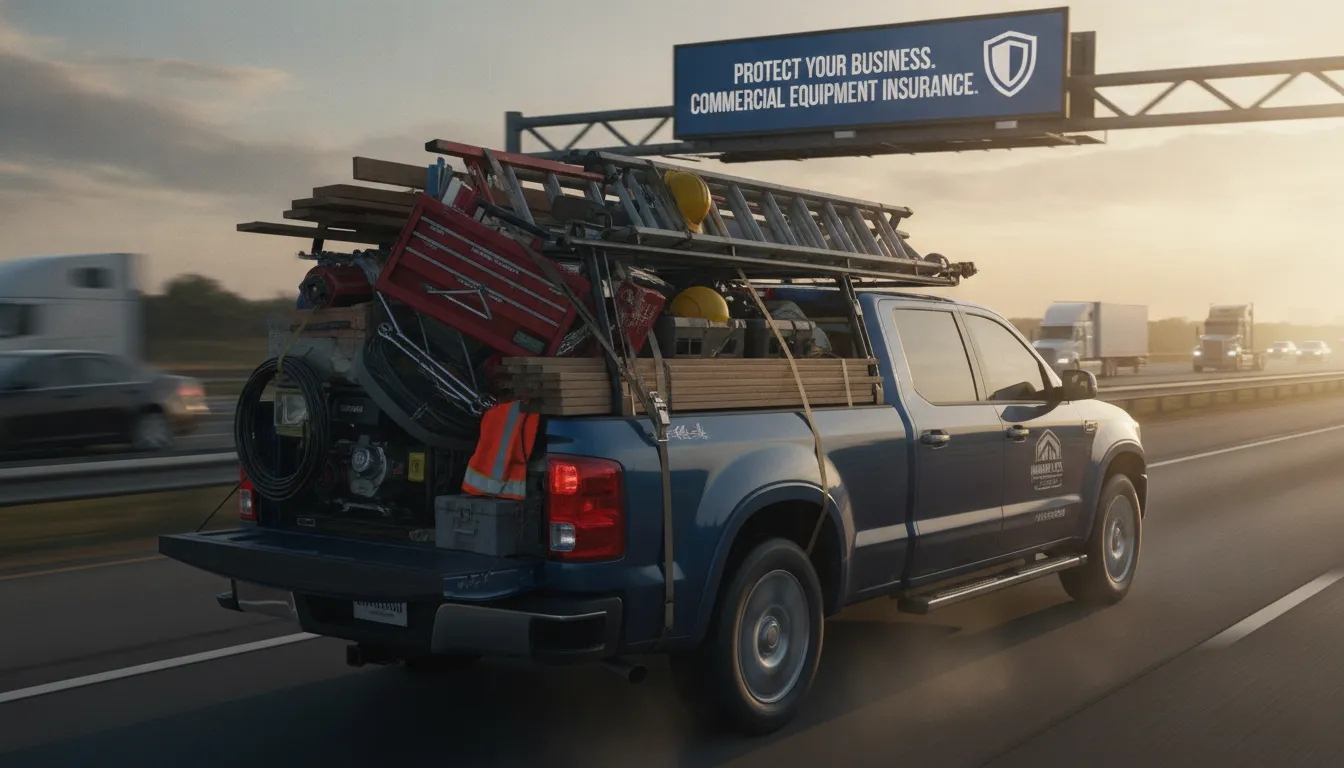
Inland Marine vs Property Insurance: What Protects Your Tools?
Your tools are the lifeblood of your contracting business, but they face constant risk when they leave your shop. Standard property policies protect your physical office, yet they often stop covering your gear the moment it hits the road. Failing to secure the right coverage for transit can lead to devastating out-of-pocket losses after a theft or accident.
Call 305-900-2823 to speak with an independent broker about inland marine vs property insurance for your contracting business. Get a free quote today.
The primary difference between inland marine vs property insurance is where your business assets receive protection. Commercial property insurance is designed to protect your physical business building and the stationary contents kept at that specific, fixed address. In contrast, inland marine insurance covers property that is mobile or in transit, making it essential for contractors who frequently move tools and heavy equipment between job sites. While a property policy covers fixed assets. An inland marine policy fills the critical coverage gaps by protecting your gear on the road, in transit, and at temporary project locations.
Understanding where your assets are protected is the first step in avoiding costly coverage gaps. This guide breaks down the differences between these two types of insurance, explains why most contractors need both, and helps you choose the right combination for your business. Let us start with the core question: What Is Commercial Property Insurance?
What Is Commercial Property Insurance?
Commercial property insurance protects your business building and the contents inside it at a single fixed location. It covers physical assets such as your office, warehouse, furniture, computers, and stored inventory against risks like fire, windstorm, and theft. This coverage applies only at the address listed on your policy, not at job sites or in transit.
For a small contractor, your shop or warehouse is the hub of your business. It is where you store your spare parts, park your vehicles overnight, and keep your office equipment safe. If a fire or storm damages this space, you need a way to rebuild quickly. This is where commercial property insurance comes in to protect your physical business assets.
Core Coverage for Your Shop
A standard property policy covers a business building and its contents against specific risks at a fixed location. According to the Virginia State Corporation Commission, this plan protects buildings, furniture, and inventory owned by your business. For an HVAC or plumbing contractor, this means the physical structure of your shop is secure, along with office desks, computers, and raw materials you store on-site.
When a covered event occurs, the policy pays to repair or replace the damaged items. The Texas Department of Insurance notes that these policies handle losses from fires, windstorms, and other sudden events. Having this coverage helps you avoid paying out of pocket for major repairs after a disaster.
How Policies Handle Risks
Not all property policies cover the same list of hazards. Coverage is typically defined by whether you have a named peril policy or an all risk policy:
- Named peril policies only cover losses from events explicitly listed in your policy documents, such as fire or lightning.
- All risk policies (also called special form policies) cover all causes of loss unless the policy specifically excludes them.
Choosing an all risk policy gives your business the most protection. It shifts the burden of proof to the insurer, but it still has limits. Most commercial property plans exclude damage from floods, earth movement, wear and tear, and pest infestations. If your shop sits in a flood zone, you will need a separate policy to cover water damage.
Protecting Your Business Income
If a fire burns down your warehouse, the cost to rebuild is only part of the problem. You also lose money while your business is shut down for repairs. Standard commercial property insurance can help by including business interruption coverage.
This protection helps replace your lost income during the recovery period. It can pay for ongoing expenses like rent, payroll, and taxes while your physical location is rebuilt. For a small contractor with tight margins, this cash flow is vital to keep your business alive while your doors are closed.
What Is Inland Marine Insurance?
Inland marine insurance is a specialized form of property coverage designed to protect business assets that are mobile or in transit. Unlike traditional property insurance, inland marine follows your tools, equipment, and materials wherever they travel. This includes coverage while items are on the road, at job sites, or stored temporarily off-site. Contractors who move equipment daily rely on this coverage to fill the gaps left by standard property policies.
Inland marine insurance is a specialized form of property coverage designed to protect business assets that are mobile or in transit. While traditional property insurance secures your shop, inland marine follows your tools, equipment, and materials wherever they travel. Whether they are on the road, at a job site, or stored temporarily off-site.
Origins and Evolution
The name “inland marine” traces back to the early days of marine insurance, when policies covered goods transported by ship across oceans. As commerce expanded inland, insurers adapted the same principles to protect goods moving by rail, truck, and other overland routes. According to the Kentucky insurance statutes, inland marine insurance covers property that is mobile or in transit, making it the modern solution for protecting contractor equipment on land.
What It Covers for Contractors
For specialty contractors, inland marine insurance provides vital coverage that standard property policies cannot match. It protects expensive equipment and tools that are regularly moved between different job sites. Common forms of inland marine coverage include:
- Contractor’s equipment insurance , covers heavy machinery like excavators, generators, and scaffolding
- Builder’s risk insurance , protects buildings under construction
- Tool and equipment floaters , covers hand tools, power equipment, and diagnostic gear
- Materials in transit coverage , protects client materials while being transported
- Rented or borrowed equipment coverage , extends protection to gear you do not own
The Texas Department of Insurance notes that inland marine insurance is essential for contractors who move tools between job sites, since standard property policies are typically limited to fixed business locations.
Flexibility and Customization
One of the greatest advantages of inland marine insurance is its flexibility. Unlike standard property policies that use fixed coverage limits, inland marine can be customized to match the specific needs of your contracting business. You can schedule individual pieces of equipment with specific values. Add coverage for seasonal fluctuations in your equipment inventory, and include riders for specialized tools that carry unique risks.
According to Kentucky insurance law, inland marine insurance offers flexible protection for many types of property away from the main business location. This means a plumbing contractor can cover diagnostic cameras and pipe threading machines, an HVAC company can protect expensive refrigerant recovery units. And an electrical contractor can secure multimeters and cable testers under the same policy type.
Who Needs It Most
Inland marine insurance is most valuable for businesses where equipment moves. Specialty contractors in construction, HVAC, plumbing, and electrical services are the primary beneficiaries. If your crew loads tools into a truck every morning and unloads them at a different job site every afternoon, you need inland marine insurance. It ensures that your most valuable business assets remain protected whether they are mounted on a truck bed. Stored in a job box, or sitting on a workbench miles from your office.
Inland Marine vs Property Insurance: Key Differences Every Contractor Should Know
The core difference is location: commercial property insurance covers assets at a single fixed address, while inland marine insurance covers assets that move. Contractors who own both a shop and mobile equipment need both policies to avoid expensive gaps. The table below shows how these coverages compare across scope, application, cost, and exclusions.
For specialty contractors, choosing the right coverage means understanding how location affects your protection. Standard commercial property policies have geographic limits that can leave your mobile tools unprotected. To avoid expensive coverage gaps, business owners must learn the core differences of inland marine insurance vs property coverage.
Core Protection and Location Limits
The main difference between these two coverages is where the protection applies. Traditional property insurance covers your business building and the items inside it, like office desks or warehouse inventory, at a single fixed address. According to the Virginia State Corporation Commission, property policies protect your stationary assets but do not follow your gear when it leaves your shop. In contrast, inland marine coverage is built specifically for items that move. It secures your tools, gear, and materials while they travel in your trucks or sit at temporary job sites.
Why Contractors Need Both Policies
Most contractors own both stationary and mobile assets, which is why a single policy is rarely enough. A plumber might store pipe inventory at a main workshop but carry expensive diagnostic tools in a van every day. If a fire burns down the shop, your property policy helps replace the building and stored inventory. But if a thief breaks into your van at a job site, you must rely on inland marine coverage. Combining these policies ensures that your business stays protected whether your gear is parked, stored, or in transit.
The table below highlights the key differences to help you choose the right options for your crew:
| Feature | Commercial Property Insurance | Inland Marine Insurance |
|---|---|---|
| Coverage Scope | Covers real estate and business contents at a set location | Covers mobile equipment, tools, and materials in transit |
| Where It Applies | Only at the scheduled address listed on the policy | Anywhere on land, including transit and job sites |
| Who Needs It | Businesses with physical offices, shops, or warehouses | Contractors who move tools and gear between jobs |
| What Is Covered | Buildings, office furniture, computers, and inventory | Hand tools, heavy machinery, and client materials |
| Common Exclusions | Floods, earthquakes, and items away from the premises | Fixed buildings, land vehicles, and normal wear |
| Typical Cost | Based on building value, location, and fire risk | Based on equipment value and transport frequency |
Risk Management and Theft Protection
Specialty contractors face a high risk of theft when tools and materials sit at remote project locations. Standard property insurance does not extend to remote work zones, creating a dangerous gap. Inland marine policies specifically list tools and machinery to guard against theft or damage at active job sites. This specialized coverage protects you from major financial hits if your cargo is stolen from a truck or damaged during a haul. By matching each asset to the right policy, you can keep your crew working without worrying about unexpected replacement costs.
Why Commercial Property Insurance Isn’t Enough for Contractors
Commercial property insurance protects only what stays inside your business address. Once tools, materials, or equipment leave your shop, standard property coverage stops. Contractors who rely solely on property insurance face significant financial exposure from theft, accidents, and damage that occur at job sites or in transit.
Many specialty contractors believe that a standard commercial property policy keeps their entire business safe. This type of coverage is built to protect physical structures and their contents, but it operates under a strict geographical boundary. The major limitation is that commercial property insurance is designed to cover a business building and its contents only at a specified, fixed location. For mobile businesses, this geographic restriction creates a significant coverage gap.
The Problem With Mobile Equipment
Specialty contractors do not work in a single office or shop. If you are a plumber, an electrician, or an HVAC technician, your essential tools are constantly on the move. Once your gear leaves your shop, your commercial property coverage stops. This means that a standard policy will not pay for tools stolen from a job site, lost in transit, or damaged in a motor vehicle crash. Understanding the difference between inland marine vs property insurance is critical to protecting contractor equipment. For fleet-based businesses, fleet insurance for small businesses offers another layer of protection for your vehicles.
How Theft Gaps Hurt Your Fleet
Imagine a plumber leaves a van parked at a project site overnight. A thief breaks into the vehicle and steals expensive pipe cutters and diagnostic cameras. If the contractor only has commercial property insurance, the claim will likely be denied because the theft did not happen at the registered business address. This is why protecting contractor equipment requires specialized coverage that follows your gear wherever it goes. Without it, you are left to pay for replacement tools out of your own pocket.
Get a free quote for inland marine coverage. Call 305-900-2823 today.
The Real Business Risk of Underinsurance
When specialty contractors do not have the right coverage, they face severe financial risks:
- A major theft or a bad van crash can wipe out thousands of dollars in tools and machinery.
- Replacing these items quickly is expensive and can drain your business cash flow.
- Losing your gear means you cannot complete scheduled jobs, leading to missed deadlines and unhappy clients.
- Lost revenue from downtime can exceed the cost of the stolen equipment itself.
Adding a specialized policy ensures your mobile business assets are fully protected, letting you focus on completing your jobs with total peace of mind.
Common Scenarios Inland Marine Covers That Property Does Not
Inland marine insurance covers five common contractor scenarios that standard property insurance excludes: theft from job sites. Equipment damaged in transit, materials stored at project locations, borrowed or rented gear, and tools left in work vans overnight. Each scenario represents a real risk that small contractors face regularly.
For small trade crews, work gear is the lifeblood of the business. Standard building policies only protect your gear while it sits inside your shop. When comparing protecting contractor equipment through inland marine vs property insurance, real world risks reveal the gap. Below are five common situations where mobile coverage steps in to save you from huge losses.
Theft From a Job Site
An HVAC crew leaves tools in a secured job box at a home remodeling site overnight. Before the crew returns the next morning, someone cuts the lock and steals the copper pipes and tools. Your basic building policy will not cover this loss because the theft happened away from your primary office. An inland marine policy covers protecting contractor equipment and tools from theft or damage at remote job sites.
Equipment Damaged in Transit
An electrician carries a heavy generator in the back of a pickup truck. When another vehicle hits the truck, the generator falls onto the road and breaks. Standard property insurance does not extend to assets in transit. But an inland marine policy covers your tools and specialty items while they travel over land, according to Kentucky insurance statutes. For fleet vehicles, HNOA commercial auto coverage may provide additional protection.
Materials Stored at a Project Location
A plumber orders a large shipment of pipes and sinks for a major commercial build. The vendor drops the supplies at the site, but a storm damages them before installation. Normal property coverage does not cover materials away from your shop. Inland marine coverage steps in to protect these items while they sit in temporary storage at your project site.
Borrowed or Rented Gear
You rent a mini excavator to dig trenches for a major landscaping job. While on the site, a branch falls and cracks the canopy of the machine. Your own property policy will not pay for damage to gear you do not own. Because inland marine is flexible, it can be set up to cover rented, leased, or borrowed tools.
Tools in a Work Van Overnight
A contractor parks their loaded utility van in their driveway at home. A thief breaks the window overnight and steals a diagnostic scanner and drills. Your standard commercial auto plan covers the truck itself, but not the items inside. To protect those tools from sudden theft, you need specialized mobile inland marine coverage. Fleet safety telematics can also help reduce theft risks through vehicle tracking.
How to Choose the Right Coverage for Your Business
Most specialty contractors need both commercial property and inland marine insurance. Property insurance protects your shop and stationary assets, while inland marine covers tools and equipment on the move. The right combination depends on where you store your assets, how often your tools travel, and whether you rent specialized equipment for specific jobs.
Choosing the right coverage for your business does not have to be hard. For most specialty contractors, the choice is not about picking inland marine vs property insurance. Instead, you likely need a combination of both to fully protect your assets. Business property policies protect your shop, while inland marine covers your tools on the road and at job sites. To make the best choice, you must look closely at your daily work patterns and where your assets sit.
Assess Your Shop and Storage Needs
Start by looking at where you keep your equipment when you are not working. If you own a shop or rent a storage yard, you have assets that stay in one spot. Standard commercial property insurance is built for these fixed spots. According to the Texas Department of Insurance, commercial property policies pay to repair or replace buildings and business property damaged by covered events like fire or storms. If you keep heavy stock, office gear, or spare parts in a warehouse, a property policy is the right tool to guard those stationary assets.
Check Your Daily Tool Movement
Next, think about your daily transit habits. If you are an electrical, plumbing, or HVAC contractor, your tools do not stay in a shop. They travel in your vans and trucks to different job sites every day. Key questions to ask yourself:
- Do your tools leave your shop every morning and return every night?
- Do you ever leave tools or materials overnight at a job site?
- Do you rent or borrow equipment for specific projects?
- Do you transport client materials between locations?
Standard property policies do not cover items once they leave your main business spot. If tools are stolen from a truck or damaged on a job site, you face a major risk. To protect these mobile items, you need inland marine coverage. This flexible policy covers contractor tools and gear while they are in transit or parked at remote job sites, filling a critical coverage gap.
Get a Custom Policy Mix
Most small trade businesses with two to ten vehicles benefit from combining both types of coverage to stay safe. A Grange Insurance guide notes that specialty contractors frequently benefit from combining both commercial property and inland marine coverages. When you build this mix, make sure to ask your broker for a special form policy. The Texas Department of Insurance confirms that special form policies provide the most coverage by covering damage from all causes of loss unless they are specifically excluded. Combining these coverages secures your shop, your transit vehicles, and your client job sites. You can also look into protecting contractor equipment through fleet insurance policies for additional protection.
For businesses looking to bid on government contracts, surety bonds for contractors may be required in addition to your insurance policies.
Frequently Asked Questions About Inland Marine vs Property Insurance
Contractors commonly ask whether inland marine covers tools stolen from a personal vehicle, whether property insurance extends to leased equipment, and how much inland marine policies typically cost. The answers below address these and other common questions about choosing the right coverage mix.
Does inland marine insurance cover tools stolen from my personal vehicle?
Yes, inland marine insurance typically covers tools and equipment stolen from a personal vehicle while in transit or at a job site. Standard personal auto policies do not cover business property inside your car. You need a scheduled inland marine policy that specifically lists your tools and their values to receive full protection against theft from any vehicle.
Can I add inland marine coverage to my existing business owners policy?
Some insurers offer inland marine endorsements that can be added to a business owners policy or commercial package policy. However, standalone inland marine policies often provide more comprehensive coverage and higher limits for contractor equipment. Your business owners policy covers your shop and general liability, while a separate inland marine policy fills the mobile equipment gap.
How much does inland marine insurance cost for small contractors?
Inland marine insurance premiums vary based on the value of your equipment, how often you transport it, and the types of job sites you work on. Most small contractors pay between $300 and $1,500 per year for basic tool and equipment coverage. Policies that cover higher-value machinery or frequent transit may cost more. Contact an independent broker for a quote specific to your equipment inventory.
What is the difference between a tool floater and inland marine insurance?
A tool floater is a specific type of inland marine coverage that protects hand tools and small equipment. While “inland marine” is the broader category that includes various mobile property coverages, a tool floater focuses specifically on tools that move between job sites. Both serve the same purpose of filling the gap left by standard property insurance.
Does commercial property insurance cover leased equipment in my shop?
Most commercial property policies cover leased equipment inside your business location, as long as the equipment is listed in your policy declarations. However, the coverage only applies while the equipment stays within your insured premises. Once you move leased equipment to a job site or transport it between locations, you need inland marine coverage for protection.
Ready to protect your tools and equipment? Call 305-900-2823 to speak with an independent broker about inland marine coverage for your contracting business.
Comments
Comments are closed.